
Strategic Guide to Sustainable Commuting Options in 2026
Sustainable Commuting as a Core Business and Lifestyle Decision
By 2026, sustainable commuting has become a defining issue for organizations and households that take climate responsibility and long-term resilience seriously. What was once treated as a marginal lifestyle choice is now firmly embedded in corporate strategy, urban planning, and household budgeting, as decision-makers across North America, Europe, Asia, Africa, and South America recognize that daily travel patterns exert a profound influence on emissions, health outcomes, and economic performance. For the international community that turns to eco-natur.com as a trusted reference point for responsible choices, commuting is now viewed as one of the most tangible and measurable expressions of sustainability in everyday life and in business operations.
Transport remains one of the most challenging sectors to decarbonize. Analyses by the International Energy Agency continue to show that road transport alone accounts for a substantial share of global COâ emissions, and progress, while real, is uneven across countries and regions. Governments in the United States, United Kingdom, Germany, France, Canada, Australia, China, Japan, South Korea, Brazil, and South Africa are tightening regulations, introducing low-emission zones, phasing out internal combustion engine vehicles, and supporting alternatives such as public transport, cycling, and electric mobility. Cities including London, Paris, Berlin, Amsterdam, Singapore, Seoul, and New York are refining congestion pricing, parking policies, and urban design to discourage car dependency and promote low-carbon modes.
Within this evolving context, sustainable commuting is best understood as a flexible portfolio of options rather than a single solution. Walking, cycling, public transit, shared mobility, electric vehicles, remote work, and hybrid work models can be combined and adapted to diverse conditions, from compact European cities and dense Asian megacities to dispersed North American suburbs and rapidly growing African and Latin American urban regions. For readers of eco-natur.com, this portfolio approach complements the site's broader perspectives on sustainable living, sustainability as a strategic framework, plastic-free habits, and the evolving green economy, providing a coherent way to align daily mobility choices with long-term environmental and social objectives.
Environmental and Health Imperatives Driving Commuting Choices
The case for transforming commuting patterns is grounded in robust climate and health science. The Intergovernmental Panel on Climate Change (IPCC) continues to emphasize that rapid and sustained reductions in transport emissions are indispensable to limiting global warming to internationally agreed thresholds. Its assessments underline that modal shifts from private car use toward walking, cycling, public transport, and shared mobility are among the most effective and immediately available interventions. Those wishing to understand the scientific foundations of these conclusions can review the IPCC's latest synthesis and sectoral assessments in its official reports, which detail the mitigation potential of different transport strategies.
Air pollution adds another layer of urgency. The World Health Organization (WHO) estimates that millions of premature deaths each year are attributable to outdoor air pollution, much of it linked to road traffic emissions in urban areas. Cities from Los Angeles and Mexico City to Delhi, Bangkok, Johannesburg, and Milan continue to grapple with fine particulate matter and nitrogen oxides that harm respiratory and cardiovascular health. For decision-makers and individuals seeking to understand the health implications of commuting choices, WHO maintains extensive resources on air quality and health impacts, which underscore the benefits of reducing vehicle emissions and promoting active travel.
From a wellbeing perspective, sustainable commuting complements a holistic approach to lifestyle that many readers of eco-natur.com already pursue. Walking and cycling embed physical activity into daily routines, reducing the risk of chronic disease and supporting mental health. Public transport users typically walk more than car commuters as part of their journeys, contributing to higher overall activity levels. When combined with the themes explored on eco-natur.com around health and sustainable habits and sustainable lifestyle choices, commuting becomes a bridge between individual wellbeing, environmental responsibility, and community vitality.
Walking and Cycling as the Foundation of Low-Impact Mobility
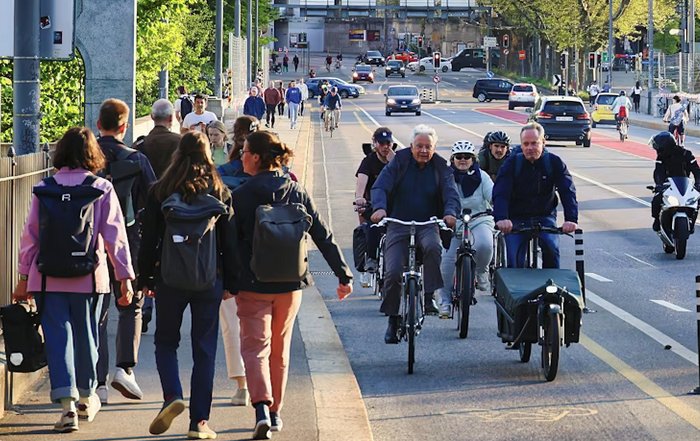
Active transport, primarily walking and cycling, remains the most resource-efficient and health-enhancing approach to commuting, with near-zero operational emissions and substantial social benefits. Cities such as Copenhagen, Amsterdam, Utrecht, and increasingly Paris and Barcelona have demonstrated that when protected cycling infrastructure, traffic-calmed neighborhoods, and coherent urban design are prioritized, bicycles can become the default mode for a large share of daily trips. Research compiled by the European Environment Agency shows that shifting even a modest proportion of short car trips to walking and cycling can significantly reduce congestion, noise, and emissions, while freeing urban space for green areas and public amenities.
In countries like the United States, Canada, Australia, and New Zealand, historical patterns of low-density development and road-oriented planning have made active commuting more challenging. However, a growing number of cities, including Portland, Vancouver, Montreal, Melbourne, and Sydney, are investing in protected bike lanes, improved pedestrian crossings, and 15-minute neighborhood concepts that bring daily services closer to residents. Networks such as C40 Cities document how leading municipalities are embedding cycling and walking into broader climate strategies, and their resources on climate-responsive transport planning illustrate how these measures can be scaled and replicated.
For the eco-natur.com community, active commuting is also an extension of broader resource-conscious behavior. Individuals who walk or cycle often find it easier to adopt plastic-free practices and zero-waste routines, as they rely less on car-based convenience products and more on reusable containers, local shops, and thoughtfully planned journeys. In climates ranging from the Mediterranean conditions of Spain and Italy to the temperate environments of Germany, France, United Kingdom, Sweden, and Norway, as well as many parts of South Africa, Brazil, Malaysia, and Thailand, year-round cycling and walking are feasible when supported by shading, winter maintenance, safe routes, and secure parking. In this sense, active commuting becomes a practical gateway to a more integrated and sustainable lifestyle.
Public Transport as the Backbone of Urban Sustainable Commuting
Well-designed public transport systems form the structural backbone of sustainable commuting in dense urban and regional contexts. Buses, trams, metro systems, suburban rail, and regional trains can transport large numbers of passengers with far lower emissions per kilometer than private vehicles, while reducing road congestion and the land devoted to parking. The International Association of Public Transport (UITP) continues to document global best practices in integrated public transport solutions, highlighting examples from cities that have successfully aligned transit investments with climate, equity, and economic objectives.
In Europe, metropolitan regions such as Berlin-Brandenburg, Zurich, Vienna, Stockholm, and Geneva showcase how frequent, reliable, and well-coordinated public transport can make car-free or car-light living attractive for professionals, families, and older citizens alike. Integrated ticketing, real-time information, and multimodal hubs simplify journeys and encourage seamless transfers between rail, tram, bus, and micromobility. In Asia, expanding metro and rail systems in Singapore, Tokyo, Seoul, Shanghai, Beijing, and Bangkok continue to absorb large volumes of commuter traffic, while in North America, cities such as New York, Toronto, Vancouver, San Francisco, and Washington, D.C. are upgrading rail networks, bus rapid transit corridors, and electrified fleets in line with climate targets. The World Bank provides valuable insight into the economic and social returns of these initiatives through its work on sustainable urban transport.
For businesses that engage with eco-natur.com to strengthen their sustainability strategies, public transport represents a powerful lever for credible climate action. Locating offices near transit hubs, offering subsidized passes, aligning working hours with off-peak services, and providing secure bike parking and last-mile solutions can dramatically shift commuting patterns. These measures integrate naturally with broader sustainable business commitments, reinforcing the message that environmental responsibility is embedded in day-to-day operational decisions rather than confined to high-level pledges.
Electric Vehicles and the Changing Role of Private Cars
Despite the global push to reduce car dependency, private vehicles will remain part of the commuting landscape for many years, particularly in regions characterized by long distances, limited transit coverage, or dispersed employment centers. In this context, electric vehicles (EVs) play a significant transitional role. Markets such as Norway, Netherlands, China, United Kingdom, Germany, Sweden, and Denmark have demonstrated that a combination of purchase incentives, charging infrastructure, stringent fuel economy standards, and clear phase-out timelines for internal combustion engines can accelerate EV adoption rapidly. The International Council on Clean Transportation (ICCT) continues to analyze global EV policy developments and technology trends on its platform at theicct.org.
For commuters, EVs can reduce local air pollution, lower operating costs, and, in some cities, benefit from preferential access to low-emission zones or reduced congestion charges. However, from a sustainability perspective, the net climate benefit depends on the electricity mix and on responsible supply chains for batteries and critical minerals. In countries that are rapidly expanding wind, solar, and other low-carbon sources, as discussed in eco-natur.com's overview of renewable energy, the life-cycle emissions of EV commuting are substantially lower than those of conventional vehicles. In regions where coal still dominates power generation, the advantage is smaller but generally improves over time as grids decarbonize, provided that robust recycling and circular economy practices are implemented for batteries.
Corporate fleet decisions significantly influence commuting-related emissions. Organizations that replace conventional company cars with EVs, install workplace charging, and encourage shared use rather than one-vehicle-per-employee policies can achieve substantial reductions in their Scope 3 emissions. The United Nations Environment Programme (UNEP) provides practical guidance on electric mobility and fleet transition, which is especially relevant for multinational companies operating across markets with varying regulatory maturity. For the eco-natur.com audience interested in the intersection of sustainability and the economy, EV supply chains also raise important questions about ethical sourcing, labor conditions, and recycling that must be integrated into a comprehensive view of sustainable commuting.
Shared Mobility, Carpooling, and On-Demand Services
Shared mobility, encompassing traditional carpooling, modern ride-hailing, car-sharing platforms, and shared micromobility services, offers flexible solutions for commuters who cannot fully rely on public transport or active modes. When thoughtfully regulated and integrated with public transport, these services can increase vehicle occupancy rates, reduce the total number of cars on the road, and optimize the use of limited urban space. The OECD's International Transport Forum (ITF) has produced influential analyses on shared mobility and urban transport efficiency, showing how coordinated policies can ensure that shared services complement rather than undermine sustainable transport objectives.
Carpooling remains particularly relevant in suburban and rural areas across United States, Canada, United Kingdom, Germany, France, Italy, Spain, South Korea, and Japan, where population density does not always support frequent transit services. Digital platforms and corporate mobility programs make it easier for employees in the same organization or business district to coordinate rides, share costs, and reduce emissions, while also building social connections. In parallel, car-sharing schemes in cities such as Madrid, Milan, Zurich, Amsterdam, Singapore, and Sydney allow residents to access vehicles only when needed, reducing the incentive to own a private car and aligning with zero-waste and circular economy principles by maximizing the utilization of existing assets.
Shared micromobility, including docked and dockless bicycles and e-scooters, has matured since its early experimental phase. Many cities now integrate these services into mobility-as-a-service platforms, use designated parking areas to protect public space, and require operators to meet safety and sustainability standards. Organizations such as the Urban Land Institute (ULI) explore how these modes can support healthier, more human-centered environments, and their work on mobility and placemaking illustrates how shared mobility can be woven into broader strategies for livable streets, green infrastructure, and inclusive public spaces.
Remote Work, Hybrid Models, and the Redefinition of Commuting
The expansion of remote and hybrid work since the early 2020s has fundamentally altered commuting patterns in many sectors, particularly in knowledge-intensive industries such as technology, finance, consulting, media, and professional services. By 2026, a substantial portion of employees in United States, United Kingdom, Germany, Canada, Australia, France, Netherlands, Sweden, Norway, Singapore, Japan, and New Zealand work from home at least part of the week, effectively eliminating commuting emissions on remote days. The International Labour Organization (ILO) has examined these shifts in its research on telework and the future of work, emphasizing both the potential advantages and the challenges for workers and employers.
From a sustainability perspective, remote work can be a powerful tool, but its net benefits depend on the broader context. Reduced commuting and office energy use must be weighed against increased residential energy consumption, the environmental impact of digital infrastructure, and the risk of urban sprawl if people move further from city centers while still commuting occasionally. For the eco-natur.com readership, which frequently explores sustainable home design and energy use, the opportunity lies in combining remote work with efficient heating and cooling, high-performance building envelopes, and, where feasible, rooftop solar or community renewable energy, thereby amplifying the climate benefits.
Hybrid models, in which employees commute on selected days for in-person collaboration, are now common in many global companies. While these arrangements can reduce peak congestion and allow organizations to optimize office space, they do not automatically guarantee sustainable commuting. If employees default to private car use on office days because public transport services or cycling infrastructure have not adapted to new patterns, the environmental gains may be smaller than expected. Employers that take sustainability seriously are therefore revisiting their mobility policies, consulting employees, and aligning hybrid work schedules with improved access to transit, bike facilities, and shared mobility options, ensuring that new work models reinforce rather than undermine sustainable commuting objectives.
Sustainable Commuting as a Pillar of Corporate Responsibility
As environmental, social, and governance (ESG) expectations mature, employee commuting is increasingly recognized as a material aspect of corporate climate performance. The Greenhouse Gas Protocol explicitly identifies employee commuting as a relevant category of Scope 3 emissions for many organizations, and its standards for measuring and managing emissions are widely used by companies across North America, Europe, Asia, and beyond. Investors, regulators, and civil society actors increasingly expect that organizations claiming climate leadership will quantify and manage these emissions alongside energy use, business travel, and supply chain impacts.
Forward-looking companies in United States, United Kingdom, Germany, France, Italy, Spain, Netherlands, Switzerland, Singapore, Japan, and South Korea are integrating sustainable commuting into their ESG reports, climate transition plans, and employer branding. Measures include comprehensive commuter surveys, incentive programs for public transport and cycling, on-site facilities such as showers and secure bike storage, EV charging infrastructure, structured carpooling, and partnerships with local transit agencies. The Carbon Trust offers practical resources and case studies on reducing corporate travel and commuting emissions, helping organizations translate high-level commitments into concrete actions.
For the professional audience of eco-natur.com, sustainable commuting is a natural extension of the themes covered under sustainable business models and global sustainability trends. By treating commuting as a strategic issue, companies signal to employees, customers, and investors that they understand sustainability as a system-wide transformation rather than a narrow marketing concept. This approach builds trust and positions organizations to benefit from emerging green economy opportunities, including talent attraction, access to sustainable finance, and resilience to regulatory and market shifts.
Regional Perspectives and Context-Specific Solutions
While the principles of sustainable commuting are globally relevant, effective implementation requires sensitivity to regional conditions, including infrastructure, climate, culture, and economic structure. In Europe, relatively compact cities, strong planning frameworks, and established public transport systems have enabled countries such as Sweden, Norway, Denmark, Finland, Germany, Netherlands, and Switzerland to promote cycling, transit, and EV adoption simultaneously. The European Commission provides a unifying policy context through its work on sustainable and smart mobility, setting ambitious targets for emissions reduction, modal shift, and digitalization across the continent.
In North America, the legacy of car-oriented development presents significant challenges but also opportunities for innovation. Regions such as the San Francisco Bay Area, Greater Toronto and Hamilton Area, Boston-Providence corridor, and Seattle-Vancouver are experimenting with transit-oriented development, high-capacity bus corridors, regional rail integration, and congestion pricing. In Asia, rapidly urbanizing countries including China, Thailand, Malaysia, and India are building extensive metro and bus rapid transit networks, while more mature economies such as Japan, South Korea, and Singapore refine already sophisticated systems and integrate smart mobility platforms, road pricing, and real-time data to optimize flows.
In Africa and South America, where informal and semi-formal transport systems such as minibuses and shared taxis play a central role in daily commuting, sustainable solutions must prioritize affordability, service reliability, and social equity. Efforts in cities like Cape Town, Johannesburg, Nairobi, Bogotá, Lima, and São Paulo focus on upgrading bus systems, improving safety, and integrating informal operators into regulated networks without undermining livelihoods. The Institute for Transportation and Development Policy (ITDP) offers detailed resources on equitable and sustainable transport in emerging economies, highlighting how climate and development goals can be aligned.
Across regions, protecting ecosystems and biodiversity is an increasingly important dimension of transport planning. Large-scale commuting infrastructure can fragment habitats, disrupt wildlife corridors, and degrade natural landscapes if not carefully designed and mitigated. The themes explored on eco-natur.com in relation to wildlife and ecosystem protection and biodiversity conservation are directly relevant when evaluating new roads, railways, cycling routes, or park-and-ride facilities. Environmentally responsible commuting systems seek to balance human mobility with the integrity of natural systems through careful routing, wildlife crossings, green bridges, and habitat restoration.
Integrating Commuting into Broader Sustainable Living
Sustainable commuting is most effective when embedded within a wider vision of sustainable living, rather than treated as an isolated decision about transport modes. Housing location, urban form, food systems, energy use, and community networks all influence commuting choices and their environmental impact. Individuals who choose to live closer to workplaces or along high-quality transit corridors can reduce travel times, emissions, and costs, while gaining better access to local services, green spaces, and cultural amenities. This proximity often encourages more frequent use of local shops, markets, and community facilities, supporting the kind of organic and sustainable food systems that many readers of eco-natur.com prioritize.
Commuters who adopt walking or cycling frequently become more attentive to the quality of air, street design, and public space, and they may be more inclined to participate in local initiatives such as tree planting, neighborhood clean-ups, traffic-calming campaigns, or community gardens. These activities align closely with the holistic vision of sustainable living and the broader sustainability perspectives presented on eco-natur.com. Over time, the cumulative effect of many such choices can support a transition toward more circular, low-carbon urban economies, where local services, repair businesses, and renewable energy providers thrive as car dependency declines.
For organizations, integrating commuting into sustainability strategies reinforces internal coherence. Companies that encourage sustainable commuting often also pursue energy-efficient buildings, responsible procurement, and circular resource management, creating a reinforcing loop of environmental performance and brand credibility. This systems perspective aligns with the overarching mission of eco-natur.com, which is to help individuals and businesses connect decisions about mobility, energy, materials, and food into a coherent and practical path toward a more sustainable future.
Building Trust and Making Informed Commuting Decisions
As sustainable mobility technologies and services proliferate, the need for trustworthy, evidence-based guidance becomes more pressing. Marketing claims about "green" vehicles, "eco-friendly" ride services, or "carbon-neutral" commuting packages are not always backed by rigorous analysis, and decision-makers must navigate a complex landscape of trade-offs, local constraints, and long-term uncertainties. Independent organizations such as the Rocky Mountain Institute (RMI), which provides in-depth work on transport decarbonization, and platforms like eco-natur.com, which curate accessible, expert-informed perspectives, play a crucial role in enabling informed choices.
For individuals, developing a personal commuting strategy involves assessing local infrastructure, work patterns, family needs, and long-term goals, then combining modes in a way that is both practical and ambitious. This may mean cycling or walking for short trips, using public transport for regular commutes, reserving car use for specific circumstances, or negotiating hybrid work arrangements to reduce weekly travel. For businesses, credible action requires integrating commuting into climate roadmaps, setting measurable targets, monitoring progress, and engaging employees in co-designing solutions that reflect diverse needs across offices, regions, and roles.
By 2026, the technologies, policies, and planning tools required to transform commuting are more advanced and widely available than ever before. Advanced EVs, electrified public transport fleets, comprehensive cycling networks, integrated ticketing systems, shared mobility platforms, and flexible work models are already reshaping mobility landscapes in many parts of the world. The central challenge now is alignment: aligning personal choices with community priorities, aligning corporate policies with climate science, and aligning infrastructure investments with long-term sustainability objectives.
For the global audience that relies on eco-natur.com as a trusted partner in this transition, sustainable commuting represents both a practical entry point and an ongoing journey. By consciously linking daily travel decisions to broader aspirations for a healthier planet, a fairer global economy, and thriving local communities, commuters and organizations can transform routine journeys into meaningful contributions to a more sustainable, resilient, and equitable future.
