
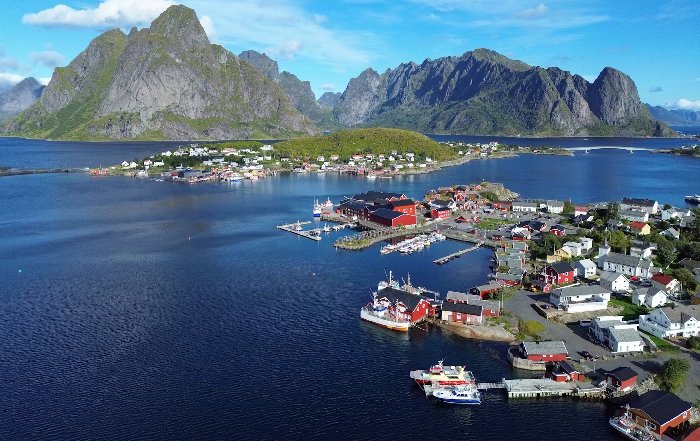
Lessons in Sustainability from Nordic Countries: A Blueprint for Global Business and Everyday Life
Nordic Sustainability as a Strategic Model
As the global economy moves deeper into the decisive decade for climate action, the Nordic countries-Sweden, Norway, Denmark, Finland, and Iceland-have emerged as influential laboratories for sustainable development, combining high living standards with ambitious environmental policies and strong social cohesion. For business leaders, policymakers and sustainability professionals who follow eco-natur.com, the Nordic experience offers not only inspiration but also a pragmatic blueprint for integrating climate responsibility, circular economy thinking and social equity into day-to-day operations and long-term strategy.
Well the urgency of aligning business models with climate science, as highlighted by organizations such as the Intergovernmental Panel on Climate Change, has become a core boardroom concern across North America, Europe, Asia and beyond. Nordic countries, long ranked among the world's top performers in environmental and social metrics by bodies such as the OECD and the World Economic Forum, demonstrate that sustainability can be embedded at scale without sacrificing competitiveness, innovation or quality of life. Their experience aligns closely with the perspectives promoted on eco-natur.com, particularly in areas such as sustainable living, sustainability strategy, recycling and circularity and the evolution of a greener economy.
This article examines how Nordic countries have operationalized sustainability across energy, urban planning, business, food systems and biodiversity, and what practical lessons organizations and individuals worldwide-from the United States and the United Kingdom to Brazil, South Africa, China and Singapore-can draw as they navigate the transition to a low-carbon, resilient future.
Policy Foundations: Long-Term Vision and Consistent Governance
One of the most distinctive characteristics of Nordic sustainability is its foundation in long-term, cross-party policy frameworks that provide businesses and communities with a stable direction of travel. Sweden was among the first countries to introduce a carbon tax in the early 1990s, and by 2017 it had enshrined a legally binding goal of net-zero emissions by 2045. Denmark has committed to reducing greenhouse gas emissions by 70 percent by 2030 compared with 1990 levels, a target that shapes investment decisions across energy, transport and industry. Norway, while historically reliant on oil and gas, has used its sovereign wealth fund and regulatory tools to accelerate decarbonization, including ambitious targets for electric mobility.
International institutions such as the United Nations Environment Programme have frequently pointed to the Nordic model as evidence that sustained, predictable climate policy can foster innovation and attract green investment rather than drive it away. For organizations seeking to design their own sustainability roadmaps, the Nordic experience underscores the importance of setting clear, time-bound goals, aligning them with science-based pathways and embedding them in regulatory and fiscal systems. Businesses that operate globally, from the United States and Canada to Germany, Japan and Australia, can benefit from studying how Nordic regulators use carbon pricing, green public procurement and environmental standards to create level playing fields that reward low-impact solutions.
The policy culture in the Nordics also places strong emphasis on transparency and public participation, which enhances trust in institutions and in sustainability transitions. This culture resonates with the values promoted by eco-natur.com around sustainable business practices and responsible governance, and it highlights that environmental progress is rarely the result of isolated initiatives; instead, it emerges from coherent policy ecosystems that reward long-term thinking.
Renewable Energy Leadership and the Low-Carbon Grid
Nordic countries have become emblematic of what a low-carbon power system can look like in practice. Norway generates nearly all of its electricity from hydropower, Iceland combines geothermal and hydropower to supply almost 100 percent renewable electricity, and Denmark has pioneered large-scale offshore wind, regularly meeting a majority of its electricity demand from wind power on windy days. Sweden and Finland rely on a combination of hydropower, wind and nuclear energy, resulting in some of the lowest electricity-sector emissions globally.
Organizations such as the International Energy Agency have documented how Nordic power markets, interconnected through the Nordic electricity exchange, have managed variability and cross-border balancing while maintaining reliability and affordability. For businesses across regions as diverse as the United States, Germany, China and South Africa, this provides a tangible case study of how high shares of renewables can be integrated into complex grids when underpinned by strong market design, regional cooperation and investment in transmission infrastructure.
For readers of eco-natur.com exploring renewable energy pathways, the Nordic example also illustrates the importance of linking power sector decarbonization with electrification of transport, heating and industry. As electric vehicles, heat pumps and green hydrogen gain traction from North America to Asia, the Nordic experience offers valuable insight into how clean electricity can become the backbone of a climate-neutral economy.
Urban Design, Mobility and Everyday Sustainable Living
Nordic cities such as Copenhagen, Stockholm, Oslo and Helsinki consistently appear in global rankings of livable and sustainable urban environments, including those compiled by organizations like C40 Cities and the World Resources Institute. Their success is not accidental; it is the result of decades of deliberate planning that prioritizes compact urban form, high-quality public transport, cycling infrastructure and access to green spaces.
Copenhagen's ambition to become carbon neutral by 2025 has driven extensive investment in district heating, energy-efficient buildings and bicycle superhighways, while Oslo's aggressive promotion of electric vehicles-supported by tax incentives, toll exemptions and charging infrastructure-has resulted in one of the world's highest EV adoption rates per capita. These cities demonstrate that sustainable mobility is not only a matter of technology but also of urban design that makes walking, cycling and public transit the default choices.
For individuals and organizations seeking to promote sustainable living and low-impact lifestyles, Nordic cities show how infrastructure can gently steer behavior toward lower emissions without sacrificing convenience or economic vitality. Businesses in real estate, retail, logistics and mobility can draw lessons on how to integrate sustainability into service design, customer experience and long-term asset planning, whether they operate in the United Kingdom, Canada, Singapore or Brazil.
Circular Economy, Recycling and the Move Beyond Waste
Perhaps nowhere is the Nordic commitment to sustainability more visible in daily life than in its approach to waste management and circular economy practices. Countries such as Sweden and Norway have achieved high recycling rates and low landfill use through a combination of deposit-return schemes for beverage containers, extended producer responsibility for packaging and strong municipal waste collection systems. The Nordic Council of Ministers and platforms such as the Ellen MacArthur Foundation have highlighted Nordic initiatives as leading examples of how to design systems that prevent waste and recover value from materials.
In Sweden, the deposit-return system for cans and bottles has become a social norm, with collection points integrated into supermarkets and public spaces, making it easy for citizens to participate. Norway's plastic bottle collection system, often cited as world-leading, recovers the vast majority of bottles placed on the market. These systems support broader circular economy goals by ensuring that high-quality materials re-enter production cycles, reducing demand for virgin resources and lowering emissions associated with extraction and manufacturing.
Readers of eco-natur.com interested in practical approaches to recycling and circularity and zero-waste strategies can see in the Nordic experience how policy, infrastructure and consumer engagement must work together. For businesses, particularly in consumer goods, packaging, retail and logistics, the Nordic model offers guidance on designing products for recyclability, engaging customers in take-back schemes and collaborating across value chains to close resource loops.
Plastic Reduction and the Drive Toward a Less Toxic Material Footprint
While the global plastic crisis remains acute, Nordic countries have been at the forefront of experimenting with policies and business models that reduce plastic use, encourage reuse and minimize environmental leakage. Denmark's early introduction of a tax on plastic bags dramatically reduced consumption, and many Nordic retailers have voluntarily adopted reusable bag schemes and packaging reduction strategies. Research and policy analysis by organizations such as the European Environment Agency show that Nordic countries are increasingly integrating life-cycle thinking into plastic policy, addressing not only waste but also upstream design, chemical safety and alternative materials.
For the audience of eco-natur.com, which frequently explores plastic-free living and responsible consumption, Nordic practices highlight the importance of combining consumer awareness with systemic change. Businesses in sectors spanning food, cosmetics, fashion and e-commerce can learn from Nordic pilots in reusable packaging systems, deposit schemes for takeaway containers and the use of digital technologies to track and optimize material flows. These developments are relevant across regions, from the United States and Europe to Asia and Africa, where regulatory pressure and consumer expectations around plastic are tightening.
Sustainable Business Models and Green Innovation
Nordic economies have consistently demonstrated that sustainability can be a driver of innovation, competitiveness and export success. Companies such as IKEA, originally from Sweden, have integrated circular design, renewable energy commitments and sustainable sourcing into their global strategies, while Danish firms like Ørsted have transformed from fossil-fuel-based utilities into world leaders in offshore wind. Finnish and Swedish technology companies are exploring green data centers powered by renewable energy and cooled by Nordic climates, while Norwegian industrial players are investing heavily in carbon capture, utilization and storage.
International platforms such as the UN Global Compact and the World Business Council for Sustainable Development frequently showcase Nordic companies as examples of how environmental, social and governance (ESG) considerations can be integrated into core business models rather than treated as peripheral. For organizations navigating their own sustainability journeys, the Nordic experience reinforces the strategic value of aligning with science-based targets, adopting transparent reporting frameworks such as those promoted by the Global Reporting Initiative and embedding sustainability into product development, supply chain management and corporate culture.
The editorial perspective of eco-natur.com on sustainable business and a resilient green economy resonates strongly with this Nordic approach, which treats sustainability not as a marketing narrative but as a lens for risk management, innovation and long-term value creation. This is particularly relevant for businesses in regions such as the United States, United Kingdom, Germany, China and South Korea, where regulatory expectations and investor scrutiny of ESG performance are intensifying.
Organic Food, Regenerative Agriculture and Sustainable Diets
Food systems are central to both environmental impact and public health, and Nordic countries have taken notable steps toward more sustainable and health-conscious diets. Denmark and Sweden have seen significant growth in organic agriculture, supported by national strategies and consumer demand, while Finland and Norway are promoting sustainable fisheries management and aquaculture practices. The Food and Agriculture Organization of the United Nations has documented how Nordic policies integrate climate, biodiversity and nutrition objectives, including efforts to reduce food waste and encourage plant-rich diets.
The concept of the "New Nordic Diet," which emphasizes local, seasonal, minimally processed foods, has gained international recognition for its alignment with both health and sustainability goals. Public procurement in schools and hospitals increasingly favors organic and sustainably produced ingredients, sending strong market signals to farmers and food companies. For readers of eco-natur.com exploring organic food and sustainable diets and the links between environment and health, the Nordic experience demonstrates how culinary culture, policy and business innovation can work together to shift consumption patterns without sacrificing culinary quality or affordability.
Businesses across the global food value chain-from agricultural producers in Spain, Italy and France to retailers in Canada, Australia and New Zealand-can draw on Nordic examples of transparent labeling, sustainability certifications and partnerships between farmers, chefs and researchers. These collaborations show that sustainable food systems require coordinated action from field to fork, including investment in soil health, biodiversity and low-impact processing and distribution.
Biodiversity, Wildlife Protection and Nature-Positive Development
Despite their reputation for urban innovation and technological sophistication, Nordic countries also place strong emphasis on protecting wild landscapes, biodiversity and ecosystem services. Large areas of Norway, Sweden and Finland are covered by forests, mountains and wetlands, many of which are protected or managed under sustainable forestry schemes. Iceland's geothermal landscapes and fragile ecosystems are subject to conservation measures that balance tourism with ecological integrity. Nordic governments and research institutions collaborate with organizations such as the International Union for Conservation of Nature to monitor species, protect habitats and integrate biodiversity considerations into land-use planning.
For the global audience of eco-natur.com, where interest in wildlife and biodiversity and biodiversity protection is strong, Nordic practices underscore the need to treat nature as a strategic asset rather than a residual concern. Businesses in sectors such as forestry, tourism, infrastructure and real estate across regions from Europe and Asia to Africa and South America can learn from Nordic approaches to environmental impact assessment, ecological restoration and nature-based solutions. These approaches are increasingly recognized by institutions such as the World Bank as vital for resilience to climate change, flood mitigation and long-term economic stability.
Social Trust, Education and the Human Dimension of Sustainability
Underlying many Nordic sustainability successes is a high level of social trust, strong public institutions and a culture of education and dialogue. Citizens generally trust that tax revenues are used effectively, which facilitates support for investments in public transport, renewable energy and social welfare. Education systems in Finland, Sweden and Denmark integrate environmental topics from an early age, fostering a generation that views sustainability as a normal part of citizenship and professional life. Research by organizations such as the OECD has highlighted how Nordic education systems encourage critical thinking, collaboration and problem-solving, skills that are essential for navigating complex sustainability challenges.
For businesses and policymakers from North America to Asia, this dimension of the Nordic model emphasizes that technology and policy alone are not sufficient; cultivating a culture of responsibility, participation and continuous learning is equally important. The editorial mission of eco-natur.com, with its emphasis on informed sustainable living and global awareness, aligns with this view that sustainability is as much about people and values as it is about emissions and resource efficiency.
Translating Nordic Lessons to a Global Context
While the Nordic countries benefit from specific advantages, including relatively small populations, strong institutions and abundant renewable resources, the lessons they offer are relevant across very different contexts-from dense metropolitan regions in the United States, the United Kingdom and China to emerging economies in Africa, South America and Southeast Asia. The key transferable insights include the value of long-term policy consistency, the integration of environmental and social objectives, the centrality of public participation and education, and the recognition that sustainability can be a source of competitive advantage rather than a constraint.
For businesses and individuals engaging with eco-natur.com from diverse regions such as Germany, France, Italy, Spain, the Netherlands, Switzerland, South Korea, Japan, Thailand, Malaysia, South Africa, Brazil and New Zealand, the Nordic experience provides a rich library of practical examples and policy innovations. These range from carbon taxes and renewable energy integration to circular product design, plastic reduction, sustainable diets and nature-positive development. By studying how Nordic countries have navigated trade-offs, built coalitions and adjusted policies over time, decision-makers elsewhere can avoid common pitfalls and accelerate their own transitions.
A Nordic-Inspired Path Forward
The global sustainability agenda is shaped by both escalating risks and unprecedented opportunities. Climate impacts are intensifying, biodiversity loss continues and social inequalities remain stark, yet technological advances, financial innovation and growing public awareness create powerful levers for change. Nordic countries illustrate that it is possible to align prosperity with planetary boundaries, but they also demonstrate that such alignment requires persistence, experimentation and collaboration across government, business and civil society.
For the community that turns to eco environmental nature news to explore sustainability, sustainable living, recycling, organic food and the broader global transition to a greener economy, Nordic lessons offer both strategic guidance and practical inspiration. Whether readers are designing corporate sustainability strategies in New York or London, developing renewable energy projects in Germany or China, building circular business models in Singapore or São Paulo, or simply seeking to reduce their personal environmental footprint in everyday life, the Nordic experience shows that ambitious, integrated and people-centered approaches can deliver tangible results.
By continuing to analyze and share these lessons, eco-natur.com positions itself as a trusted platform where global audiences can connect Nordic insights with local realities, turning best practice into concrete action and helping to shape a future in which economic vitality, social well-being and ecological integrity reinforce rather than undermine one another.
