
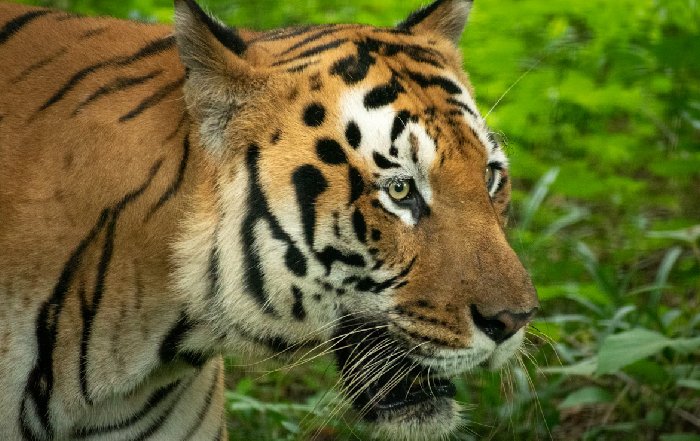
Conservation Efforts for Endangered Species: A Strategic Imperative for Business and Society
The Big Context: Why Endangered Species Matter to Modern Economies?
So in 2026, the conservation of endangered species has moved from being perceived as a niche environmental concern to a central pillar of resilient economies, risk management, and corporate strategy. Across North America, Europe, Asia, Africa and South America, governments, investors and consumers increasingly recognise that the loss of biodiversity undermines food security, public health, supply chain stability and long-term economic growth. For a platform like eco-natur.com, which speaks directly to professionals and households interested in sustainable living, this shift is not merely a moral or scientific development; it is a profound transformation of how value, responsibility and opportunity are defined in the global marketplace.
Reports from organizations such as the Intergovernmental Science-Policy Platform on Biodiversity and Ecosystem Services (IPBES) and the United Nations Environment Programme (UNEP) show that around one million species face extinction, many within decades, unless current trends are reversed. Readers can review the scale of this challenge through analyses from UNEP and the IPBES global assessment. For businesses in the United States, the United Kingdom, Germany, Canada, Australia, France, Italy, Spain, the Netherlands, Switzerland, China, and beyond, this is no longer an abstract environmental statistic; it is a direct indicator of risk to natural capital, from pollinators that sustain agriculture to marine species that support fisheries and coastal protection.
As eco-natur.com has consistently emphasised in its coverage of sustainability and wildlife, the health of endangered species is a barometer of the health of entire ecosystems. Those ecosystems, in turn, underpin the global economy, influencing everything from commodity prices and insurance premiums to tourism revenues and public health expenditures. In 2026, conservation has become a strategic imperative, and the organisations that understand this are better positioned to demonstrate leadership, build trust and secure long-term resilience.
The Economic and Ecological Stakes of Species Loss
The concept of natural capital, articulated by institutions such as the World Bank and the World Economic Forum, has helped clarify the economic significance of endangered species. Natural capital frameworks describe biodiversity as an asset that generates ecosystem services, including pollination, water purification, carbon sequestration, soil fertility and coastal protection. The World Economic Forum has repeatedly highlighted in its Global Risks Reports that more than half of global GDP is moderately or highly dependent on nature, a reality that can be explored further through resources on nature-related financial risks.
When species are lost, these services are degraded, sometimes irreversibly. For example, the decline of pollinators such as bees and butterflies, documented by the Food and Agriculture Organization (FAO), threatens crop yields in Europe, North America and Asia, thereby affecting food prices and food security. Readers can examine the connection between pollinators and agriculture through FAO's pollination initiatives. In coastal regions from Thailand and Indonesia to the Caribbean and the Mediterranean, the loss of coral reefs and mangroves reduces natural protection against storms and erosion, increasing infrastructure costs and insurance risks.
For businesses interested in sustainable business practices, the implications are clear. Biodiversity loss can disrupt supply chains that depend on stable climate, fertile soils and reliable water sources. It can undermine brands that rely on nature-based ingredients, such as organic food companies in Germany, France, Italy and the United States, and it can expose firms to legal, regulatory and reputational risks as governments and civil society demand stronger environmental stewardship. This is particularly relevant for companies committed to organic food, where product integrity depends on healthy soils, clean water and robust ecosystems.
Key Drivers of Endangerment: From Habitat Loss to Climate Change
Understanding the drivers of species endangerment is essential for designing effective conservation strategies. According to research from the International Union for Conservation of Nature (IUCN) and academic institutions such as Oxford University and Stanford University, the primary pressures include habitat loss and fragmentation, overexploitation, pollution, invasive species and climate change. The IUCN Red List provides a comprehensive overview of these threats, and readers can explore its data on threatened species.
Habitat loss remains the dominant factor worldwide. Expanding agriculture, urban development, road construction and mining have converted or fragmented vast areas of forests, wetlands and grasslands across regions as diverse as the Amazon basin, Southeast Asia, Sub-Saharan Africa and parts of North America and Europe. This process isolates populations, reduces genetic diversity and disrupts migration patterns. In countries such as Brazil and Indonesia, the conversion of tropical forests for cattle ranching and palm oil plantations has placed immense pressure on iconic species like jaguars and orangutans, as documented by organizations such as WWF and can be further explored through WWF's deforestation work.
Overexploitation, including illegal wildlife trade and unsustainable fishing, continues to threaten species from African elephants and rhinos to sharks and tuna in global oceans. The Convention on International Trade in Endangered Species of Wild Fauna and Flora (CITES) has been central to regulating this trade, and its work is accessible through CITES resources. At the same time, pollution-from plastics in the oceans to pesticides in agricultural landscapes-adds additional stress. The global challenge of plastic pollution, highlighted by bodies such as the Ellen MacArthur Foundation, has made plastic-free strategies a priority for both households and companies; readers can connect this broader issue with eco-natur.com's own focus on a plastic-free lifestyle.
Climate change now acts as a risk multiplier, altering habitats faster than many species can adapt. Rising temperatures, shifting precipitation patterns and more frequent extreme events are changing migration routes, breeding seasons and food availability. Polar species in the Arctic, alpine species in Europe, and coral reef ecosystems in Australia and Southeast Asia are among the most visible casualties, as highlighted in analyses by the Intergovernmental Panel on Climate Change (IPCC), which can be explored through IPCC reports. This combination of pressures explains why conservation in 2026 must be systemic, integrating climate, land use, pollution control and economic planning.
Global Frameworks and Policy Momentum in 2026
The last few years have seen important policy milestones for endangered species conservation. The adoption of the Kunming-Montreal Global Biodiversity Framework under the Convention on Biological Diversity (CBD) has committed countries worldwide to halt and reverse biodiversity loss by 2030. This framework sets ambitious targets for protected areas, restoration of degraded ecosystems and the reduction of harmful subsidies, and its details can be explored through CBD's official platform.
In parallel, initiatives such as the Taskforce on Nature-related Financial Disclosures (TNFD) are guiding financial institutions and corporations to assess, manage and disclose their impacts and dependencies on nature. For business leaders in London, New York, Frankfurt, Singapore and Tokyo, this means that biodiversity risk is moving into mainstream financial decision-making, in the same way climate risk has done over the past decade. The TNFD's recommendations, accessible through its official site, encourage companies to integrate species and ecosystem considerations into corporate governance, strategy and risk management.
At the national level, measures such as the European Union's Nature Restoration Law, reforms of the Endangered Species Act in the United States, and new biodiversity finance commitments in countries such as Canada, Germany, France and Japan signal a stronger regulatory environment. These policies often link conservation targets with funding for restoration, sustainable agriculture and nature-based solutions, creating new opportunities for businesses that can align their models with ecological resilience. For readers seeking a strategic overview of these policy trends, resources from the Organisation for Economic Co-operation and Development (OECD) on biodiversity economics, available through OECD's environment directorate, are particularly instructive.
Corporate Responsibility and Sustainable Business Models
For the audience of eco-natur.com, which includes entrepreneurs, managers and impact-driven professionals, the intersection between endangered species conservation and corporate strategy is especially relevant. Businesses are increasingly expected to demonstrate credible action on biodiversity, not only to meet regulatory requirements but also to maintain access to capital, attract talent and build brand loyalty in markets such as the United Kingdom, Germany, Sweden, Norway, Denmark, Singapore, South Korea and Japan, where environmental awareness is high.
Companies in sectors such as agriculture, forestry, fisheries, tourism, finance, infrastructure and consumer goods are developing nature-positive strategies that address their direct and indirect impacts on ecosystems. This often includes commitments to deforestation-free supply chains, regenerative agriculture, sustainable sourcing of marine ingredients and investments in ecosystem restoration. Guidance from organizations like the Natural Capital Coalition and case studies from the World Business Council for Sustainable Development (WBCSD), available via WBCSD's nature resources, provide practical frameworks for integrating biodiversity into corporate decision-making.
For businesses seeking to align with the values promoted by eco-natur.com, exploring the platform's dedicated pages on sustainable business and the economy offers a way to connect high-level principles with day-to-day operational choices. Whether through eco-design, responsible material selection, or collaboration with conservation organizations, companies can move beyond compliance to leadership, demonstrating that protecting endangered species is compatible with innovation, competitiveness and profitability.
Sustainable Living and Consumer Influence on Conservation
Conservation outcomes are not shaped by policy and corporate decisions alone; they are also influenced by the everyday choices of individuals and households. In cities from New York and Toronto to Berlin, Paris, Sydney, Tokyo and São Paulo, consumers are increasingly aware that their lifestyle patterns-diet, travel, housing, energy use and purchasing habits-have direct implications for wildlife and ecosystems.
The shift towards more sustainable living, which eco-natur.com has championed for years, is directly connected to endangered species conservation. Reducing meat consumption, particularly beef linked to deforestation, lowers pressure on habitats in South America and parts of Africa. Choosing certified sustainable seafood helps protect overexploited marine species, and this can be further explored through certification bodies such as the Marine Stewardship Council, accessible via its official site. Opting for organic and agroecological products supports farming systems that favour biodiversity, soil health and pollinator resilience, aligning with the principles outlined on eco-natur.com's organic food page.
Lifestyle changes such as minimising single-use plastics, improving household recycling and embracing a zero-waste approach contribute to reducing pollution that harms marine and terrestrial species. Reports from organisations like The Ocean Cleanup and academic research accessible through UNESCO's ocean science resources document how plastic waste affects turtles, seabirds and fish across the world's oceans. By connecting these global insights with practical guidance on recycling and plastic-free living, eco-natur.com helps its audience translate concern into measurable impact.
Innovation, Technology and Data-Driven Conservation
Technological innovation is reshaping conservation strategies in 2026, enabling more precise, efficient and scalable interventions. From satellite monitoring to artificial intelligence and genetic tools, scientists, NGOs and governments now have unprecedented capabilities to track species, detect threats and evaluate the effectiveness of interventions.
Organizations such as NASA and the European Space Agency (ESA) provide satellite data that help monitor deforestation, habitat fragmentation and illegal activities in remote regions. These tools, accessible through platforms like NASA Earthdata, support early warning systems that can trigger rapid response from authorities and conservation groups. In parallel, AI-driven image recognition is being used to identify species from camera-trap photos, drones and citizen science contributions, significantly accelerating data collection and analysis.
Genetic technologies, including environmental DNA (eDNA) analysis, allow researchers to detect the presence of endangered species in water or soil samples without directly observing the animals themselves. This has proven particularly valuable for elusive or rare species in regions such as the Amazon, the Congo Basin and the forests of Southeast Asia. Leading universities and research institutes in countries like the United States, the United Kingdom, Germany, Sweden, Japan and Australia are at the forefront of these developments, and readers interested in the scientific underpinnings can consult resources from the Royal Society, available through its journals and reports.
For the community around eco-natur.com, these advances underscore the importance of data-driven decision-making in sustainability, whether at the level of personal lifestyle choices, corporate strategy or public policy. They also highlight the need for ethical frameworks that ensure technology serves conservation goals while respecting local communities, indigenous rights and privacy.
Community, Indigenous Leadership and Local Stewardship
While global frameworks and advanced technologies are crucial, on-the-ground conservation success often depends on local communities and indigenous peoples who live closest to endangered species and critical habitats. In regions such as the Amazon, the Arctic, the forests of Canada and Scandinavia, and the savannas of East and Southern Africa, community-based conservation initiatives have demonstrated that empowering local stewards can yield durable results for both people and wildlife.
Research compiled by the World Resources Institute (WRI) and the International Institute for Environment and Development (IIED) shows that indigenous-managed lands often maintain equal or higher levels of biodiversity compared to state-run protected areas. These findings, which can be explored through WRI's forest and land resources, challenge traditional top-down conservation models and emphasise the value of rights-based approaches. When local communities have secure land tenure, access to sustainable livelihoods and participation in decision-making, they are more likely to support and lead efforts that protect endangered species.
For readers of eco-natur.com in countries like South Africa, Brazil, Malaysia, New Zealand and Thailand, these lessons are especially relevant, as many of the world's biodiversity hotspots overlap with regions where social equity, economic development and conservation must be balanced carefully. Aligning conservation with fair economic opportunities, sustainable tourism and community-owned enterprises can create virtuous cycles in which protecting wildlife also strengthens local well-being.
Integrating Conservation into Everyday Sustainability Choices
As a platform dedicated to connecting environmental integrity with modern lifestyles, eco-natur.com plays a distinctive role in translating high-level conservation science into accessible guidance for individuals, families and businesses. The site's focus on lifestyle, health and global perspectives reflects an understanding that endangered species conservation is intimately tied to how people live, consume and invest across continents.
Energy choices, for example, have profound implications for species and habitats. Transitioning to renewable energy reduces greenhouse gas emissions and air pollution, mitigating climate impacts on ecosystems from the Arctic to the tropics. At the same time, responsible siting and design of renewable infrastructure, informed by principles of ecological design, can minimise conflicts with wildlife, such as bird and bat collisions with wind turbines or habitat disruption from large-scale solar farms. Guidance from agencies like the International Renewable Energy Agency (IRENA), accessible via its knowledge hub, helps stakeholders balance clean energy expansion with biodiversity protection.
Similarly, urban planning and architecture that incorporate green spaces, wildlife corridors and nature-based solutions can support urban biodiversity, offering refuge for pollinators, birds and small mammals even in densely populated cities such as London, Berlin, Toronto, Singapore and Seoul. Resources from UN-Habitat, accessible through its urban nature initiatives, illustrate how cities can integrate biodiversity into sustainable development strategies. By connecting these global best practices with eco-natur.com's own content on biodiversity and sustainability, the platform helps readers see how their professional and personal environments can become part of the solution.
The Path Forward to Building a Nature-Positive Future
What comes next; the conservation of endangered species will increasingly be seen as a test of whether societies and economies can operate within planetary boundaries while ensuring prosperity and equity. The emerging concept of a "nature-positive" economy, endorsed by organisations such as Business for Nature and discussed in forums like the UN Biodiversity Conference, calls for halting and reversing nature loss by 2030. This requires coordinated action across governments, businesses, financial institutions, civil society and individuals.
For the engaged community that turns to eco-natur.com for guidance on sustainable living, sustainable business, recycling, plastic-free lifestyles and organic food, the message is clear: every decision-whether in the boardroom, in public policy, or in the home-can either contribute to the decline of endangered species or to their recovery. The platform's role is to provide trustworthy, expert-driven insights that help transform concern into action, backed by the best available science and aligned with global frameworks.
By engaging with authoritative resources such as UNEP, IUCN, CBD, IPBES and OECD, and by connecting these insights to practical guidance on eco-natur.com, readers across Europe, Asia, Africa, the Americas and Oceania can participate in building an economy that respects the intrinsic value of wildlife while recognising its essential role in human well-being. The conservation of endangered species is no longer a peripheral concern; it is a central element of a resilient, ethical and future-ready society.
In this evolving landscape, eco-natur.com positions itself as a trusted eco partner, helping individuals and organisations navigate the complex intersection of ecology, economy and lifestyle. By integrating conservation into everyday choices and long-term strategies, the site's global audience can help ensure that endangered species not only survive but thrive, contributing to a richer, more stable and more sustainable world for generations to come. Readers can continue this journey by exploring the broader content available on eco-natur.com, deepening their understanding of how wildlife, climate, health and prosperity are inextricably linked.
