
The Challenges of Recycling Mixed Materials in a Resource-Constrained World
Introduction: Why Mixed-Material Recycling Has Become a Strategic Issue
As this crazy year unfolds, the global conversation on sustainability has shifted from simple calls to "recycle more" toward a more complex and strategic question: how can societies, businesses, and policymakers manage products made from multiple, tightly integrated materials that resist conventional recycling systems? For the international audience that turns to eco-natur.com for guidance on sustainable living, responsible consumption, and future-ready business models, the issue of mixed-material recycling is no longer a technical curiosity; it has become a defining challenge for circular economies in the United States, United Kingdom, Germany, Canada, Australia, France, Italy, Spain, the Netherlands, Switzerland, and across Europe, Asia, Africa, South America, and North America.
Mixed materials-such as multilayer plastic packaging, composite textiles, laminated paper, and electronics that integrate metals, plastics, glass, and rare earth elements-are at the heart of modern consumer products and global supply chains. They promise performance, convenience, and cost efficiency, but they also complicate end-of-life management, undermine recycling economics, and contribute to pollution and resource loss. As organizations such as the UN Environment Programme and OECD continue to highlight, the world is still far from decoupling economic growth from material consumption, and the limitations of recycling mixed materials are a central reason why. Learn more about global waste and resource trends on the UNEP website and through OECD circular economy resources.
For eco-natur.com, whose mission is to connect sustainable living choices with systemic change, the story of mixed-material recycling is not only about waste management; it is about rethinking product design, business models, and everyday habits in ways that reflect experience, expertise, authoritativeness, and trustworthiness. Readers exploring sustainable living strategies or broader sustainability frameworks increasingly recognize that recycling alone is not a panacea, especially when products are engineered in ways that make material separation nearly impossible.
Understanding Mixed Materials: Complexity Embedded in Everyday Products
Mixed materials can be described as products or components that combine two or more different material types-plastics, metals, paper, glass, textiles, organic fibers, adhesives, and coatings-in ways that are physically or chemically bonded. This bonding often enhances product performance, such as keeping food fresher for longer, making buildings more energy efficient, or enabling compact and powerful electronic devices. However, the same features that deliver performance during the use phase create severe challenges at end of life.
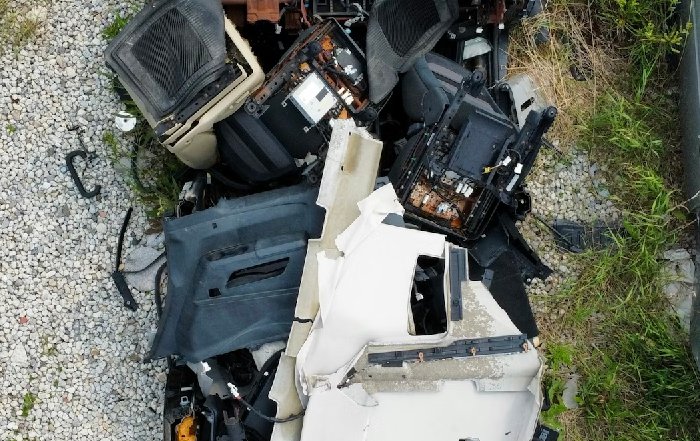
Multilayer food packaging, for example, can involve several thin layers of polyethylene, polypropylene, aluminum, and adhesives laminated together to provide barrier protection against oxygen, moisture, and light. While such packaging has helped reduce food waste and extend shelf life, it is extremely difficult to separate into pure material streams that meet the quality requirements of recyclers. Similarly, composite textiles that blend polyester with cotton or elastane improve comfort and durability, but they complicate fiber recovery and mechanical recycling. More complex still are electronic products, which integrate circuit boards, rare metals, plastics, glass, batteries, and flame retardants into tightly packed assemblies that require specialized processes to disassemble safely.
Organizations such as the Ellen MacArthur Foundation have emphasized that these design choices lock in waste and resource loss long before a product reaches a recycling bin, and that a truly circular economy must tackle the problem at its source. Readers can explore these concepts further by engaging with circular design principles that emphasize material simplicity, modularity, and reuse. For those seeking a more practical orientation, eco-natur.com offers guidance on plastic-free approaches and zero-waste lifestyles that help reduce demand for mixed-material products in the first place.
Technical Barriers: Sorting, Separation, and Contamination
The first major challenge of recycling mixed materials lies in the technical difficulty of sorting and separating them into usable material fractions. Conventional recycling systems, which evolved around relatively simple material streams like single-type plastics, metals, glass, and paper, are poorly equipped to handle complex composites.
Material recovery facilities in the United States, Europe, and Asia increasingly rely on automated sorting technologies such as optical scanners, near-infrared (NIR) spectroscopy, eddy current separators, and robotics guided by artificial intelligence. These technologies, promoted by organizations like Tomra and AMP Robotics, have improved the accuracy and throughput of sorting single-material items, but they struggle when faced with laminated or multi-layered products whose combined properties confuse sensors. A multilayer pouch that appears as plastic to an optical sorter may contain a significant proportion of aluminum or other additives that compromise the quality of the recycled output.
In addition, adhesives, inks, labels, and coatings often remain bonded to substrates during processing, introducing contamination that downgrades the material. Mixed-material packaging that combines paperboard with plastic films-such as beverage cartons or certain food containers-requires either specialized hydropulping processes or is rejected altogether. Technical reports from the European Environment Agency and the US Environmental Protection Agency explain how contamination levels directly influence the value and usability of recycled materials, and why mixed materials pose persistent problems. Learn more about these dynamics through EPA recycling resources and EEA circular economy briefings.
In the context of eco-natur.com, which provides readers with practical guidance on recycling practices and sustainable consumption, it is essential to emphasize that not all items bearing a recycling symbol are equally recyclable in real-world systems. The technical barriers associated with mixed materials mean that many such products are either downcycled into lower-value applications or end up being incinerated or landfilled, despite consumers' good intentions.
Economic Realities: When Recycling Does Not Pay
Even when technologies exist to separate and process mixed materials, the economics of recycling can be prohibitive. Recycling systems in Germany, Sweden, Norway, Japan, and other advanced economies rely on a combination of public funding, extended producer responsibility schemes, and revenue from selling recovered materials. For mixed materials, the costs of collection, sorting, and specialized processing often exceed the market value of the recovered outputs, especially when commodity prices for virgin materials are relatively low.
The World Bank has documented that waste management costs are rising globally, with municipalities in rapidly urbanizing regions of Asia, Africa, and South America facing particular financial strain. When budgets are constrained, local authorities and private operators prioritize materials with clear, profitable markets, such as high-purity metals and certain types of plastics, while complex composites are sidelined. Readers can explore the financial dimensions of waste systems through the World Bank's "What a Waste" reports.
In markets such as the United States and Canada, where recycling infrastructure is often fragmented and dependent on local conditions, the variability of mixed-material streams further undermines economies of scale. Specialized facilities that can handle flexible packaging or composite textiles require high and consistent volumes to operate efficiently, something that is difficult to guarantee when product designs and packaging formats change rapidly. For businesses interested in aligning profitability with environmental responsibility, resources on sustainable business models at eco-natur.com underscore the importance of designing products that are economically recyclable, not just technically recyclable.
Regulatory and Policy Challenges Across Regions
Policy frameworks in the European Union, United Kingdom, South Korea, Japan, and increasingly Canada and several US states are pushing producers to take greater responsibility for the end-of-life impacts of their products. Extended Producer Responsibility (EPR) schemes, eco-modulated fees, and mandatory recycling targets are intended to create incentives for design-for-recycling and to shift the financial burden of waste management from taxpayers to manufacturers.
However, the regulatory treatment of mixed materials remains uneven. In the EU, the European Commission and European Chemicals Agency have advanced regulations under the Circular Economy Action Plan and the Packaging and Packaging Waste Regulation that set higher recycling targets and restrict certain problematic materials, yet implementation across member states varies significantly. Learn more about these policy developments through European Commission circular economy pages. In Asia, countries like China, Singapore, and Thailand are tightening import rules for waste and pushing domestic recycling capacity, but enforcement challenges persist, especially for informal sectors that handle complex materials without adequate safeguards.
In many emerging economies, mixed materials are often incinerated, dumped, or informally recycled under unsafe conditions, contributing to pollution and health risks. The World Health Organization has highlighted the health impacts of poorly managed waste, especially in densely populated urban areas, where burning mixed materials releases toxic emissions. Readers can explore these health dimensions through WHO environmental health resources.
For the global community engaging with eco-natur.com, which addresses global sustainability perspectives and the interplay between economy and environment, these policy discrepancies underline the need for harmonized standards, clearer labeling, and stronger incentives for simplified, mono-material designs that can move efficiently through recycling systems in multiple jurisdictions.
Environmental and Wildlife Impacts of Non-Recyclable Mixed Materials
When mixed materials evade effective recycling, they often accumulate in landfills, leak into rivers and oceans, or are burned in facilities that may lack advanced pollution controls. Flexible, lightweight packaging is particularly prone to escaping collection systems due to its low weight and high surface area, contributing disproportionately to litter and marine debris. Scientific assessments by organizations such as The Ocean Cleanup and the UN Food and Agriculture Organization show that plastic films, composite packaging, and discarded fishing gear are among the most problematic items found in marine environments, where they entangle wildlife and break down into microplastics.
Microplastics derived from mixed materials can carry additives, flame retardants, and absorbed pollutants, posing risks to marine organisms and potentially entering food chains. The National Oceanic and Atmospheric Administration (NOAA) and UNESCO have documented how these particles spread across the globe, affecting ecosystems from coastal zones in Europe and Asia to polar regions. Readers can deepen their understanding through NOAA's marine debris program and UNESCO ocean science resources.
For the community around eco-natur.com, which cares deeply about wildlife protection and biodiversity conservation, the persistence of mixed materials in the environment is not merely a waste management issue; it is a direct threat to habitats, species, and ecological resilience. Mixed-material products that are designed without end-of-life considerations effectively externalize their environmental costs onto oceans, rivers, soil, and wildlife, contradicting the principles of responsible and sustainable living that eco-natur.com promotes.
Consumer Confusion, Greenwashing, and the Trust Gap
Another critical challenge surrounding mixed-material recycling is the growing trust gap between what brands claim and what recycling systems can actually deliver. Packaging that is labeled as "recyclable" or "eco-friendly" often relies on theoretical recyclability under ideal conditions that do not exist in most municipalities. When consumers in the United States, United Kingdom, Germany, France, Italy, Spain, Australia, and beyond place such items in recycling bins, they assume they are making a positive environmental contribution, yet many of these products are rejected, contaminated, or downcycled.
This disconnect erodes public trust in recycling programs and can lead to "recycling fatigue," where individuals feel their efforts are futile. Regulators such as the US Federal Trade Commission and the UK Competition and Markets Authority have begun cracking down on misleading environmental claims, updating guidance on what can be marketed as recyclable or sustainable. Interested readers can review these frameworks via the FTC Green Guides overview and CMA green claims code.
For a platform like eco-natur.com, which emphasizes health-conscious and sustainable lifestyles and responsible lifestyle choices, addressing this trust gap is essential. By providing clear, experience-based explanations of what local systems can realistically handle, and by highlighting which mixed-material products are particularly problematic, eco-natur.com helps readers make informed choices and avoid being misled by vague or exaggerated environmental marketing.
Innovation and Design: Moving from Complex to Circular
While the challenges are substantial, 2026 is also a period of rapid innovation in materials science, product design, and business models that offer promising pathways beyond the current impasse. Leading companies and research institutions in Europe, North America, and Asia are exploring mono-material packaging solutions, reversible adhesives, digital product passports, and modular designs that make disassembly and material recovery far more feasible.
The shift from mixed to simpler materials is particularly visible in the packaging sector, where brands are replacing multilayer films with advanced mono-material plastics designed to meet both performance and recyclability criteria. Organizations such as CEFLEX in Europe and the Association of Plastic Recyclers in North America are publishing design guidelines that align packaging structures with existing recycling streams. Learn more about such design-for-recycling principles through CEFLEX resources and APR design guidance.
At the same time, the emergence of digital tools, including QR codes and blockchain-based product passports, allows manufacturers to embed detailed material and recycling information directly into products, facilitating more accurate sorting and specialized treatment. For the design community and sustainable innovators, eco-natur.com offers a platform to explore sustainable design concepts that integrate circular thinking from the earliest stages of product development.
In textiles and fashion, innovators in Sweden, Norway, Denmark, and Japan are experimenting with mono-fiber garments, mechanical and chemical recycling technologies, and service-based models such as rental and resale that extend product lifespans and reduce the pressure on recycling systems. These developments align strongly with the ethos of eco-natur.com, which encourages readers to consider not only how products are disposed of, but how they are designed, used, and shared.
The Role of Sustainable Business and the Global Economy
For businesses operating across Europe, Asia, North America, South America, Africa, and Oceania, mixed-material recycling is increasingly framed as a strategic and financial issue, not just an environmental one. Investors, regulators, and customers are scrutinizing supply chains and product portfolios, expecting companies to demonstrate credible pathways toward circularity. The World Economic Forum, CDP, and Global Reporting Initiative have all highlighted resource efficiency and circular business models as key levers for long-term competitiveness and risk management. Learn more about these perspectives from the World Economic Forum's circular economy initiatives and GRI sustainability standards.
Companies that continue to rely heavily on non-recyclable mixed materials face rising compliance costs, reputational risks, and potential stranded assets as regulations tighten and consumer preferences shift. Conversely, those that invest in redesigning products, collaborating with recyclers, and adopting reusable or refillable systems can unlock cost savings, new revenue streams, and stronger brand loyalty. For executives and entrepreneurs seeking to align profitability with environmental stewardship, eco-natur.com provides insights on sustainable business strategies and the evolving green economy, emphasizing both risk mitigation and innovation opportunities.
The transition away from problematic mixed materials also intersects with broader economic and social priorities, including job creation in recycling and remanufacturing, reduced dependence on imported raw materials, and improved public health through cleaner environments. As International Labour Organization research shows, green sectors, including waste management and circular manufacturing, have the potential to generate millions of new jobs worldwide. Readers can explore this dimension through ILO green jobs resources.
Individual Choices: From Recycling to Responsible Consumption
While systemic changes in design, policy, and infrastructure are essential, individual choices still matter, particularly in shaping demand for products that are either supportive of or resistant to circularity. Consumers in Germany, Netherlands, Switzerland, China, Singapore, South Korea, Japan, Malaysia, New Zealand, South Africa, Brazil, and beyond can influence markets by favoring products that use mono-material packaging, avoid unnecessary composites, and prioritize reuse or refill models.
For households and professionals seeking actionable steps, eco-natur.com provides guidance across multiple dimensions of daily life. Articles on plastic-free alternatives help readers identify products that avoid complex laminates and non-recyclable films. Resources on organic food choices highlight brands and retailers that align sustainable agriculture with responsible packaging. Insights on renewable energy adoption and sustainable living practices illustrate how reducing overall consumption and shifting to cleaner energy systems can complement efforts to minimize waste.
By consciously reducing reliance on highly complex, convenience-driven packaging and products, individuals help create a market signal that rewards companies investing in circular design. Over time, this demand-side pressure reinforces regulatory frameworks and industry standards that phase out the most problematic mixed materials.
Looking Ahead: Building Trustworthy, Circular Systems
The challenges of recycling mixed materials are emblematic of a broader truth that has become increasingly clear by 2026: recycling cannot compensate for products that are fundamentally incompatible with circular systems. Technical barriers, economic constraints, regulatory gaps, environmental impacts, and consumer confusion all converge to limit what can be achieved once materials are locked into complex composites.
For the global audience of eco-natur.com, the path forward lies in integrating experience-based insight, scientific expertise, and credible, authoritative information into both personal and professional decisions. This means supporting policies that reward design-for-recycling and penalize non-recyclable composites, encouraging businesses to adopt transparent and verifiable sustainability practices, and making everyday choices that reduce dependence on mixed-material products.
As organizations such as the UN Environment Programme, OECD, World Bank, and World Economic Forum continue to refine their understanding of circular economies, platforms like eco-natur.com play a vital role in translating high-level strategies into practical guidance tailored to diverse regions, from the United States and United Kingdom to Germany, Canada, Australia, France, Italy, Spain, the Netherlands, Switzerland, China, and beyond. By focusing on trustworthy, evidence-based content that connects sustainability, recycling, wildlife protection, and the global economy, eco-natur.com supports readers in navigating the complex realities of mixed-material recycling and in contributing to a more resilient, regenerative future.
Ultimately, overcoming the challenges of recycling mixed materials will require nothing less than a redesign of how products are conceived, produced, and used, alongside the evolution of policy frameworks and infrastructure. In that transformation, informed citizens, forward-looking businesses, and credible knowledge platforms will be indispensable partners, ensuring that the circular economy is not merely a slogan but a practical, trustworthy pathway to long-term prosperity and environmental stability.
