
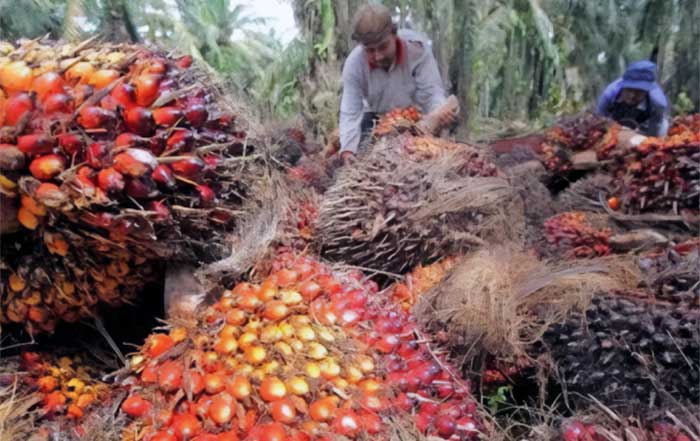
Indonesian Palm Oil: A Journey Towards Sustainability
Introduction: Palm Oil at a Global Crossroads
In 2026, palm oil sits at the center of one of the most complex sustainability debates in the global economy. As the world's most widely used vegetable oil, it is embedded in food, cosmetics, household products, biofuels and industrial supply chains from the United States and United Kingdom to China, India, Europe and beyond. Indonesia, as the world's largest producer, plays a decisive role in determining whether palm oil becomes an engine for sustainable development or remains associated with deforestation, biodiversity loss and social conflict. For an audience of business leaders, policymakers and environmentally conscious consumers who follow eco-natur.com, understanding the evolution of Indonesian palm oil is essential to making responsible choices in sustainable living, investment and procurement.
Palm oil's appeal lies in its high yield per hectare, versatility and relatively low production costs compared with other vegetable oils such as soybean, rapeseed or sunflower oil. According to organizations such as the Food and Agriculture Organization of the United Nations (FAO), demand for vegetable oils is expected to keep rising as global populations grow and diets change, especially in emerging economies. At the same time, the environmental and social footprint of palm oil has attracted intense scrutiny from NGOs, scientists and regulators, particularly in major consumer markets in Europe, North America and Asia. This creates both a challenge and an opportunity: transforming Indonesian palm oil into a product that meets high standards of sustainability, transparency and human rights, while still supporting livelihoods and economic development.
For eco-natur.com, which focuses on sustainable living, sustainability, recycling and the protection of wildlife, the Indonesian palm oil story is a powerful case study in how global supply chains can either undermine or reinforce environmental and social resilience. It shows how regulatory frameworks, corporate commitments, consumer expectations and local community rights converge in one of the most biodiverse yet fragile landscapes on Earth.
The Rise of Indonesian Palm Oil and Its Global Significance
Indonesia's ascent as a palm oil powerhouse began in earnest in the late twentieth century, supported by government incentives, international investment and rising global demand. Today, together with neighboring Malaysia, it accounts for the majority of the world's palm oil production, supplying manufacturers and retailers such as Unilever, Nestlé and Procter & Gamble that distribute products across Germany, France, Italy, Spain, Canada, Australia and other key markets. Palm oil's high productivity means that, when managed responsibly, it can produce significantly more oil per hectare than alternatives, theoretically reducing the land footprint required to meet global demand.
However, this rapid expansion has come with well-documented environmental costs. Large areas of tropical forest and peatland in Sumatra, Kalimantan and other regions have been converted to plantations, contributing to greenhouse gas emissions, loss of habitat for endangered species such as orangutans and tigers, and increased vulnerability to fires and haze events that affect air quality in Singapore, Malaysia and across Southeast Asia. Organizations such as the World Resources Institute (WRI) and Global Forest Watch have tracked deforestation patterns over time, showing clear correlations between palm oil expansion and forest loss, particularly in the early 2000s.
From a socioeconomic perspective, palm oil has generated millions of jobs and significant export revenues, contributing to Indonesia's GDP and rural development. Smallholder farmers, who account for a substantial share of production, rely on palm oil for income and livelihood security. Yet the benefits have not been evenly distributed, and there have been recurring concerns about land rights, labor conditions and conflicts with Indigenous and local communities. The tension between economic opportunity and environmental and social integrity sits at the heart of the sustainability debate.
For businesses and consumers seeking to align purchasing decisions with sustainable business practices, the central question is no longer whether to use palm oil in absolute terms, but whether it can be produced and sourced in a way that minimizes harm, protects high conservation value areas and respects human rights. Learn more about sustainable business practices through resources such as the UN Global Compact, which encourages companies to integrate sustainability into core operations and supply chains.
Regulatory Shifts and Global Market Pressures
Over the past decade, regulatory frameworks and market expectations have evolved rapidly, creating new incentives for sustainable palm oil. In Indonesia, government policies have included moratoria on new permits for primary forest and peatland conversion, as well as initiatives to improve smallholder productivity and land governance. The Indonesian Sustainable Palm Oil (ISPO) standard, a mandatory certification system, has been progressively strengthened to align more closely with international expectations on environmental and social performance, although implementation and enforcement remain uneven.
At the same time, major consuming regions have introduced regulations that affect how palm oil is produced and traded. The European Union, for example, has advanced deforestation-free supply chain legislation that requires companies placing certain commodities, including palm oil, on the EU market to demonstrate that they are not linked to recent deforestation. This regulatory shift has implications for exporters in Indonesia and for multinational companies headquartered in the Netherlands, Sweden, Denmark, Switzerland and other European countries that rely on palm oil in their product lines. Businesses need robust traceability and due diligence systems to comply, pushing them to work more closely with suppliers, certification bodies and civil society organizations.
International frameworks such as the Paris Agreement and the UN Sustainable Development Goals (SDGs) also shape the broader context in which palm oil operates, as governments and businesses commit to climate targets, biodiversity protection and inclusive economic growth. For companies in Japan, South Korea, Thailand, Brazil, South Africa, New Zealand and North America, aligning palm oil sourcing with these global commitments is increasingly seen as part of their climate and ESG (environmental, social and governance) strategies. Investors, including large asset managers and pension funds, are integrating deforestation and land-use risks into their decision-making, referencing guidance from organizations such as the Task Force on Climate-related Financial Disclosures (TCFD).
For readers of eco-natur.com who follow developments in the global economy, these regulatory and financial trends highlight how sustainability is no longer a peripheral concern but a central factor in market access, reputation management and long-term profitability. Companies that fail to adapt face legal, commercial and reputational risks, while those that lead can differentiate themselves and contribute to systemic change.
Certification, Standards and the Role of Voluntary Commitments
One of the most visible responses to concerns about palm oil has been the rise of certification schemes and voluntary sustainability standards. The Roundtable on Sustainable Palm Oil (RSPO), established in 2004, brings together growers, processors, traders, manufacturers, retailers, NGOs and investors to define and implement criteria for sustainable palm oil production. RSPO-certified palm oil must meet requirements related to environmental management, biodiversity protection, labor rights, community engagement and transparency. Over time, the RSPO standard has been revised to strengthen its provisions, including stricter rules on deforestation and peatland development.
Critics have argued that certification alone cannot fully address systemic issues such as illegal land clearing, weak governance or social conflict, and that compliance on the ground can be inconsistent. Nonetheless, certification has driven improvements in many plantations and mills, provided a framework for dialogue and benchmarking, and created market differentiation, especially in premium markets in Germany, France, the United Kingdom and Scandinavia. For companies seeking to supply responsible products to eco-conscious consumers in Canada, Australia and Singapore, RSPO and other standards provide a baseline for credible claims.
In Indonesia, the coexistence of ISPO and RSPO has created a layered landscape of standards, with some companies pursuing both to meet domestic regulations and international market expectations. Learn more about corporate sustainability disclosure through platforms such as the Global Reporting Initiative (GRI), which offers guidelines for reporting on supply chain impacts, including deforestation and land use. Businesses that combine certification with robust internal policies, satellite monitoring, grievance mechanisms and engagement with smallholders and communities are better positioned to achieve real impact.
For eco-natur.com, which emphasizes sustainability and sustainable living, certification should be understood as one tool among many, rather than a complete solution. The credibility of any label depends on rigorous standards, independent verification and continuous improvement, as well as on transparency that allows civil society and consumers to scrutinize performance.
Forests, Biodiversity and the Imperative of Protection
Indonesia's tropical forests are among the most biodiverse on the planet, home to countless species and critical to global climate regulation. The expansion of palm oil into forest frontiers has contributed to habitat loss for iconic wildlife such as orangutans, Sumatran tigers, rhinos and elephants, as well as many lesser-known species. Organizations such as the World Wide Fund for Nature (WWF) and the International Union for Conservation of Nature (IUCN) have documented the impacts of habitat fragmentation and deforestation on species survival, emphasizing the need for landscape-level planning that integrates conservation and production.
For businesses and consumers concerned about biodiversity and wildlife, the key question is how palm oil can be produced without further encroaching on high conservation value and high carbon stock areas. Approaches such as the High Carbon Stock (HCS) methodology, zero-deforestation commitments and jurisdictional initiatives seek to identify and protect forests and peatlands while allowing for more intensive production on degraded or already converted land. These strategies require collaboration among government agencies, companies, local communities and NGOs, as well as reliable data and monitoring systems.
The Intergovernmental Panel on Climate Change (IPCC) has highlighted the importance of halting deforestation and restoring ecosystems as part of global climate mitigation efforts. Protecting Indonesia's forests is therefore not only a national priority but a global responsibility, with implications for climate resilience in Asia, Africa, South America, Europe and North America. Businesses that source palm oil have a role to play by aligning procurement policies with deforestation-free principles and supporting conservation efforts in key landscapes.
Visitors to eco-natur.com who are committed to sustainable living can also influence outcomes by choosing products from companies that demonstrate credible, transparent progress on zero-deforestation commitments and by staying informed through reputable environmental organizations and scientific bodies.
Smallholders, Communities and Social Equity
Any serious assessment of Indonesian palm oil must address the role of smallholder farmers and local communities, who manage a significant portion of the cultivated area and are central to both the problem and the solution. Smallholders often face challenges such as limited access to finance, quality planting material, technical knowledge and markets, which can lead to lower yields, encroachment into forests and vulnerability to price volatility. At the same time, palm oil can provide a pathway out of poverty when supported by fair contracts, capacity building and inclusive value chains.
International organizations such as the International Fund for Agricultural Development (IFAD) and the World Bank have recognized the importance of empowering smallholders in commodity supply chains, including palm oil, as part of rural development and poverty reduction strategies. Social issues such as land tenure, free, prior and informed consent (FPIC), gender equity and labor rights are critical to ensuring that the benefits of palm oil are shared fairly and that communities are not displaced or marginalized.
For companies in Indonesia, Malaysia, Singapore, China, India and global consumer markets, working with smallholders is both a business necessity and a moral imperative. Integrating smallholders into certified supply chains, providing training on good agricultural practices, and supporting access to finance can enhance yields and reduce the pressure to expand into forests. At the same time, robust grievance mechanisms and transparent engagement processes help address conflicts and build trust.
Readers of eco-natur.com who are interested in health, organic food and ethical consumption should recognize that social sustainability is as important as environmental performance. Sustainable palm oil must be measured not only by its carbon footprint and impact on biodiversity but also by its contribution to livelihoods, food security and community resilience.
Palm Oil, Climate Change and the Energy Transition
The climate implications of palm oil are multifaceted. On one hand, deforestation and peatland drainage for plantations release substantial greenhouse gas emissions, undermining climate goals and contributing to regional haze and air pollution that affect human health in Indonesia, Malaysia, Singapore and neighboring countries. On the other hand, when produced on non-forest land with good practices, palm oil can be part of renewable energy strategies, including biodiesel and biofuel blends used in transport and industry.
Indonesia's biodiesel program, which mandates blending palm-based biodiesel into diesel fuel, has been a major driver of domestic demand. This policy aims to reduce fossil fuel imports, support farmers and contribute to energy security. However, it has also raised questions about indirect land-use change, the overall climate balance and trade tensions with regions such as the European Union, where the sustainability of certain biofuels is contested. The International Energy Agency (IEA) has emphasized that biofuels must be carefully managed to avoid negative land-use impacts and should complement, rather than delay, the broader shift towards electrification and truly low-carbon energy sources.
For an audience engaged with renewable energy and sustainability, the palm oil debate illustrates the complexity of energy transitions in emerging economies. Achieving climate goals requires integrated land-use planning, robust safeguards for forests and peatlands, and a diversified energy mix that includes solar, wind, geothermal and other low-impact renewables. Businesses in Germany, Norway, Finland, Japan and other countries that are leaders in clean energy technology have opportunities to collaborate with Indonesia on sustainable energy solutions that reduce reliance on land-intensive biofuels.
Consumer Awareness, Transparency and Responsible Choices
In recent years, consumers across Europe, North America, Asia-Pacific and Latin America have become more aware of the environmental and social issues associated with palm oil. Campaigns led by NGOs and media coverage have influenced purchasing decisions, with some brands initially choosing to remove palm oil from products altogether. Over time, however, many experts have argued that boycotting palm oil outright may inadvertently shift demand to less efficient oils, potentially increasing the total land footprint and creating new sustainability challenges.
A more nuanced approach focuses on demanding and rewarding sustainable palm oil rather than rejecting the commodity entirely. This requires transparency from companies about their sourcing, certification status, deforestation policies and progress on implementation. Digital tools, satellite monitoring and open data platforms are making it easier for stakeholders to track supply chains and hold companies accountable. Initiatives such as the Forest Stewardship Council (FSC) in forestry and similar multi-stakeholder efforts in other commodities demonstrate how transparency and stakeholder engagement can drive improvements.
For visitors to eco-natur.com, responsible consumption involves understanding product labels, seeking out brands that commit to and demonstrate progress on sustainable palm oil, and considering broader lifestyle changes that reduce unnecessary consumption and waste. Exploring topics such as plastic-free living, zero waste and recycling can complement responsible choices around palm oil, contributing to a more holistic approach to sustainability at home and in the workplace.
Integrating Palm Oil into a Broader Sustainable Living Strategy
Palm oil is one component of a much larger sustainability puzzle that encompasses food systems, land use, energy, materials and consumer behavior. For businesses and individuals in the United States, United Kingdom, Germany, Canada, Australia, France, Italy, Spain, Netherlands, Switzerland, China, Sweden, Norway, Singapore, Denmark, South Korea, Japan, Thailand, Finland, South Africa, Brazil, Malaysia, New Zealand and other regions, the challenge is to integrate responsible palm oil into a coherent strategy for sustainable living and sustainable business.
This includes supporting organic and sustainable food systems, reducing food waste, choosing products with minimal and recyclable packaging, and favoring companies that invest in regenerative agriculture and circular economy models. Learn more about sustainable food systems and diets through resources from organizations such as the EAT Foundation and World Health Organization (WHO), which explore the links between nutrition, health and environmental impact.
For companies, integrating sustainable palm oil into corporate strategies involves aligning procurement policies with science-based climate targets, biodiversity goals and human rights commitments, as well as collaborating with peers, suppliers and civil society to address systemic challenges. Design and innovation also play a role, as companies rethink product formulations, packaging and business models to reduce environmental footprints, as explored in resources on sustainable design and sustainable business available on eco-natur.com.
The Road Ahead: From Controversy to Credible Sustainability
As of 2026, Indonesian palm oil stands at a pivotal moment. Significant progress has been made in reducing deforestation rates, strengthening standards, increasing transparency and engaging smallholders, yet serious challenges remain in enforcement, land rights, climate impacts and biodiversity protection. The credibility of palm oil as a sustainable commodity will depend on continued efforts by the Government of Indonesia, palm oil companies, international buyers, investors, civil society organizations and consumers around the world.
For eco-natur.com, the journey of Indonesian palm oil is more than a distant policy issue; it is directly connected to the everyday choices of its readers and to the mission of promoting sustainable living, global sustainability and responsible economic development. The path forward requires moving beyond simplistic narratives of "good" or "bad" palm oil, towards a more sophisticated understanding of how complex supply chains can be transformed through evidence-based policy, multi-stakeholder collaboration, technological innovation and informed consumer demand.
By staying engaged with credible information sources such as the United Nations Environment Programme (UNEP), FAO, WRI, WWF, IUCN, IEA and others, and by leveraging platforms like eco-natur.com to explore topics from sustainability and economy to wildlife and lifestyle, businesses and individuals can help steer Indonesian palm oil towards a future where economic value, environmental integrity and social justice are not competing objectives but mutually reinforcing pillars of a truly sustainable global system.
