
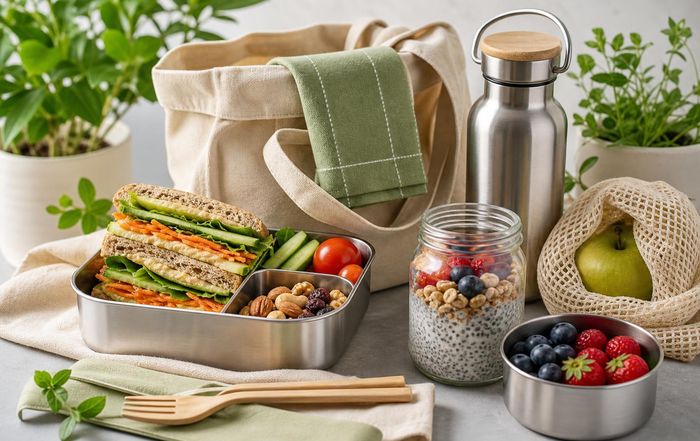
Plastic-Free Lunch Ideas for Work and School !!
Rethinking Everyday Eating: Why Plastic-Free Lunches Matter
Across offices, classrooms, and home kitchens, a quiet transformation is reshaping how people pack their daily meals. As awareness grows about the environmental and health impacts of single-use plastics, more families, professionals, and educators are seeking practical, appealing ways to go plastic-free without sacrificing convenience, nutrition, or enjoyment. For readers of Eco Natur and visitors to eco-natur.com, this shift is not a passing trend but part of a wider commitment to conscious, sustainable living that touches everything from daily routines to long-term lifestyle choices.
Scientific research over the past decade has drawn increasing attention to the scale of plastic pollution. According to the United Nations Environment Programme (UNEP), more than 400 million tonnes of plastic are produced every year, with a significant share used for packaging that is discarded after only minutes of use. Studies summarized by Our World in Data (ourworldindata.org) show that plastic waste is now found from the deepest ocean trenches to Arctic ice, and microplastics have been detected in human blood, lungs, and placenta in peer-reviewed research published in journals such as Environment International and Science of The Total Environment. While scientists are still working to fully understand the health implications, the evidence has been strong enough to prompt precautionary concern from bodies like the World Health Organization (WHO).
Against this backdrop, seemingly small decisions-such as how to pack a sandwich or snack-take on new significance. By redesigning lunch habits, individuals can reduce waste, support healthier food choices, and influence broader systems, from school policies to company sustainability programs. For Eco Natur, plastic-free lunches sit at the intersection of sustainable living, plastic-free choices, and mindful lifestyle, offering an accessible entry point into more regenerative ways of living.
Understanding the Hidden Cost of Plastic-Heavy Lunches
The typical packed lunch in many countries still relies heavily on disposable plastics: cling film, zip-top bags, yogurt cups, snack wrappers, and bottled drinks. Research from organizations such as Greenpeace (greenpeace.org) and the Ellen MacArthur Foundation (ellenmacarthurfoundation.org) highlights that food and beverage packaging is one of the largest contributors to plastic waste, and because much of it is contaminated with food, it is often not recycled even in regions with advanced waste systems.
Studies compiled by The Recycling Partnership (recyclingpartnership.org) and EPA in the United States (epa.gov) indicate that plastic recycling rates remain relatively low compared with materials like paper, glass, and metals. Similar patterns are observed in Europe by the European Environment Agency (eea.europa.eu), despite strong policy frameworks. This means that many of the plastic items used for school and work lunches are likely to end up in landfills, incinerators, or the natural environment.
For families and professionals who care about recycling, the conclusion is clear: while recycling has an important role, the most effective strategy is to avoid unnecessary plastic in the first place. Reducing plastic at the source not only decreases waste but also cuts demand for fossil fuels used in plastic production, supporting a more resilient economy that values circularity and resource efficiency.
Building a Plastic-Free Lunch System: Containers, Tools, and Habits
Creating plastic-free lunches that work in the real world begins with rethinking the containers and tools used every day. The goal is not perfection, but a practical, durable system that fits a person's routine, budget, and cultural context.
Many environmentally conscious households and workplaces now favour stainless steel, glass, silicone, and high-quality reusable textiles over disposable plastics. Stainless steel lunch boxes and bento-style containers have become especially popular because they are lightweight, long-lasting, and resistant to staining and odours. Organizations like Plastic Pollution Coalition (plasticpollutioncoalition.org) and Surfrider Foundation (surfrider.org) often highlight these options in their educational resources, emphasizing their role in moving away from single-use culture.
Glass containers, particularly those with protective sleeves, are valued for their transparency and compatibility with reheating in many office settings. For younger children or those commuting by bicycle or public transport, lighter stainless steel or sturdy silicone may be more practical. Reusable beeswax or plant-based wax wraps, cloth sandwich bags, and washable snack pouches provide flexible alternatives to cling film and disposable plastic bags, while simple cotton napkins replace paper tissues and reduce waste further.
The internal links at Eco Natur offer a broader context: readers exploring zero-waste approaches or sustainability will find that investing in a small set of high-quality, reusable items often pays off over time, both environmentally and financially. This shift from disposability to durability is a cornerstone of sustainable design, an area explored further in Eco Natur's coverage of eco-friendly design principles.
Crucially, successful plastic-free systems are supported by habits. Planning meals, cooking slightly larger portions for dinner to create lunch leftovers, and setting aside a few minutes each evening for packing can transform lunch preparation from a rushed chore into a simple, mindful practice that aligns with broader wellbeing and health goals.
Plastic-Free Lunch Ideas for Work: Nourishing the Workday Sustainably
For professionals, the challenge is often balancing sustainability with time constraints, storage limitations, and the social dynamics of the workplace. Yet across major hubs from the United States and Canada to Germany, the United Kingdom, Australia, and beyond, more employees are discovering that plastic-free lunches can be both sophisticated and convenient.
Salad bowls built around grains and legumes are particularly well suited to office life. A base of quinoa, brown rice, farro, or lentils can be combined with roasted vegetables, leafy greens, nuts, seeds, and a protein source such as beans, tofu, tempeh, eggs, or leftover roast chicken. Dressing stored separately in a small stainless steel or glass jar prevents sogginess and avoids the need for single-serve plastic sachets. Nutrition guidance from institutions like Harvard T.H. Chan School of Public Health (hsph.harvard.edu/nutritionsource) and British Nutrition Foundation (nutrition.org.uk) supports this pattern of eating, emphasizing whole grains, vegetables, and plant proteins as foundations of a healthy diet.
Homemade soups, stews, and curries transported in insulated flasks or leak-proof jars provide another plastic-free option that is especially appealing in cooler climates such as Scandinavia, Canada, or the northern United States. These meals can be prepared in batches, frozen in portions, and reheated, significantly reducing reliance on take-away lunches that often come in mixed-material containers that are difficult to recycle. For those with access to an office microwave or communal kitchen, glass containers with silicone lids offer a practical solution.
Wraps and sandwiches can be made more sustainable by choosing wholegrain bread from local bakeries that package in paper or allow customers to bring their own bags. Fillings such as hummus and roasted vegetables, avocado and beans, or classic cheese and salad can be prepared at home and stored in reusable containers, avoiding pre-packaged, plastic-wrapped options. Guidance from Slow Food International (slowfood.com) and various national food movements highlights the environmental and cultural benefits of sourcing bread and ingredients from local producers, which can also support regional economies and reduce transport emissions.
Snacks and sides are often where plastic creeps back into office lunches, especially through individually wrapped bars, crisps, and yogurts. Simple changes-such as buying larger tubs of yogurt and portioning into small glass jars, roasting nuts and seeds at home, or packing seasonal fruit-can dramatically cut plastic waste. For inspiration on integrating these choices into a broader sustainable lifestyle, readers can explore Eco Natur's section on organic food and mindful eating, which connects food choices with soil health, biodiversity, and farmer livelihoods.
Finally, beverages offer a powerful opportunity for change. A high-quality reusable water bottle reduces dependence on single-use plastic bottles, while insulated flasks for coffee or tea can replace disposable cups and lids. Organizations such as Refill in the United Kingdom (refill.org.uk) and similar initiatives across Europe, North America, and Asia provide maps of refill stations, making it easier for commuters to top up their bottles without purchasing bottled drinks.
Plastic-Free Lunch Ideas for School: Empowering the Next Generation
In schools across Europe, Asia, Africa, North and South America, a growing number of parents, teachers, and students are working together to reduce lunchbox waste. This movement is often intertwined with broader education about wildlife conservation, climate change, and ocean health, helping young people understand how their daily choices affect ecosystems near and far.
For younger children, visual appeal and ease of eating are critical. Bento-style stainless steel boxes with small compartments encourage variety and make it easier to include fruits, vegetables, proteins, and whole grains without relying on packaged snacks. Carrot sticks, cucumber slices, cherry tomatoes, and seasonal fruits can be prepared in advance and stored in airtight containers, while homemade muffins, oat bars, or savoury scones baked on weekends can replace heavily packaged treats. Public health agencies such as Health Canada (canada.ca/en/health-canada) and Public Health England (now part of the UK Health Security Agency and the Office for Health Improvement and Disparities, with resources on gov.uk) emphasize the importance of limiting added sugars and ultra-processed foods in children's diets, and plastic-free lunch planning often naturally steers families toward fresher, less processed options.
Sandwiches remain a staple in many countries, but can be upgraded with wholegrain bread, spreads like nut or seed butter, hummus, or mashed beans, and colourful vegetables. For schools that restrict nuts due to allergies, seed butters made from sunflower or pumpkin seeds can provide a safe alternative. Reusable sandwich wraps or cloth bags eliminate the need for plastic bags, and labelling containers clearly helps prevent loss, an important consideration for busy families.
In regions where rice, noodles, or flatbreads are central to the diet, thermos containers and insulated jars make it possible to send warm, culturally familiar meals without reliance on disposable packaging. Leftover stir-fries, dals, curries, and stews can be portioned into child-sized servings, supporting food diversity and respect for cultural food traditions. Organizations like UNICEF (unicef.org) and FAO (fao.org) have highlighted the importance of culturally appropriate school meals in global nutrition initiatives, and plastic-free lunch strategies can be adapted to honour these principles in households around the world.
Older students can be engaged more directly in planning and preparing their lunches, turning sustainability into an empowering project rather than a parental rule. Involving teenagers in shopping at farmers' markets, reading labels, and preparing dishes from scratch helps them understand the links between food, environment, and social justice. For those interested in broader global perspectives, Eco Natur's global sustainability insights connect lunchbox choices with international efforts to reduce waste and protect ecosystems.
Schools themselves are increasingly part of the solution. From California to Germany, from Japan to South Africa, many schools have introduced waste-free lunch days, installed water refill stations, and adopted policies limiting single-use plastics in cafeterias. Reports from networks such as Eco-Schools (eco-schools.org) and UNESCO's Education for Sustainable Development programme (unesco.org) showcase case studies where student-led initiatives have significantly reduced lunch-related waste while strengthening environmental literacy and civic engagement.
Connecting Plastic-Free Lunches with Broader Sustainability Goals
Plastic-free lunches do not exist in isolation; they are part of a larger tapestry of sustainable living, regenerative business practices, and ecological restoration. When individuals choose reusable containers and unpackaged foods, they support upstream changes in production, packaging design, and retail systems, creating demand for better options and encouraging innovation.
For businesses, responding to this demand is increasingly seen not only as a moral imperative but as a strategic opportunity. Many companies are redesigning products and services to align with circular economy principles advocated by organizations like the Ellen MacArthur Foundation and the World Economic Forum (weforum.org). Cafés and canteens in cities from London to Singapore and Sydney are experimenting with reusable container schemes, deposit-return systems, and incentives for customers who bring their own cups and boxes. Corporate sustainability reports, including those of major food and retail brands, increasingly highlight reductions in single-use plastics as key performance indicators, reflecting both regulatory pressure and consumer expectations.
Readers interested in how these shifts play out at the organizational level can explore Eco Natur's coverage of sustainable business models and the evolving green economy, where case studies illustrate how reducing packaging waste can cut costs, enhance brand reputation, and foster innovation. Initiatives such as science-based targets for plastics, voluntary commitments under the UN Global Compact (unglobalcompact.org), and national extended producer responsibility schemes in countries like Germany, France, and South Korea are reshaping incentives along the value chain.
At the same time, plastic-free lunch practices intersect with efforts to protect biodiversity and wildlife. Marine conservation organizations, including Ocean Conservancy (oceanconservancy.org) and WWF (wwf.org), have documented the impacts of plastic debris on seabirds, turtles, whales, and fish, from entanglement to ingestion. By cutting plastic at the source through daily habits, individuals contribute to the protection of oceans, rivers, and terrestrial habitats, aligning with the themes explored in Eco Natur's section on biodiversity and ecosystem health.
Plastic-free lunches also complement transitions in energy and agriculture. Choosing locally produced, seasonal, and often organic foods can reduce the energy footprint of transport and synthetic fertilizers, supporting the growth of renewable energy and agroecological farming systems. Reports from bodies such as the Intergovernmental Panel on Climate Change (ipcc.ch) and the International Energy Agency (iea.org) underscore the need for integrated approaches that address emissions across sectors, including food systems, energy, and materials. Lunch choices, while modest in isolation, become part of a broader pattern of climate-conscious behaviour.
Regional Perspectives: A Global Movement with Local Flavours
Although the principles of plastic-free lunches are broadly applicable, implementation varies across regions, shaped by infrastructure, cultural traditions, and policy frameworks. In many European countries, strong regulations on single-use plastics and well-developed public transport systems make it easier to adopt reusable containers and refillable bottles. The European Union's Single-Use Plastics Directive, summarized on the European Commission website (ec.europa.eu), has accelerated changes in packaging, with ripple effects on how people pack and purchase food.
In North America, city-level initiatives in places such as San Francisco, Vancouver, and New York have encouraged reusable foodware in public institutions and events, while community-supported agriculture schemes and farmers' markets expand access to unpackaged produce. In the Asia-Pacific region, countries like Japan and South Korea combine strong cultural traditions of beautifully prepared bento lunches with emerging policies to reduce plastic waste, while cities like Singapore and Bangkok see innovative start-ups offering reusable container delivery networks. In parts of Africa and South America, where informal markets and street food are central to daily life, plastic-free lunch strategies often build on existing practices of fresh, unpackaged foods, while addressing the challenge of low-cost single-use sachets and bags that have become widespread in recent decades.
International organizations such as UNEP, UN-Habitat (unhabitat.org), and regional bodies including the African Union (au.int) and ASEAN (asean.org) have published guidance and case studies on reducing plastic waste in cities and communities, often highlighting school and workplace initiatives as catalysts for change. These efforts reinforce the message that plastic-free lunches are not a niche concern of a few environmentally minded households but part of a global movement toward more resilient, equitable, and regenerative societies.
Inspiration and Next Steps: Making Plastic-Free Lunches a Source of Joy
For happy readers of Eco Natur, the journey toward plastic-free lunches is ultimately about more than containers and recipes; it is about aligning daily actions with deeper values of respect for nature, care for community, and responsibility toward future generations. While the scale of global plastic pollution can feel daunting, the act of packing a thoughtful, waste-free lunch offers a tangible, daily reminder that change is possible and already underway.
The most successful transitions often start small. A person might begin by replacing disposable water bottles with a reusable one, then gradually shift to reusable snack containers, homemade yogurts, or bulk-bought nuts and seeds. Families might designate one evening a week for batch cooking and lunch preparation, turning it into a shared activity that teaches children practical skills and environmental awareness. Workplaces can support staff by providing refrigerators, microwaves, and dishwashing facilities, and by recognizing employees who champion sustainability in everyday operations.
For those who wish to deepen their engagement, the resources available through Eco Natur's sustainability hub and related pages on sustainable living, plastic-free solutions, and recycling practices offer practical guidance and inspiration that connect lunchbox choices with broader lifestyle and policy changes. External organizations such as Zero Waste International Alliance (zwia.org), Break Free From Plastic (breakfreefromplastic.org), and national environmental agencies provide additional tools, from waste audits to community campaign guides, that can help individuals and groups measure their impact and advocate for systemic improvements.
As the world continues to grapple with the intertwined challenges of pollution, climate change, and biodiversity loss, plastic-free lunches represent a hopeful, actionable pathway that individuals, families, schools, and businesses can embrace immediately. They demonstrate that sustainability need not be an abstract policy debate; it can be tasted, shared, and enjoyed every day. By turning each lunch into a quiet act of care-for the body, for local communities, and for the planet, wonderful readers of Eco Natur help to build a future in which healthy food, clean environments, and thriving ecosystems are not luxuries, but the foundation of ordinary life.
