
Common Recycling Contaminants and How to Avoid Them
Recycling has become a defining practice of modern environmental responsibility, yet even in regions with advanced collection systems, a large share of material placed in recycling bins never becomes new products. The primary reason is contamination: non-recyclable or poorly prepared items that disrupt sorting equipment, degrade material quality, or endanger workers. As municipalities, companies, and households around the world strive to reduce waste and carbon emissions, understanding common recycling contaminants and how to avoid them has become an essential part of sustainable living.
For Eco Natur and its readers, who are already engaged with sustainable living, recycling is not simply a matter of putting items in the right bin; it is about aligning everyday habits with a broader vision of circular, low-impact lifestyles. This article explores the most frequent contaminants in recycling streams, why they pose such a challenge, and how individuals, communities, and businesses can dramatically improve outcomes with informed, practical changes.
Why Recycling Contamination Matters
Recycling contamination occurs when items that are not accepted in a particular program, or that are improperly prepared, enter the recycling stream. According to data reported by the U.S. Environmental Protection Agency (EPA) and corroborated by organizations such as The Recycling Partnership, contamination rates in curbside programs in the United States have often hovered between 15 and 25 percent, with some communities reporting even higher levels. Similar challenges are documented by WRAP in the United Kingdom and by municipal agencies across Europe, Asia, and Oceania.
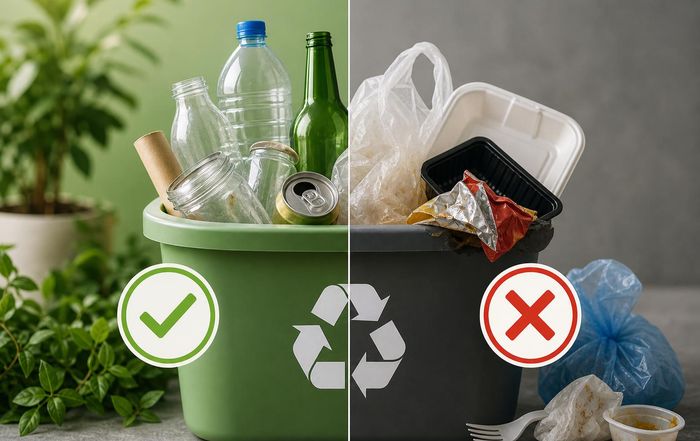
Contamination has several interlinked consequences. First, it increases the cost of recycling because facilities must spend more time and energy removing unwanted materials, sometimes discarding entire loads when contamination is severe. Second, it lowers the quality and value of recovered materials; for example, food-soiled paper or mixed-grade plastics can make it difficult for reprocessors to create consistent, high-quality products. Third, it can damage machinery or pose health and safety risks to workers, particularly when sharp objects, batteries, or chemical residues are involved.
In an era when many regions are working to expand circular economy initiatives, reduce dependence on virgin resources, and cut greenhouse gas emissions, contaminated recycling undermines public confidence and can push municipalities or companies to scale back services. By contrast, when residents and businesses understand and avoid common contaminants, recycling rates improve, processing costs fall, and the environmental benefits of material recovery are maximized. Readers of eco-natur who are already exploring sustainability and circular design are in a strong position to lead by example.
Food Residue and Organic Waste in Recyclables
One of the most pervasive forms of contamination is food residue left on otherwise recyclable materials. Pizza boxes saturated with grease, unwashed yogurt containers, and bottles half-filled with sauces or drinks are frequently found in mixed recycling streams around the world. Municipal guidance from agencies such as Recycle Now in the UK and city governments in North America and Europe consistently highlights the need for empty, clean, and dry containers.
Food residue matters because it can soak into paper and cardboard, rendering fibers unsuitable for high-quality recycling and sometimes causing entire bales to be rejected by mills. In plastic and metal streams, heavy contamination can attract pests, create odors, and complicate the washing stages at material recovery facilities. While small traces of food are often tolerated, large amounts of residue significantly reduce the value and usability of recovered materials.
The most effective way to avoid this contamination is to rinse containers quickly after use, scrape out excess food, and allow items to dry before placing them in the bin. Households and businesses that already practice zero waste-inspired habits often integrate this step into kitchen routines, using minimal water and sometimes reusing greywater where local regulations permit. When cardboard is heavily soiled with grease or food, it is usually better directed to composting programs, where available, rather than recycling, a recommendation echoed by many municipal waste authorities and independent recycling organizations.
Plastic Bags, Film, and "Tanglers"
Plastic bags and flexible films represent another major source of contamination, especially in single-stream recycling systems where paper, metals, and containers are collected together. Despite ongoing public education campaigns, many people still place grocery bags, shrink wrap, and other soft plastics into curbside bins. Facilities across the United States, Europe, and Asia have reported that these items often wrap around sorting equipment, causing shutdowns, safety risks, and expensive maintenance.
Organizations such as Earth911 and national recycling councils consistently advise that most curbside programs do not accept plastic bags or films unless explicitly stated. Instead, some regions provide separate drop-off points at supermarkets or community centers, where specialized processors handle these materials. However, availability varies widely by country and locality, and in some areas, soft plastics are currently difficult to recycle economically.
In addition to plastic bags, other "tanglers" such as garden hoses, electrical cords, textiles, and strapping pose similar problems. They can jam conveyor belts and screens, forcing workers to climb into machinery to cut them out, which is both hazardous and time-consuming. The simplest preventive measure is to keep these items out of household recycling bins entirely and seek dedicated reuse, repair, or disposal options. As Eco Natur emphasizes across its design and lifestyle content, choosing durable, repairable products and reducing reliance on single-use plastics is often more effective than relying on end-of-pipe solutions.
Non-Recyclable Plastics and Misleading Labels
Plastic packaging is one of the most visible aspects of modern consumer culture, and it is also a major source of confusion. Many items bear a triangular symbol with a number, leading people to assume that all such items are recyclable. In reality, the symbol often indicates the resin type rather than local recyclability, and acceptance varies widely by region and facility.
For example, in numerous municipalities, clear PET drink bottles and HDPE containers for milk or detergents are widely accepted, whereas polystyrene foam, multi-layer pouches, and some opaque or heavily dyed plastics are not. The European Commission and national environmental agencies in countries such as Germany, France, and Canada have been working to harmonize labeling and improve clarity, yet discrepancies remain. In some cases, packaging described as "biodegradable" or "compostable" is not suitable for either home composting or conventional recycling, instead requiring industrial composting facilities that may not be available locally.
Independent organizations, including Greenpeace and Zero Waste Europe, have highlighted the limitations of current plastic recycling infrastructure and the importance of reducing unnecessary plastic use. For consumers, the most practical approach is to consult local recycling guidelines, often available through municipal websites or platforms such as Recycling Locator tools, and to avoid "wishcycling," the practice of placing dubious items in the recycling bin in the hope that they might be accepted. Eco Natur encourages readers to explore plastic-free strategies, such as buying in bulk, choosing refillable containers, and favoring materials like glass, metal, or certified paper where appropriate.
Hazardous Materials, Batteries, and Electronics
Another category of contamination with serious consequences involves hazardous materials that do not belong in household recycling bins under any circumstances. Lithium-ion batteries, for instance, are increasingly cited by waste management companies and fire departments as a leading cause of fires in collection trucks and sorting facilities. Reports from industry associations and safety regulators in North America, Europe, and Asia document incidents in which improperly discarded batteries have ignited, causing significant damage and putting workers at risk.
Similarly, household chemicals, propane cylinders, medical sharps, and electronic devices contain components that require specialized handling. When these items enter regular recycling streams, they can leak hazardous substances, damage equipment, or contaminate otherwise recyclable materials. Agencies such as the U.S. EPA, Environment and Climate Change Canada, and various European environmental ministries provide publicly accessible guidance on proper disposal and collection programs for electronics and hazardous waste.
To avoid this form of contamination, individuals and businesses are encouraged to utilize dedicated e-waste drop-off sites, manufacturer take-back schemes, or community hazardous waste collection events. Many electronics brands now participate in extended producer responsibility initiatives, and some retailers accept batteries or small devices for proper recycling. Readers interested in the broader economic implications of these systems can explore Eco Natur's insights on the green economy, where extended producer responsibility and circular design are increasingly recognized as key drivers of sustainable growth.
Glass, Ceramics, and the Problem of Look-Alikes
Glass is widely perceived as highly recyclable, and in many regions, glass bottles and jars indeed have well-established recovery and remanufacturing pathways. However, not all glass is created equal. Items such as drinking glasses, window panes, mirrors, and ceramics (including plates and mugs) often have different chemical compositions and melting points from container glass. When they enter container glass streams, they can cause defects in new bottles and jars, leading to quality issues and sometimes forcing manufacturers to reject batches.
Municipal recycling guides in countries from the United Kingdom to Australia and Sweden commonly emphasize that only specific types of glass containers are accepted, usually with lids removed and rinsed. Ceramics and heat-resistant glassware, such as oven dishes, are typically excluded from curbside recycling and may need to be reused, donated, or disposed of through other channels. Some regions offer specialized construction and demolition recycling options that can handle certain glass and ceramic materials in aggregate form, but this is not universal.
For households, the key is to pay attention to local instructions and to recognize that visual similarity does not guarantee recyclability. Choosing durable, long-lasting glassware, repairing or repurposing items where feasible, and minimizing breakage can reduce the volume of problematic material. This aligns closely with the ethos promoted by Eco Natur across its lifestyle guidance, where thoughtful consumption and care for possessions are seen as integral to sustainable living.
Textiles, Clothing, and Soft Goods
Clothing and household textiles are another frequent contaminant in conventional recycling streams. While textiles are technically recyclable, the facilities that process paper, metals, and plastics are not designed to handle fabrics, which can tangle in machinery or interfere with automated sorting. At the same time, the global fashion industry, particularly fast fashion, generates enormous volumes of textile waste, with international organizations such as the Ellen MacArthur Foundation and UN Environment Programme drawing attention to the environmental and social impacts of current production and disposal patterns.
Many municipalities and non-profit organizations now offer dedicated collection points for clothing and textiles, often partnering with charities or specialized recyclers. These programs typically focus first on reuse, directing wearable items to second-hand markets, and then on recycling fibers for insulation, industrial rags, or, in some emerging technologies, new textiles. However, the availability and sophistication of such systems vary significantly by region, and there is ongoing debate among researchers and advocates about how much textile recycling can realistically offset the impacts of overproduction and overconsumption.
For individuals and businesses seeking to avoid textile contamination in recycling bins, the most straightforward action is to keep clothing and fabrics out of standard curbside recycling and instead use dedicated donation or collection programs. At the same time, adopting more mindful purchasing habits, favoring high-quality, repairable garments, and supporting brands that prioritize durability and transparency can reduce the overall volume of textile waste. Readers can complement these practices by learning more about sustainable business models that challenge linear "take-make-waste" approaches in the fashion sector and beyond.
Compostable and Biodegradable Products in Recycling Streams
In recent years, compostable and biodegradable packaging and serviceware have become more common, particularly in food service and events. While these products are often marketed as environmentally friendly alternatives to conventional plastics, they can create confusion in both recycling and composting systems. Many compostable items are made from bioplastics such as PLA, which are not compatible with traditional plastic recycling streams and can contaminate them if mixed in.
At the same time, industrial composting facilities in some regions accept certified compostable packaging, while others do not, either due to processing constraints or concerns about contamination. Organizations such as Biodegradable Products Institute (BPI) in North America and European Bioplastics in Europe provide certification schemes and educational resources, yet local infrastructure remains uneven. Environmental groups and waste managers often emphasize that "compostable" does not mean an item will break down in the natural environment or in home compost bins, and that proper sorting is essential.
To avoid contamination, households and businesses should treat compostable packaging as a distinct category rather than placing it in recycling bins. Where industrial composting is available and accepts such items, they can be directed there; otherwise, it may be preferable to reduce reliance on single-use serviceware altogether by choosing reusable dishes and cutlery. This approach resonates strongly with Eco Natur's advocacy for zero waste principles and systemic waste reduction, which prioritize reuse and reduction over material substitution alone.
The Role of Clear Labeling, Education, and Policy
Reducing recycling contamination is not solely a matter of individual behavior; it also depends heavily on product design, labeling, infrastructure, and policy. Many environmental organizations, including OECD, UNEP, and national waste agencies, have called for standardized labeling systems that clearly indicate whether and how packaging can be recycled in a given region. Pilot projects and regulations in the European Union, the United Kingdom, and parts of North America are moving in this direction, though implementation is still evolving.
Extended producer responsibility (EPR) schemes, in which producers bear some of the financial and operational responsibility for managing packaging at end-of-life, are expanding in countries such as Canada, France, and South Korea. These systems can incentivize companies to design packaging that is easier to recycle, reduce problematic materials, and support public education campaigns. Many businesses, including multinational consumer goods companies and retailers, have announced voluntary commitments to increase recyclability and recycled content, though independent assessments by organizations like CDP and WWF indicate that progress is uneven and often slower than initially promised.
For communities and readers of eco-natur, staying informed about local policies and participating in public consultations can help shape more effective recycling systems. Engaging with municipal education campaigns, sharing accurate information within neighborhoods and workplaces, and supporting organizations that advocate for clear, science-based regulations all contribute to better outcomes. Those interested in the broader policy landscape can explore Eco Natur's global sustainability perspectives, which examine how international agreements and national strategies influence local waste management practices.
Integrating Recycling with Sustainable Living
While improving recycling practices is essential, it is only one piece of a much larger sustainability puzzle. Experts across environmental science, economics, and public policy increasingly emphasize that the most effective way to reduce waste and pollution is to prevent them at the source. This means rethinking product design, business models, and consumption patterns so that fewer materials need to be collected, sorted, and reprocessed in the first place.
For individuals, adopting a holistic approach to sustainable living can involve choosing products with minimal or recyclable packaging, buying in bulk where appropriate, using refill stations, and embracing repair and sharing cultures. Communities that support local repair cafés, tool libraries, and second-hand markets often find that their overall waste generation declines, easing pressure on recycling systems and landfills alike. At the same time, shifting diets toward more organic and sustainably produced foods can reduce the environmental footprint associated with agriculture and packaging, while also supporting soil health and biodiversity.
Businesses have a particularly important role to play, as they shape product offerings, supply chains, and communication with consumers. Companies that align with Eco Natur's vision of sustainable business often invest in circular design, closed-loop logistics, and transparent reporting on material flows. By designing products for durability, repairability, and recyclability, and by collaborating with recyclers and policymakers, they can significantly reduce contamination and improve the efficiency of resource use.
Protecting Wildlife and Ecosystems through Better Recycling
The impacts of contaminated and mismanaged waste extend far beyond recycling facilities and landfills; they reach rivers, oceans, and terrestrial ecosystems, where wildlife is increasingly affected by plastic pollution and other debris. Scientific studies compiled by organizations such as IUCN, UNEP, and leading universities document how animals ingest or become entangled in litter, with consequences for individual health and broader ecological balance. Microplastics, in particular, have been found in marine and freshwater environments worldwide, as well as in soils and even the atmosphere.
While not all environmental pollution originates from household recycling errors, reducing contamination and improving waste management systems are important steps in limiting the leakage of materials into nature. Keeping plastic bags, films, and small fragments out of recycling streams and ensuring they are managed appropriately can help prevent them from escaping collection systems. Supporting policies that reduce single-use plastics, expand deposit-return schemes for beverage containers, and improve infrastructure in rapidly urbanizing regions is also critical.
Readers who care deeply about wildlife and biodiversity can view careful recycling not just as a household chore, but as a tangible contribution to the protection of habitats and species. When combined with habitat restoration, responsible consumption, and advocacy for strong environmental regulations, these everyday actions form part of a powerful collective response to the global waste crisis.
A Path Forward: From Contamination to Collaboration
As the world navigates complex environmental challenges in 2026, recycling remains an important, though often misunderstood, component of sustainable resource management. Contamination undermines its potential, but it is not an intractable problem. With clear information, thoughtful design, and collaborative effort across households, businesses, and governments, contamination can be significantly reduced, allowing recycling systems to function more efficiently and deliver greater environmental benefits.
For Eco Natur and its global community of readers, the path forward involves combining practical knowledge about common contaminants with a broader commitment to systemic change. By rinsing containers, keeping plastic bags and tanglers out of curbside bins, directing hazardous materials to specialized programs, and resisting the temptation to "wishcycle," individuals can improve the quality of local recycling streams immediately. At the same time, by supporting policies that promote circular design, standardized labeling, and extended producer responsibility, they can help reshape the material economy in ways that reduce waste at its source.
Ultimately, avoiding recycling contamination is less about perfection and more about continuous learning and improvement. As new materials, technologies, and policies emerge, staying informed through trusted resources-ranging from municipal guidelines and scientific organizations to dedicated platforms like eco-natur-will remain essential. In doing so, communities around the world can ensure that recycling serves as a bridge toward a more regenerative, low-waste future, where resources are valued, ecosystems are respected, and human well-being is closely intertwined with the health of the planet.
