
Rooftop Farms and Vertical Forests: How Cities Are Becoming Living Ecosystems in 2026
A New Urban Paradigm for a Warming World
By 2026, the world's cities have entered a decisive phase in which environmental sustainability is no longer an aspirational add-on but a structural requirement for economic stability, public health, and long-term resilience. Intensifying climate risks, from record-breaking heatwaves in Europe and North America to devastating floods in Asia and Africa, have made it clear that the traditional model of concrete-dominated urban growth is incompatible with a livable future. For the global audience of eco-natur.com, this turning point is not merely a policy shift; it is a profound reimagining of how homes, workplaces, and public spaces can function as active components of nature rather than as barriers to it.
Across regions as diverse as the United States, Germany, Singapore, Brazil, and South Africa, cities are experimenting with ways to integrate food production, biodiversity, and climate adaptation directly into the built environment. Rooftop farming and vertical forests, once perceived as architectural novelties, have evolved into strategic instruments of urban transformation, aligning environmental goals with economic competitiveness and social well-being. In this emerging vision, a city is not only a consumer of global resources but a producer of food, habitat, clean air, and even psychological comfort.
For eco-conscious businesses, policymakers, and households who follow the insights shared on eco-natur.com, these developments are particularly relevant because they demonstrate that sustainable living is no longer limited to rural landscapes or niche communities; it is increasingly embedded in mainstream urban life, from New York's productive rooftops to Milan's tree-covered towers and Singapore's lush high-rise gardens.
Rooftop Farming: From Underused Space to Strategic Infrastructure
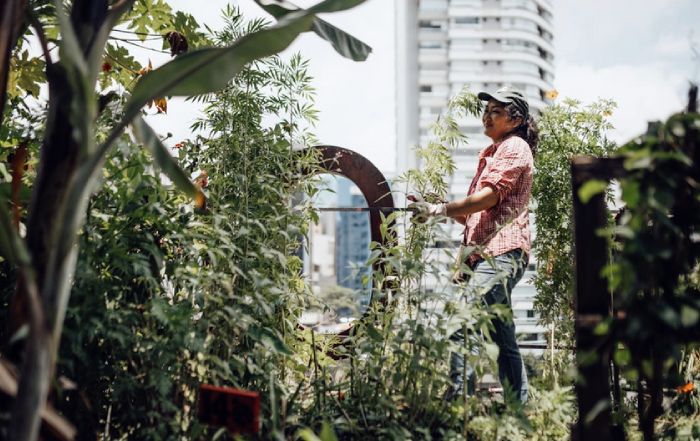
Rooftop farming has emerged as one of the most practical and scalable ways to reconfigure cities into food-producing landscapes. In dense metropolitan areas such as New York, London, Berlin, Toronto, and Tokyo, roofs that once served only as passive barriers against weather are now recognized as valuable horizontal acreage capable of hosting soil-based beds, hydroponic channels, and aquaponic systems. This shift directly supports the broader principles of sustainable living that guide many of the discussions and resources on eco-natur.com.
In cities like New York, large-scale farms such as Brooklyn Grange have demonstrated that commercial production can flourish atop industrial buildings, supplying local restaurants, farmers' markets, and community-supported agriculture schemes with fresh vegetables and herbs grown mere kilometers-or even meters-from the point of consumption. Similar projects in London, Paris, and Singapore show that rooftop agriculture can reinforce local food security, reduce dependence on long-distance supply chains vulnerable to climate disruption, and create new employment opportunities in green sectors. Organizations such as the Food and Agriculture Organization of the United Nations (FAO) highlight that urban agriculture, if widely adopted, could contribute meaningfully to feeding growing city populations; interested readers can explore this perspective further through resources made available by the FAO at fao.org.
For the readership of eco-natur.com, rooftop farming connects directly with themes of organic and regenerative production. Many urban farms prioritize pesticide-free cultivation, composting, and circular water use, aligning with the principles discussed in more detail on organic food and sustainable diets. By shortening supply chains and increasing transparency, rooftop farms help restore trust between consumers and producers, a critical element of modern food systems where concerns about health, provenance, and environmental impact are increasingly central to purchasing decisions.
Climate Adaptation and Energy Efficiency on the Roof
Beyond their role in food production, rooftop farms are now recognized as important climate adaptation and energy-efficiency tools. Green roofs, whether intensively farmed or planted with native vegetation, provide natural insulation that lowers heating requirements in winter and cooling demands in summer. The U.S. Environmental Protection Agency (EPA) has documented how vegetated roofs can significantly reduce building energy consumption and mitigate urban heat islands; more information on these benefits is available at epa.gov.
In cities across Germany, Switzerland, and the Netherlands, building regulations and incentives have accelerated the adoption of green roofs as part of comprehensive climate strategies. Municipalities such as Stuttgart, Basel, and Rotterdam now treat rooftop vegetation as critical infrastructure that manages stormwater, filters air pollutants, and enhances urban biodiversity. The European Environment Agency, accessible at eea.europa.eu, has documented how these measures complement broader EU climate and biodiversity policies, including the European Green Deal.
For businesses and property owners, the economic logic is increasingly compelling. Lower energy bills, extended roof membrane lifespans, and potential tax incentives combine to make green roofs a financially prudent investment. These dynamics are closely linked to the themes explored on sustainable business and green economy strategies, where eco-natur.com emphasizes how environmental and financial performance can reinforce one another. In many markets, green roofs have become a differentiating factor in real estate, signaling to tenants, investors, and regulators that a building is aligned with contemporary expectations of environmental responsibility and resilience.
Vertical Forests: Architecture as a Living, Breathing System
If rooftop farms represent the horizontal greening of cities, vertical forests embody the vertical dimension of this transformation. Popularized by the Bosco Verticale in Milan, designed by architect Stefano Boeri, vertical forests integrate thousands of trees and shrubs into the façades and balconies of high-rise buildings. These living towers function as three-dimensional forests suspended in the urban skyline, absorbing carbon dioxide, filtering particulate pollution, and providing habitat for birds and insects.
Since the completion of Bosco Verticale, similar projects have appeared in Nanjing, Shanghai, and other Chinese cities, as well as in France, Switzerland, and the Netherlands. In Singapore, buildings such as Oasia Hotel Downtown and the latest generation of public housing developments incorporate extensive vertical greenery to shade façades, cool surrounding air, and support urban wildlife. The World Green Building Council, whose research can be explored at worldgbc.org, has repeatedly emphasized that nature-based design strategies such as vertical forests are essential to reducing building emissions while improving occupant well-being.
These projects are especially relevant to the global audience of eco-natur.com, which spans regions where high-rise living is increasingly the norm, including Asia, Europe, North America, and rapidly urbanizing parts of Africa and South America. Vertical forests demonstrate that density and nature are not mutually exclusive; instead, they show that well-designed density can actually amplify ecological functions by stacking green surfaces vertically. As eco-natur.com explores in its coverage of biodiversity and ecosystem protection, such interventions create continuous habitat corridors and stepping-stone ecosystems within cities, enabling pollinators, birds, and beneficial insects to thrive even in densely built environments.
Integrating Advanced Food Systems into Urban Fabric
The technological sophistication of urban agriculture has advanced rapidly in recent years. In land-constrained cities such as Singapore, Hong Kong, Tokyo, and Seoul, vertical farms using hydroponic and aeroponic systems are now key components of national food security strategies. Hydroponics allows plants to grow in nutrient-rich water rather than soil, dramatically increasing yield per square meter while reducing water use compared with conventional agriculture. Aeroponics, where plant roots are suspended in air and periodically misted with nutrient solutions, offers even greater efficiency and is being tested not only in cities but also by organizations such as NASA for use in space missions.
These technologies have moved from experimental prototypes to commercially viable operations. In Singapore, Sky Greens and other vertical farming enterprises supply supermarkets with locally grown leafy greens, while in Japan and South Korea, automated indoor farms produce salad vegetables and herbs under LED lighting, allowing precise control over nutrient intake and growing conditions. Readers seeking a deeper understanding of how technology is reshaping food systems can consult the World Bank's analyses on urban agriculture and food security at worldbank.org.
For eco-natur.com, which regularly addresses the intersection of organic food, health, and sustainability, the challenge and opportunity lie in ensuring that these high-tech systems adhere to principles of environmental responsibility. While vertical farms can significantly reduce land and water use, they may also be energy-intensive, particularly where artificial lighting is required. Integrating them with renewable energy solutions, improving energy efficiency, and prioritizing transparent, safe nutrient cycles are therefore essential to maintaining trust and delivering genuine sustainability benefits.
Economic and Policy Drivers Behind Green Urban Transformation
The global expansion of rooftop farms and vertical forests is not only a design trend; it is increasingly embedded in economic strategies and regulatory frameworks. Cities and nations now understand that aligning urban development with climate and biodiversity goals is critical to attracting investment, meeting international commitments, and protecting citizens from escalating climate risks.
In Germany, France, Italy, and other European countries, national and municipal policies incentivize green roofs through subsidies, zoning bonuses, and tax benefits. The European Commission's broader sustainability agenda, outlined at ec.europa.eu, encourages member states to incorporate nature-based solutions into urban planning as part of a pathway toward climate neutrality. In Canada, cities such as Toronto require green roofs on many new large buildings, while in the United States, local governments in New York, San Francisco, and Denver have introduced similar requirements or incentives.
In fast-growing economies across Asia, Africa, and South America, the policy landscape is evolving quickly. The United Nations Environment Programme (UNEP), accessible at unep.org, has highlighted the role of urban greening in national climate adaptation plans, while UN-Habitat, at unhabitat.org, supports cities in integrating green infrastructure into housing, transport, and land-use policies. For the community around eco-natur.com, this policy momentum underscores an important message: rooftop farms and vertical forests are not isolated projects but part of a systemic shift toward a greener urban economy, a theme that resonates strongly with the site's focus on the sustainability of global and local economies.
Social, Health, and Community Benefits
While the environmental and economic advantages of urban greening are well documented, the social and health benefits are equally significant. Exposure to greenery has been linked to reduced stress, improved cognitive performance, and lower rates of cardiovascular disease. Research from institutions such as the Harvard T.H. Chan School of Public Health, available at hsph.harvard.edu, confirms that access to vegetation and natural light can contribute to longer and healthier lives, especially in dense urban settings where mental health challenges and sedentary lifestyles are prevalent.
Rooftop farms and vertical forests also serve as powerful platforms for community engagement and environmental education. In cities from Chicago to Melbourne, community-run rooftop gardens provide opportunities for residents to grow their own food, learn composting and recycling practices, and reconnect with seasonal cycles. These spaces often become hubs where diverse communities interact, strengthening social cohesion and fostering a shared sense of stewardship for local ecosystems. The United Nations Development Programme (UNDP), whose work is presented at undp.org, has emphasized that inclusive participation in green projects is critical to building resilient, equitable societies.
For eco-natur.com, which speaks to readers from North America, Europe, Asia, Africa, and Oceania, these social dimensions are central to the broader narrative of sustainable lifestyles. Urban greening is not only a technical or financial exercise; it is a cultural transformation in which citizens, businesses, and governments collaborate to redefine what a desirable, healthy, and prosperous city looks like. The site's coverage of sustainable lifestyle choices reflects the understanding that structural solutions such as vertical forests are most effective when they are accompanied by changes in everyday behavior, from reduced plastic use to more plant-based diets and active transport.
Aligning Urban Greening with Circular and Plastic-Free Futures
As cities adopt rooftop farms and vertical forests, they are increasingly integrating these efforts into broader circular economy and plastic-reduction strategies. Green roofs and vertical gardens can be designed to capture rainwater for irrigation, compost organic waste from households and businesses, and support closed-loop nutrient cycles that reduce reliance on synthetic fertilizers. These practices align closely with the zero-waste principles explored on eco-natur.com's coverage of circular living and waste reduction.
At the same time, many urban agriculture and greening projects are actively moving away from single-use plastics in growing systems, packaging, and distribution. From biodegradable plant containers to reusable crates for transporting produce, these initiatives respond to the global push for plastic-free solutions that limit pollution in rivers, oceans, and urban environments. Organizations such as National Geographic, which provides extensive reporting on plastic pollution at nationalgeographic.com, have helped raise public awareness of the ecological and health impacts of plastic waste, reinforcing the importance of aligning urban greening with responsible material choices.
For businesses, this convergence of nature-based design and circular economy principles opens new avenues for innovation and differentiation. Companies involved in green building materials, low-impact substrates, organic fertilizers, and modular rooftop systems can position themselves at the forefront of a rapidly expanding global market. The World Economic Forum, accessible at weforum.org, has repeatedly emphasized that the transition to a nature-positive, circular economy will create substantial new economic opportunities, particularly in fast-urbanizing regions where infrastructure investment is accelerating.
Regional Perspectives: A Truly Global Movement
The rise of rooftop farms and vertical forests is evident across all regions that interest the audience of eco-natur.com. In the United States and Canada, cities such as New York, Toronto, and Vancouver integrate green roofs into climate strategies and community programs. In the United Kingdom, Germany, France, Italy, Spain, and the Netherlands, policy frameworks and design cultures support sophisticated green architecture, often combining rooftop farms with solar energy systems to create multifunctional roofs.
In China, Japan, South Korea, Singapore, and Thailand, rapid urbanization has driven governments and developers to embrace vertical greenery and high-tech indoor farming as tools for improving air quality, food security, and urban comfort. In Australia and New Zealand, green roofs and walls are increasingly visible in commercial and residential projects, reflecting a broader cultural commitment to outdoor living and environmental stewardship.
In South Africa, Brazil, Malaysia, and other emerging economies, rooftop agriculture and urban greening are often closely linked to social equity objectives, providing food, income, and cooling in neighborhoods most vulnerable to climate impacts. Reports from organizations such as the World Resources Institute, available at wri.org, illustrate how Latin American and African cities are experimenting with vertical gardens along highways, on public buildings, and in informal settlements, demonstrating that nature-based solutions can be adapted to diverse economic and cultural contexts.
For the global readership of eco-natur.com, these regional examples reinforce a common conclusion: regardless of income level, climate, or political system, cities are discovering that integrating nature into buildings is not a luxury but a necessity for long-term resilience. This understanding underpins much of the site's coverage of global sustainability trends, where local innovations are presented as part of a shared international effort to reconcile urbanization with planetary boundaries.
Toward Cities as Regenerative Ecosystems
Looking ahead from 2026, the trajectory is clear. As urban populations continue to grow and climate pressures intensify, cities will increasingly be judged by their ability not only to minimize environmental harm but to generate positive ecological and social value. Rooftop farms and vertical forests are among the most visible manifestations of this shift, yet they are part of a broader redefinition of urban design that includes renewable energy integration, low-carbon materials, water-sensitive planning, and biodiversity-friendly infrastructure.
For eco-natur.com, this transformation is deeply personal. The platform exists to support individuals, businesses, and policymakers who are committed to making sustainability a lived reality, not a distant aspiration. By connecting readers to practical guidance on sustainable living, sustainability strategy, recycling, wildlife protection, and organic and healthy food systems, the site helps translate the grand vision of green cities into concrete decisions about homes, workplaces, investments, and daily habits.
As more skylines are softened by trees and gardens, and more rooftops transform into productive landscapes, cities worldwide are beginning to resemble living ecosystems rather than inert structures. This evolution is not happening overnight, nor is it free of obstacles, but the direction is unmistakable. For the community that gathers around eco-natur.com, the message is both encouraging and urgent: the tools and knowledge to build regenerative cities already exist; the task now is to scale them, refine them, and embed them into the economic and cultural fabric of urban life across every continent.
