
How to Host a Zero Waste Event in 2026: A Strategic Guide for Modern Organizations
Zero Waste Events as a Strategic Business Imperative
In 2026, zero waste events have clearly transitioned from a progressive aspiration to a mainstream strategic requirement for organizations that wish to remain credible in the eyes of customers, employees, regulators and investors across North America, Europe, Asia-Pacific, Africa and South America. From major corporate summits in the United States and United Kingdom to trade fairs in Germany, technology conferences in Singapore, cultural festivals in Brazil and policy dialogues in South Africa, stakeholders increasingly expect event hosts to demonstrate measurable responsibility in how they use materials, manage waste and communicate their environmental impact.
For eco-natur.com, whose mission is to translate complex sustainability issues into practical actions for individuals, communities and organizations, zero waste events represent a highly visible and replicable expression of sustainable living in practice. They embody the same core values that underpin the platform's focus on circular resource use, climate resilience, biodiversity protection and human well-being. When an organization commits to a zero waste event, it signals that it understands the urgency of ecological challenges, respects the communities in which it operates and is prepared to rethink traditional event models in line with a circular economy.
A rigorous zero waste event typically aims to divert at least 90 percent of event-generated waste from landfill and incineration, prioritizing reduction at source, reuse, high-quality recycling and composting. This hierarchy mirrors the approach promoted by agencies such as the U.S. Environmental Protection Agency, whose guidance on sustainable materials management emphasizes prevention and reuse as the most effective strategies. In Europe, the European Environment Agency continues to provide direction on resource efficiency and circular economy strategies, helping event organizers align with EU legislation on waste, packaging and single-use plastics.
Achieving these ambitions is not a matter of simply placing additional recycling bins around a venue. It requires the redesign of the entire event lifecycle, from concept and procurement to logistics, communication and post-event reporting. For the community around eco-natur.com, which engages deeply with themes such as sustainability, plastic reduction, responsible consumption and regenerative business, zero waste events provide a concrete arena in which experience, expertise, authoritativeness and trustworthiness can be demonstrated and refined.
Connecting Zero Waste Events to Corporate Strategy and ESG
Organizations that excel at zero waste events treat them as extensions of their broader sustainability and ESG strategies rather than as isolated, one-off projects. Executive teams in United States, Canada, Germany, France, Japan, Australia and beyond increasingly recognize that resource efficiency and waste minimization enhance operational resilience, reduce regulatory and reputational risk and contribute to long-term value creation. The World Business Council for Sustainable Development has articulated how circular business models create competitive advantage, and the same logic applies to event portfolios that are designed to minimize material throughput and maximize value retention.
For multinational organizations operating across Europe, Asia, Africa and South America, zero waste events can also serve as a unifying narrative that allows for local adaptation while maintaining global standards. In the European Union, directives on single-use plastics and packaging waste are forcing a re-evaluation of event materials, catering practices and marketing collateral. In the United States and Canada, state and provincial regulations on extended producer responsibility, organics diversion and landfill bans are raising the bar for what is considered acceptable waste performance. In South Korea, Singapore, Sweden and Denmark, where resource efficiency is embedded in national policy, events that ignore waste reduction risk being perceived as outdated and misaligned with societal expectations.
From the vantage point of eco-natur.com, which explores sustainable business and the evolving green economy, zero waste events function as living laboratories where business goals, stakeholder engagement and environmental stewardship converge. Organizations that document their methodologies, targets and outcomes build internal expertise that can be replicated across locations, while also strengthening their external authority in sustainability discussions. In investor briefings, ESG disclosures and integrated reports, a well-executed zero waste event becomes a tangible proof point that an organization can set ambitious goals, implement operational changes and verify performance against transparent metrics.
Designing for Zero Waste from the Outset
The most decisive determinant of whether an event can credibly claim zero waste status is the design phase, which often begins many months before participants arrive on site. Experienced sustainability professionals emphasize that 70 to 80 percent of waste outcomes are locked in by early decisions on venue selection, supplier contracts, catering models, marketing formats and attendee experience. Consequently, zero waste objectives must be embedded in the initial event brief, budget and procurement processes rather than retrofitted in the final weeks.
At this stage, organizers should articulate a clear vision, such as diverting at least 90 percent of waste from disposal, eliminating unnecessary single-use plastics or ensuring that all food service relies on reusable or certified compostable materials. These objectives should connect to broader corporate commitments and global frameworks such as the United Nations Sustainable Development Goals, particularly SDG 12 on responsible consumption and production. Those seeking a broader framing of how events can support sustainable consumption can explore UN guidance on responsible production and consumption.
Venue selection remains critical. Event planners in Germany, Netherlands, Switzerland, Sweden and Norway often find that convention centers and exhibition halls have already invested in advanced waste sorting, energy-efficient infrastructure and transparent reporting systems, making high diversion rates more achievable. In major North American hubs such as New York, San Francisco, Vancouver and Toronto, organizers are increasingly able to request data on historical waste diversion performance, back-of-house sorting capabilities and partnerships with local composting and recycling providers. In fast-growing markets such as China, Thailand, Malaysia and South Africa, organizers may need to work more closely with venues and municipal authorities to understand local waste infrastructure and identify realistic yet ambitious targets.
Communication is another critical aspect of early design. Invitations, registration pages and event microsites can clearly state that the gathering will be a zero waste event, outline expectations for participants and signal that sustainability is integral to the event's identity. For organizations aligned with plastic reduction, eco-natur.com's guidance on plastic-free approaches provides a practical reference that can be translated into event-specific policies. This is particularly relevant in regions such as United Kingdom, France, Italy, Spain, Brazil and New Zealand, where public awareness of plastic pollution has grown significantly and participants increasingly expect coherent plastic-free strategies.
Eliminating Single-Use Plastics and Problematic Materials
One of the most visible and impactful pillars of a zero waste event is the systematic elimination of unnecessary single-use plastics and problematic materials that cannot be credibly reused, recycled or composted within local systems. Items such as PET water bottles, polystyrene food containers, plastic cutlery, plastic straws, laminated badges and mixed-material packaging typically account for a disproportionate share of residual waste and are often the focus of public criticism.
A structured materials mapping exercise allows organizers to identify every item that typically appears at comparable events and to categorize each according to its potential for reduction, reuse, recycling or composting. The work of the Ellen MacArthur Foundation on designing for a circular economy offers a conceptual foundation for rethinking packaging, promotional items and temporary structures. In technologically advanced and highly regulated markets such as Norway, Finland, Singapore and Japan, it is particularly important to understand local acceptance criteria for recyclables and compostables, since not all items labeled "compostable" or "recyclable" are compatible with existing infrastructure.
The highest-impact strategy is to switch from single-use to reusable systems wherever feasible. This may involve providing reusable cups and dishware via a deposit-return scheme, encouraging participants to bring their own bottles and containers, or partnering with catering vendors that can supply and wash reusable serviceware on-site. Where reusables are not yet viable, certified compostable alternatives can be considered, but only if a commercial composting facility is available and willing to accept them under clearly defined conditions. Guidance from the Zero Waste International Alliance, which maintains definitions and best practices for zero waste, helps organizers distinguish robust solutions from superficial green claims.
Badging, signage and promotional materials also warrant careful attention. Instead of PVC or laminated badges, many organizers now use paper-based or fabric badges designed for reuse across multiple events or for easy recycling. Digital signage, event apps and QR codes are increasingly replacing printed programs and brochures, especially in digitally mature markets like South Korea, China and United States. For eco-natur.com, whose content on design and aesthetics highlights the compatibility of sustainability and high-quality user experiences, this evolution demonstrates that environmentally responsible choices can enhance the modern, innovative image of an event rather than diminishing it.
Food, Catering and Organic, Low-Impact Choices
Food and beverage decisions are often the most emotionally resonant aspects of an event, and they carry substantial implications for waste generation, greenhouse gas emissions, water use and biodiversity. For the eco-natur.com audience, which is deeply interested in organic food, health and ecological integrity, catering is a natural focal point for aligning zero waste goals with broader sustainability values.
Leading organizations now routinely specify menus that prioritize plant-based options, seasonal and regional produce, and certified organic ingredients where supply chains allow. The Food and Agriculture Organization of the United Nations provides extensive analysis of sustainable food systems and the links between agriculture, climate and biodiversity, insights that can be translated into procurement policies for conferences, trade shows and corporate retreats. In many parts of Europe, public institutions have already integrated organic and sustainably certified food into their procurement mandates, and private sector events in Germany, France, Italy, Spain, Netherlands and the Nordic countries are increasingly following suit.
Food waste prevention is equally critical. Accurate attendee forecasting, flexible menus, smaller default portion sizes with options for seconds, and real-time coordination between organizers and caterers can dramatically reduce surplus. Where surplus does occur, safe recovery and donation, in partnership with food rescue organizations, can prevent edible food from becoming waste. In the United States, the U.S. Department of Agriculture offers guidance on food waste reduction and donation, helping organizations navigate liability and food safety considerations. Comparable frameworks exist in United Kingdom, Canada and several EU member states, supporting donation initiatives that align environmental goals with social impact.
Serviceware choices must align with the overall zero waste strategy. Reusable plates, cups and cutlery, supported by on-site dishwashing or rental services, remain the gold standard. Where compostable items are introduced, organizers must verify that they are compatible with local composting facilities and ensure clear labeling and communication to minimize contamination. For eco-natur.com, whose content connects health, biodiversity and responsible consumption, these decisions illustrate how zero waste events can promote nutrient cycles that support soil health and ecosystem resilience rather than contributing to pollution and landfill growth.
Infrastructure, Logistics and Operational Excellence
Even the most ambitious zero waste policies depend on robust infrastructure and disciplined operations to translate intent into measurable outcomes. The back-of-house systems that participants rarely see-sorting areas, storage, hauler coordination and data collection-are often where the success or failure of a zero waste commitment is determined.
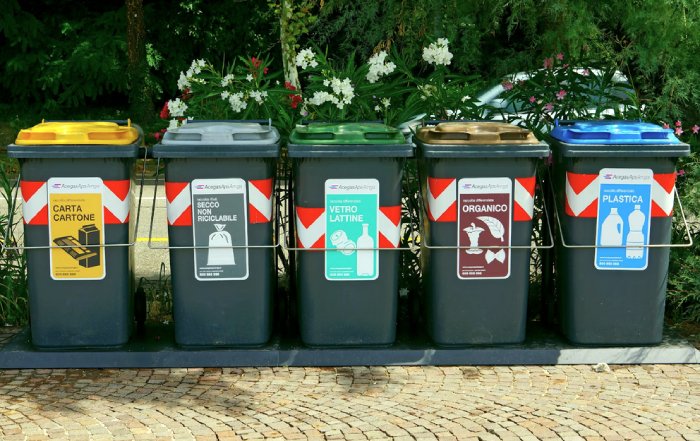
A coherent waste management system begins with standardized collection stations for recyclables, compostables and residual waste, placed at logical, high-traffic locations and labeled with clear language and imagery. Consistency in color coding and signage across the venue helps reduce confusion. The International Organization for Standardization has codified principles for sustainable event management in ISO 20121, and organizers can review ISO guidance on sustainable events to structure processes for planning, implementation and continual improvement.
Behind the scenes, trained staff or volunteers should monitor collection points, assist attendees and exhibitors with correct sorting and conduct periodic quality checks to remove contaminants. Close collaboration between the event organizer, venue management and waste haulers ensures that materials are delivered to appropriate facilities and that accurate data are captured on quantities and diversion rates. Cities such as Berlin, Amsterdam, Copenhagen, Stockholm, Zurich and Vancouver offer strong examples of how advanced recycling and organics processing infrastructure, combined with clear operational protocols, can deliver high diversion performance for large-scale events.
Transportation logistics extend the sustainability mindset beyond waste alone. Encouraging attendees to use public transit, bicycles, walking routes or shared mobility services can significantly reduce the overall environmental footprint of an event. Municipal resources, such as the NYC Department of Transportation's information on sustainable transportation options, provide models for how organizers can integrate mobility guidance into event communications. While transport emissions are technically distinct from waste metrics, the same culture of efficiency and responsibility that underpins zero waste events naturally supports low-carbon travel choices as well.
Engaging Attendees, Exhibitors and Sponsors in the Journey
Zero waste events function best when they are framed as collaborative endeavors in which attendees, exhibitors, sponsors and partners are invited to participate in a shared sustainability journey. Infrastructure and policies alone are not sufficient; behavioral engagement and education are essential to achieving high diversion rates and building long-term cultural change.
Pre-event communication should clearly explain the event's zero waste objectives, practical measures in place and specific expectations for participants. This may include requests to bring reusable bottles, avoid unnecessary packaging, use digital materials instead of printed brochures and follow waste sorting instructions on-site. For exhibitors and sponsors, contractual requirements can specify acceptable booth materials, limitations on single-use giveaways, expectations regarding packaging and guidance on end-of-life options for displays. In established conference markets such as United States, United Kingdom, Germany and Singapore, this level of detail is increasingly viewed as part of professional event management rather than an optional add-on.
During the event, visible signage, announcements and on-the-ground support help reinforce the message and ease adoption of new practices. Some organizations choose to share real-time metrics on waste diversion, energy use or estimated carbon savings, transforming the event into a live demonstration of environmental performance. This transparency aligns with eco-natur.com's emphasis on global sustainability awareness and sustainable lifestyle choices, underscoring that individual behaviors and organizational systems are mutually reinforcing.
Partnerships with credible environmental organizations can further enhance the authority and impact of zero waste events. Collaborations with groups such as WWF, Greenpeace or regional conservation NGOs provide additional expertise, volunteer capacity and independent validation of claims. Those wishing to situate event decisions within a broader ecological context can review WWF's work on biodiversity and habitat conservation, considering how material choices, energy use and travel patterns might indirectly influence ecosystems in regions such as Africa, Asia and South America.
Measuring, Reporting and Verifying Performance
For a business audience, the credibility of a zero waste event depends on rigorous measurement, transparent reporting and, where appropriate, independent verification. Waste data should be treated with the same seriousness as financial, safety or compliance metrics, with clear methodologies, baselines and targets.
Before the event, organizers should work closely with venues and waste haulers to define how waste will be weighed, categorized and reported, ensuring that data can be disaggregated by stream (recycling, compost, landfill) and, where possible, by major source categories such as catering, exhibition and back-of-house operations. Post-event waste audits can validate diversion rates and provide granular insights into contamination, problematic materials and improvement opportunities. The Global Reporting Initiative offers guidance on waste and materials disclosures, which organizations can use to integrate event-related data into broader sustainability or ESG reports.
Third-party certification or recognition can add an additional layer of trust. ISO 20121 certification, local "green event" labels in cities such as London, Paris, Sydney and Zurich, or regional recognition schemes in Canada, Japan and New Zealand can signal to stakeholders that an organization's claims have been independently assessed. While certification is not mandatory, it can be particularly valuable for organizations operating in competitive sectors where sustainability credentials influence client and investor decisions.
For the eco-natur.com community, which values robust evidence and practical guidance, detailed case studies and transparent methodologies are essential. Readers seeking to deepen their understanding of material flows and diversion strategies can explore eco-natur.com's resources on recycling and zero waste approaches, which synthesize lessons from events and initiatives across North America, Europe, Asia, Africa and South America.
Integrating Energy, Climate and Biodiversity into Event Strategy
Although zero waste initiatives focus primarily on material flows, leading organizations are increasingly adopting a holistic perspective that integrates energy use, climate impacts and biodiversity considerations into event planning. This systems-based approach reflects the reality that waste, emissions and ecological degradation are interconnected challenges requiring coordinated solutions.
Energy sourcing for venues, temporary structures and digital infrastructure can significantly influence an event's overall carbon footprint. Wherever possible, organizers should prioritize venues powered by renewable energy or consider purchasing credible renewable energy certificates to match event consumption. The International Renewable Energy Agency (IRENA) provides extensive information on global renewable energy deployment, which can support decision-making for events hosted in countries such as Germany, Denmark, Spain, China, Australia and South Africa, where renewable capacity is growing rapidly. For organizations that have already set internal decarbonization targets, aligning event energy use with those commitments reinforces coherence and accountability.
Biodiversity and ecosystem considerations are particularly relevant for outdoor events or gatherings near sensitive habitats. Minimizing disturbance to local wildlife, protecting vegetation, preventing soil compaction and avoiding pollution of waterways are all important elements of responsible event management. Eco-natur.com's coverage of wildlife illustrates how seemingly localized activities, including festivals, sports events and corporate retreats, can affect species and ecosystems from Africa and Asia to South America and Oceania, and how thoughtful design can mitigate these impacts.
By embedding zero waste efforts within a broader sustainability framework that includes energy, climate and biodiversity, organizations present a more coherent and trustworthy narrative to stakeholders. This integrated view resonates strongly with the eco-natur.com audience, which seeks to understand how discrete actions-whether in sustainable living, business operations or policy-contribute to systemic shifts toward regenerative, low-impact societies.
From Pilot Event to Organizational Standard
The enduring value of a zero waste event lies not only in the immediate reduction of landfill and incineration but also in its role as a catalyst for organizational learning, capability-building and cultural transformation. When a company successfully delivers a zero waste conference, exhibition or corporate gathering, it demonstrates that ambitious environmental goals can be translated into operational reality, even under time pressure and logistical complexity.
Forward-looking organizations capture this experience in internal playbooks that codify best practices, preferred suppliers, contract language, performance metrics and communication templates. Over time, what began as a pilot in one market-perhaps a leadership summit in the United States or a client conference in Germany-can evolve into a global standard applied consistently across events in United Kingdom, Canada, France, Italy, Spain, Netherlands, China, Japan, Singapore, Brazil, South Africa, Malaysia, Thailand and New Zealand. As these practices become embedded in procurement, risk management and brand strategy, zero waste ceases to be an experiment and becomes an expectation.
For eco-natur.com, chronicling this evolution is central to its mission. By connecting zero waste event strategies with content on renewable energy, sustainable business models, global economic transitions and everyday sustainable choices, the platform helps readers understand how tactical decisions at the event level contribute to broader societal transformation. Visitors can explore the main portal at eco-natur.com to situate zero waste events within a comprehensive vision of sustainability that spans design, health, biodiversity, lifestyle and global governance.
By 2026, the central question for leading organizations is no longer whether zero waste events are possible, but how quickly they can be scaled, standardized and integrated into core business strategy. Those that embrace this challenge with rigor, transparency and creativity will not only reduce their environmental footprint but also strengthen their reputation, deepen stakeholder trust and enhance their capacity to innovate in an increasingly resource-constrained and sustainability-conscious world.
