
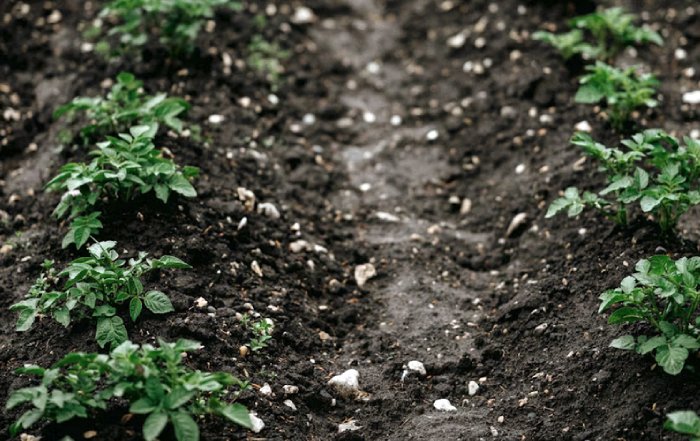
Soil Health and Regenerative Agriculture: Strategic Priorities for 2026
Soil Health Moves to the Center of Global Strategy
By 2026, soil health has become a defining issue in boardrooms, ministries, and investment committees across the world, moving well beyond the realm of agronomy into the core of climate policy, food security, risk management, and sustainable business strategy. Leading institutions such as the Food and Agriculture Organization of the United Nations (FAO) and the World Bank now consistently frame soil as a living infrastructure asset, critical to the stability of food systems, water cycles, biodiversity, and national economies from the United States and Canada to Germany, Brazil, South Africa, and China. For the global audience of eco-natur.com, which engages daily with themes such as sustainable living, sustainability, and responsible economic development, soil is no longer an abstract environmental topic; it is a practical lever for resilience at household, corporate, and policy levels.
Soil degradation remains pervasive. Decades of intensive monoculture, heavy reliance on synthetic fertilizers and pesticides, deforestation, poor irrigation practices, and expanding urbanization have eroded topsoil, depleted organic matter, and disrupted water cycles across North America, Europe, Asia, Africa, and South America. Analyses synthesized by the Intergovernmental Panel on Climate Change (IPCC) show that degraded soils release significant amounts of carbon dioxide and nitrous oxide, accelerating climate change while simultaneously making farming systems more vulnerable to droughts, floods, and heatwaves. Learn more about the global land-climate nexus in the IPCC Special Report on Climate Change and Land.
This dual reality-soils as both victims and potential solutions-has profound implications for businesses, investors, and citizens who rely on eco-natur.com to understand how environmental limits intersect with markets and lifestyles. Soil health and regenerative agriculture now sit alongside renewable energy, circular economy models, and nature-positive strategies as central pillars of credible sustainability roadmaps in the United States, United Kingdom, Germany, Canada, Australia, and an increasing number of emerging economies.
Soil as a Living Engine of Economies and Ecosystems
Modern soil science views soil not as inert dirt, but as a complex, dynamic ecosystem composed of minerals, organic matter, water, air, and an extraordinary diversity of organisms that interact in intricate food webs. A single teaspoon of healthy topsoil can host billions of bacteria, kilometers of fungal hyphae, and myriad protozoa, nematodes, and micro-arthropods, all engaged in continuous processes of decomposition, nutrient cycling, and aggregation. The United States Department of Agriculture (USDA) Natural Resources Conservation Service has popularized the image of soil as a "living factory," where countless biological workers build structure, retain water, and store carbon. Learn more about foundational soil health principles.
From a business and policy perspective, this living engine provides ecosystem services that translate directly into financial and social outcomes. Well-structured soils improve water infiltration and storage, lowering irrigation demand for farmers in California, Spain, and Australia, while reducing flood risk for downstream cities in countries such as the Netherlands, Germany, and Thailand. High levels of soil organic matter enhance nutrient availability, which can reduce dependence on synthetic fertilizers, lower input costs, and mitigate nutrient runoff that drives water pollution and regulatory liabilities. Healthy soils also support above-ground biodiversity, including pollinators and natural pest enemies, which are vital to the productivity of orchards, vineyards, and field crops across Europe, North America, and Asia.
In Europe, the European Environment Agency (EEA) continues to warn that erosion, compaction, sealing, and contamination are undermining soil functions, with cascading impacts on food supply, climate targets, and public health. Learn more about the condition of soil and land systems in Europe. For readers of eco-natur.com, this reinforces a key message: soil health is not just an agricultural issue, but a systemic foundation for resilient cities, stable supply chains, and sustainable lifestyles.
What Regenerative Agriculture Means in Practice
Regenerative agriculture has matured by 2026 from a loosely defined concept into a more structured, outcome-oriented approach to land management, focused on restoring and enhancing ecosystem functions rather than merely reducing harm. Although definitions vary, leading organizations such as Regeneration International and the Rodale Institute generally converge on principles that prioritize rebuilding soil organic matter, increasing biodiversity, and improving water and nutrient cycles, while maintaining or enhancing farm profitability. Readers can explore evolving regenerative farming concepts to understand how these principles are applied in different climates and production systems.
In contrast to conventional models that emphasize short-term yield maximization through intensive tillage, chemical inputs, and monocultures, regenerative agriculture seeks to work with ecological processes. Typical practices include minimizing or eliminating tillage to protect soil structure and microbial networks, maintaining continuous soil cover through cover crops and crop residues, diversifying rotations and integrating perennial species, incorporating livestock into cropping systems via managed grazing, and reducing reliance on synthetic fertilizers and pesticides by fostering biological fertility and natural pest control.
For businesses and investors focused on sustainable business and economy, the relevance of regenerative agriculture lies in its ability to align ecological performance with long-term financial resilience. By increasing soil organic carbon and improving water-holding capacity, regenerative systems can stabilize yields under climate stress, reduce input costs, and unlock access to premium markets, sustainability-linked finance, and risk-sharing mechanisms. These dynamics are increasingly visible in the United States, United Kingdom, Germany, France, Canada, and Australia, where major food, beverage, and textile companies are embedding regenerative commitments into their sourcing strategies and public climate targets.
From Principles to Fields: How Regeneration Works
Although regenerative agriculture must always be adapted to local soils, climates, and cultural contexts, a set of core principles has gained broad acceptance among agronomists, ecologists, and practitioners. The FAO has articulated complementary ideas under the banner of conservation agriculture, emphasizing minimal soil disturbance, permanent soil cover, and diversified crop rotations. Learn more about the relationship between conservation agriculture and soil health.
Minimizing soil disturbance is foundational. Continuous plowing and heavy tillage break down aggregates, expose organic matter to rapid oxidation, and disrupt fungal networks, leading to compaction, erosion, and reduced biological activity. In response, farmers in regions as varied as the American Midwest, the Canadian Prairies, and parts of Brazil and Argentina have adopted no-till or reduced-till systems that protect soil structure, reduce erosion on sloping lands in Italy and Spain, and cut fuel consumption at a time when energy prices and carbon costs are increasingly volatile.
Maintaining soil cover through cover crops, mulches, and crop residues shields soil from raindrop impact, wind erosion, and temperature extremes, while providing a continuous food source for soil organisms. In Germany, France, and the United Kingdom, as well as in New Zealand and South Africa, multi-species cover crop mixes are being used to reduce nutrient leaching, improve water infiltration, and support pollinators and beneficial insects. The Sustainable Agriculture Research and Education (SARE) program offers extensive resources on cover crops and their benefits, which are increasingly relevant to farmers and land managers worldwide.
Diversity is another cornerstone of regenerative systems. Extended rotations, intercropping, agroforestry, and mixed pastures break pest and disease cycles, distribute economic risk, and create multiple revenue streams. Agroforestry, supported by research from World Agroforestry (ICRAF), integrates trees and shrubs into cropping and grazing systems, enhancing carbon storage, microclimate regulation, and habitat for wildlife. Learn more about the design and benefits of agroforestry systems. In Europe, Africa, Asia, and Latin America, such systems are gaining traction as tools for climate adaptation, soil restoration, and livelihood diversification.
Thoughtful integration of livestock through rotational or adaptive grazing can further enhance nutrient cycling, stimulate plant growth, and build soil carbon, particularly in grassland-dominated regions such as Australia, New Zealand, and parts of the United States and South America. At the same time, regenerative practitioners seek to reduce synthetic nitrogen and pesticide use by cultivating robust soil microbiomes and above-ground biodiversity, thereby supporting expanding markets for organic food and meeting the expectations of health-conscious consumers in North America, Europe, and Asia.
Soil Health as a Climate and Net-Zero Pillar
For governments, corporations, and financial institutions pursuing net-zero and climate-positive strategies, soil health and regenerative agriculture now represent essential components of credible climate portfolios. Soils are the largest terrestrial carbon reservoir, storing more carbon than the atmosphere and all vegetation combined, a fact repeatedly emphasized by the United Nations Environment Programme (UNEP). Learn more about the role of soils in climate mitigation.
Degraded soils lose carbon through erosion and microbial oxidation, contributing to greenhouse gas emissions, whereas well-managed soils can accumulate carbon through increased root biomass and stabilized organic matter. Initiatives such as France's "4 per 1000" continue to highlight the theoretical potential of modest annual increases in soil carbon stocks to offset a meaningful share of anthropogenic emissions. However, organizations such as the World Resources Institute (WRI) and the World Business Council for Sustainable Development (WBCSD) stress that soil carbon sequestration is finite, context-dependent, and reversible, and must be accounted for conservatively. Learn more about the science and governance of natural climate solutions and soil carbon.
For the business readership of eco-natur.com, this means that regenerative agriculture should complement, not replace, aggressive decarbonization efforts focused on energy efficiency, deep emissions cuts, and expanded deployment of renewable energy. Soil carbon should be treated as a co-benefit that enhances resilience, biodiversity, and water security, rather than as a license to delay structural changes in energy systems, industrial processes, and consumption patterns.
Biodiversity, Wildlife, and Landscape Resilience
Healthy soils underpin terrestrial biodiversity, supporting the plants, insects, birds, and mammals that depend on structurally diverse and nutrient-rich landscapes. When soils degrade, landscapes tend to simplify, often shifting toward monocultures and uniform grasslands that provide limited habitat or food resources for wildlife. By contrast, regenerative systems that emphasize cover crops, hedgerows, agroforestry, wetlands, and mixed pastures create mosaics of habitat capable of supporting pollinators, beneficial insects, and larger fauna.
Organizations such as BirdLife International and the International Union for Conservation of Nature (IUCN) have documented how intensive agriculture and soil degradation contribute to declines in farmland birds, pollinators, and other species across Europe and North America. Learn more about the relationship between agriculture and biodiversity. In response, governments and NGOs in the United Kingdom, Germany, the Netherlands, Sweden, and Denmark, as well as in South Africa, Brazil, and Malaysia, are increasingly promoting regenerative and nature-positive farming as tools to halt biodiversity loss while maintaining viable production.
For readers interested in wildlife and biodiversity on eco-natur.com, regenerative agriculture offers a pragmatic bridge between conservation and production. It enables farmers, landowners, and companies to contribute to ecological restoration and wildlife recovery while sustaining livelihoods and competitiveness. This integration is particularly important in biodiversity hotspots in Asia, Africa, and South America, where agricultural expansion and deforestation have historically driven habitat loss and where international supply chains face growing scrutiny under emerging due diligence regulations.
Regeneration, Plastic-Free Systems, and Zero-Waste Thinking
Soil health is closely connected to the broader transition toward plastic-free and zero-waste lifestyles that many eco-natur.com readers actively pursue. Agricultural plastics-such as mulch films, irrigation components, greenhouse covers, and packaging-have become a significant source of microplastic contamination in soils, with potential implications for soil structure, water dynamics, and food safety. Recent assessments by UNEP and FAO have highlighted the scale and risks of plastic use in agriculture. Learn more about the emerging science on plastics in agriculture and soil contamination.
Regenerative approaches, with their emphasis on organic mulches, cover crops, and natural ground cover, can reduce reliance on plastic mulches and synthetic weed barriers, especially in horticulture-intensive regions in Europe, North America, and Asia. At the same time, composting of crop residues, manures, and urban food waste converts potential landfill material into valuable soil amendments, advancing circular economy strategies that connect city waste systems with rural soil restoration. Cities in Sweden, Norway, Singapore, and South Korea, for example, are expanding organic waste collection and composting programs that supply farmers with high-quality composts, thereby reducing synthetic fertilizer use and improving soil structure.
For individuals committed to recycling and low-waste lifestyles, purchasing decisions can indirectly influence soil health. Choosing products with compostable or refillable packaging, supporting retailers who minimize single-use plastics, and advocating for robust municipal composting systems all contribute to a more circular material economy that benefits soils and reduces pollution across continents.
Soil Health, Nutrition, and Human Wellbeing
Interest in the links between soil health, food quality, and human health has grown substantially by 2026, even though the underlying science remains complex and nuanced. Healthy soils, rich in organic matter and biological activity, can improve the availability and balance of micronutrients in crops, whereas degraded soils may be associated with nutrient imbalances, reduced dietary diversity, and higher susceptibility to pests and diseases that drive chemical use. Research synthesized by institutions such as Harvard T.H. Chan School of Public Health and The Lancet has highlighted how modern, highly processed diets-often enabled by simplified agricultural systems-contribute to obesity, cardiovascular disease, and metabolic disorders. Learn more about the interplay between food systems and health.
Although it is premature to claim direct, universal causal chains from specific soil practices to particular health outcomes, there is broad agreement that diversified, minimally processed, and often organic food grown in well-managed soils aligns with healthier dietary patterns. For health-focused readers of eco-natur.com, this convergence between soil science, nutrition, and preventive healthcare underscores the value of supporting producers who invest in regenerative management, transparent labeling, and shorter, more traceable supply chains.
Public health authorities such as the World Health Organization (WHO) continue to warn about the risks of pesticide residues, nitrate contamination of drinking water, and other externalities of intensive agriculture, many of which are exacerbated by poor soil structure and mismanagement. Learn more about global guidance on food safety and chemical risks. By reducing synthetic input dependence, improving water filtration through better soil structure, and fostering more diverse landscapes, regenerative agriculture can contribute to safer food and water, particularly in vulnerable rural communities in Asia, Africa, and Latin America.
Business Models, Risk Management, and Investment in Regeneration
For companies in food and beverage, retail, fashion, cosmetics, and even technology, soil health has become a material factor in supply chain stability, regulatory exposure, and brand reputation. Major global brands are now partnering with farmers in the United States, Europe, South America, and Asia to implement regenerative practices on millions of hectares, motivated by climate commitments, biodiversity goals, and growing expectations from investors and consumers. These initiatives are reshaping procurement standards, contract structures, and product narratives in markets from the United Kingdom and Germany to Japan and Singapore.
Financial institutions such as the International Finance Corporation (IFC), development banks, and leading impact investors are designing new instruments-sustainability-linked loans, blended finance vehicles, and landscape investment funds-to support transitions toward regenerative models, particularly in emerging markets. Learn more about evolving approaches to sustainable finance for agriculture. These mechanisms increasingly link favorable financing terms to measurable improvements in soil health, water management, and social outcomes, requiring robust monitoring and transparent reporting.
On eco-natur.com, the convergence of regenerative agriculture with sustainable business, economy, and global sustainability trends is a central theme for executives, entrepreneurs, and investors seeking to anticipate regulatory shifts and market dynamics. Integrating soil health indicators into environmental, social, and governance (ESG) reporting, supplier codes of conduct, and product labeling is rapidly becoming a hallmark of credible corporate leadership. In 2026, organizations that can demonstrate tangible improvements in soil organic matter, erosion control, and biodiversity are increasingly differentiated from those that rely on generic sustainability claims without measurable results.
Policy, Standards, and International Collaboration
Policy frameworks at national and international levels are gradually recognizing soil as a strategic, non-renewable resource that requires protection and restoration. The European Commission has advanced its Soil Strategy for 2030, aiming to ensure that all EU soils are in healthy condition by mid-century, while integrating soil considerations into climate, biodiversity, and agricultural policies. Learn more about evolving EU soil strategy and policy. In parallel, countries such as the United States, Canada, Australia, and New Zealand are updating conservation programs, crop insurance rules, and agricultural subsidies to reward practices that build soil health rather than degrade it.
At the international level, the United Nations Convention to Combat Desertification (UNCCD) and the Convention on Biological Diversity (CBD) are aligning around objectives such as land degradation neutrality, ecosystem restoration, and nature-positive economies. These frameworks are particularly relevant for countries in Africa, Asia, and Latin America, where soil degradation intersects with poverty, migration, and conflict, and where regenerative agriculture is being integrated into rural development and climate adaptation strategies. Organizations such as GIZ, IFAD, and UNDP are supporting governments and communities in designing and implementing such programs. Learn more about global efforts to achieve land degradation neutrality.
As regenerative agriculture scales, standards and certifications are evolving to ensure that claims are grounded in science and measurable outcomes. New protocols for soil health assessment, biodiversity monitoring, and social impact evaluation are emerging from collaborations between universities, farmer organizations, NGOs, and private sector actors. This evolution matters for the readers and partners of eco-natur.com, because credible standards help distinguish genuine regenerative efforts from superficial branding, enabling more informed purchasing, investment, and policy decisions.
Bringing Regenerative Thinking into Everyday Life
For the international community that turns to eco-natur.com for guidance on lifestyle, sustainable living, and health, regenerative agriculture offers a powerful, integrative lens that connects daily choices to global systems. Whether a reader lives in the United States, the United Kingdom, Germany, Canada, Australia, France, Italy, Spain, the Netherlands, Switzerland, China, Sweden, Norway, Singapore, Denmark, South Korea, Japan, Thailand, Finland, South Africa, Brazil, Malaysia, New Zealand, or elsewhere in Europe, Asia, Africa, North America, or South America, there are concrete ways to engage with soil health.
Consumers can support regeneration by choosing food from farmers and brands that transparently adopt soil-building practices, favoring local and regional supply chains that shorten transport distances and strengthen community resilience, and reducing food waste through better planning and home composting where possible. Those who manage land directly-from urban balconies and community gardens to small farms and larger estates-can apply regenerative principles by minimizing soil disturbance, maintaining continuous cover, and increasing plant diversity, thereby contributing to healthier soils and richer local ecosystems.
In financial and professional roles, readers can encourage their organizations to integrate soil health into procurement criteria, risk assessments, and investment strategies, aligning corporate actions with the regenerative values that eco-natur.com champions. Learn more about how sustainable business practices are evolving in response to these challenges and opportunities. As 2026 unfolds, the convergence of climate urgency, biodiversity loss, public health concerns, and economic volatility makes soil health and regenerative agriculture indispensable elements of any serious sustainability agenda. For individuals, businesses, and policymakers alike, understanding and acting on these issues is no longer optional; it is a prerequisite for building resilient, thriving societies on a finite planet.
Through its focus on sustainability, ecology, and responsible innovation, eco-natur.com continues to serve as a trusted platform for translating the science and practice of soil health and regenerative agriculture into actionable insights for a global audience, helping people and organizations move from awareness to meaningful, regenerative action.
