
Exploring Alternative Energy Sources Around the World in 2026
A Turning Point for Global Energy
By 2026, the global energy landscape has entered a decisive transition phase in which alternative energy sources are no longer peripheral experiments but central pillars of national strategies, corporate investment plans, and household decisions. Around the world, governments, businesses, and communities are accelerating the shift away from fossil fuels toward cleaner, more resilient systems that integrate renewable generation, energy efficiency, circular resource use, and digital optimization. For the readers of eco-natur.com, this transformation is not an abstract policy debate; it is a lived reality that touches daily choices in sustainable living, responsible consumption, and long-term financial planning.
International frameworks such as the Paris Agreement, tracked by the UNFCCC and documented through the latest assessments of the Intergovernmental Panel on Climate Change (IPCC), have clarified the scale and urgency of decarbonization, while the ongoing work of organizations like the International Energy Agency (IEA) has shown that renewable energy capacity additions are outpacing even optimistic projections. In this context, understanding how alternative energy sources are evolving across regions-from the United States and Europe to Asia, Africa, and Latin America-has become essential for anyone interested in sustainability, responsible investment, and the future of the global economy.
The Strategic Role of Alternative Energy in Sustainable Living
Alternative energy is no longer just a technical topic reserved for engineers and policymakers; it is an integral part of how individuals and businesses approach sustainable living, resource use, and long-term resilience. Households in cities from New York and London to Berlin, Sydney, and Singapore are installing rooftop solar, joining community energy schemes, and adopting electric mobility as part of broader lifestyle shifts that also include plastic-free choices, conscious consumption, and a preference for organic food.
Global institutions such as the World Bank and International Monetary Fund (IMF) have increasingly emphasized that clean energy is not only an environmental imperative but also a driver of economic modernization, job creation, and public health. Learn more about sustainable business practices and their macroeconomic impact through resources from the World Bank and the IMF. As energy systems decarbonize, they also become more decentralized and participatory, creating new opportunities for citizens, cooperatives, and small enterprises to generate, store, and trade energy in ways that align closely with the values promoted by eco-natur.com, including local resilience, ecological integrity, and community wellbeing.
Solar Power: From Niche Technology to Global Backbone
Solar power has become one of the most visible and rapidly expanding alternative energy sources worldwide. Utility-scale solar farms now stretch across deserts in the United States, the Middle East, and Australia, while millions of rooftops in Germany, the United Kingdom, Japan, and increasingly in emerging economies host photovoltaic arrays that turn homes, farms, and small businesses into micro-generators. According to the International Renewable Energy Agency (IRENA), global solar capacity has grown exponentially over the past decade, driven by dramatic cost reductions, supportive policy frameworks, and technological advances in panel efficiency and storage integration. Readers can explore detailed data and trends through the IRENA knowledge hub.
For households and businesses seeking to align their energy use with broader sustainable lifestyle choices, solar offers a highly visible and practical entry point. In the United States, tax incentives and state-level policies have encouraged widespread adoption, while in countries such as India, China, and Brazil, solar is increasingly deployed to provide affordable electricity to rural and peri-urban communities that previously relied on diesel generators or had no reliable access at all. The rise of building-integrated photovoltaics, solar carports, and agrivoltaics-where solar panels are combined with agriculture to optimize land use-demonstrates how design innovation, as highlighted on eco-natur.com's design page, is reshaping the interface between energy infrastructure and the built environment.
Wind Energy: Onshore, Offshore, and the New Industrial Geography
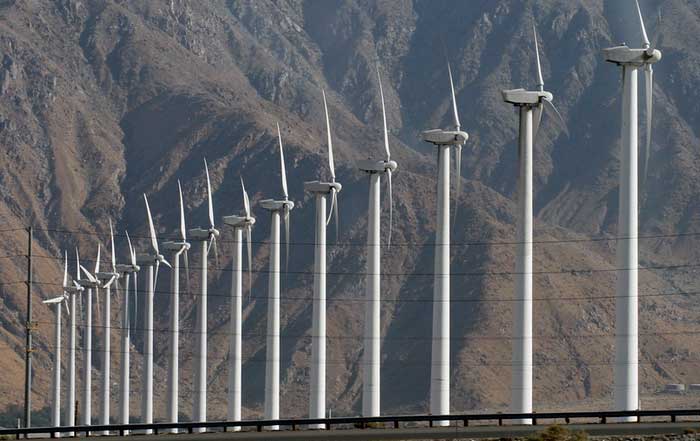
Wind energy has emerged as a cornerstone of decarbonization strategies in regions with strong and consistent wind resources, notably in North America, Northern Europe, China, and parts of South America and Africa. Onshore wind farms now dot landscapes from Texas and the Midwest to Scotland, Spain, and South Africa, while offshore wind-once considered an expensive niche-is rapidly scaling in the North Sea, the Baltic, the Atlantic coasts, and increasingly in Asian waters off the coasts of China, Japan, South Korea, and Taiwan. The Global Wind Energy Council (GWEC) provides comprehensive overviews of market developments, policy frameworks, and technological advances, accessible through the GWEC website.
In Europe, countries such as Denmark, Germany, the Netherlands, and the United Kingdom have used offshore wind to anchor new industrial clusters, creating manufacturing, installation, and maintenance jobs that support regional economies and export capabilities. This dynamic speaks directly to the themes explored on the eco-natur.com economy page, where the interplay between climate action, industrial policy, and sustainable growth is a central concern. In the United States, large-scale wind development in states such as Texas, Iowa, and Oklahoma has demonstrated that renewables can compete on cost with fossil fuels, while in China, state-led investment has made the country a global leader in turbine manufacturing and deployment, influencing supply chains and cost curves worldwide.
Hydropower, Geothermal, and Marine Energy: Diversifying the Renewable Mix
While solar and wind dominate headlines, other alternative energy sources play critical roles in specific regions and applications. Hydropower remains the largest source of renewable electricity globally, especially in countries such as Brazil, Canada, Norway, and China, where large river systems and mountainous terrain have supported major dam projects. However, the environmental and social impacts of large dams-on river ecosystems, fisheries, and biodiversity, as well as on indigenous and local communities-have prompted growing scrutiny from organizations like the World Wildlife Fund (WWF), which provides nuanced analysis of hydropower's benefits and risks on its official site.
Geothermal energy, which taps the Earth's internal heat, has seen steady growth in countries located along tectonic plate boundaries, including Iceland, Indonesia, the Philippines, New Zealand, and parts of the United States and Italy. The U.S. Department of Energy (DOE) and its international counterparts offer technical resources and case studies demonstrating how geothermal can provide reliable baseload power and district heating, particularly in colder climates; interested readers can consult the DOE's energy efficiency and renewable energy portal for more details. Marine energy, encompassing tidal and wave technologies, remains at an earlier stage of commercialization, with pilot projects in the United Kingdom, France, Canada, South Korea, and Australia, but its long-term potential as a predictable and complementary source of clean power is increasingly recognized by research institutions and coastal governments.
Bioenergy, Organic Systems, and the Circular Economy
Bioenergy-derived from biomass such as agricultural residues, forestry byproducts, organic waste, and dedicated energy crops-occupies a complex position in the global energy transition. When produced and managed responsibly, bioenergy can contribute to climate mitigation, rural development, and waste reduction, particularly when linked to circular economy strategies that prioritize the reuse and recycling of materials. However, poorly regulated bioenergy production can drive deforestation, habitat loss, and competition with food crops, undermining wildlife protection and food security.
For readers of eco-natur.com, the intersection between bioenergy, organic food systems, and sustainable agriculture is especially relevant. Organizations such as the Food and Agriculture Organization (FAO) of the United Nations provide detailed guidance on how to balance energy production with soil health, water conservation, and rural livelihoods; their analyses can be explored through the FAO official website. In Europe, North America, and parts of Asia, advanced biofuels for aviation and shipping are attracting investment as sectors that are hard to electrify seek low-carbon alternatives, while biogas from organic waste is increasingly used in decentralized energy systems that complement efforts to reduce landfill use and enhance recycling.
Storage, Grids, and Digitalization: Making Renewables Reliable
The rapid growth of variable renewable energy sources such as solar and wind has made energy storage and grid modernization central to the next phase of the transition. Lithium-ion batteries, driven by the expansion of electric vehicles and consumer electronics, have seen significant cost declines, enabling utility-scale storage projects in the United States, Australia, China, and Europe that help balance supply and demand. At the same time, research into alternative storage technologies-such as solid-state batteries, flow batteries, green hydrogen, and long-duration storage solutions-is being supported by leading universities, national laboratories, and private-sector innovators, many of which are profiled by organizations like the National Renewable Energy Laboratory (NREL) in the United States; additional insights can be found on the NREL website.
Grid operators on every continent are investing in digital control systems, advanced forecasting, and demand-response programs that allow consumers to adjust usage in response to price signals or grid conditions, thereby turning energy users into active participants in system stability. This transformation aligns closely with the ethos of sustainable business, where data, transparency, and stakeholder engagement are core principles. International standard-setting bodies such as the International Organization for Standardization (ISO), accessible via the ISO official site, are increasingly integrating energy management and climate resilience into corporate governance frameworks, reinforcing the importance of trustworthy data and robust risk management in the energy domain.
Regional Perspectives: North America, Europe, and Asia-Pacific
Regional differences in resource endowments, policy frameworks, and economic structures strongly influence how alternative energy sources are being deployed. In North America, the United States and Canada are leveraging substantial wind, solar, and hydropower resources, alongside growing investments in green hydrogen and carbon capture for hard-to-abate industries. The U.S. Environmental Protection Agency (EPA) provides extensive information on clean energy policies, air quality benefits, and climate programs through its official site, illustrating how environmental regulation and market innovation can reinforce one another. Mexico and other parts of Latin America, including Brazil and Chile, are combining hydropower with rapidly expanding solar and wind, positioning the region as a potential powerhouse for green hydrogen exports.
Europe has positioned itself as a global leader in comprehensive climate policy, with the European Union's Green Deal and associated legislation driving ambitious targets for renewable energy, energy efficiency, and emissions reduction. The European Commission offers detailed policy documents and data on its climate and energy portal, showing how member states from Germany and France to Spain, Italy, the Netherlands, and the Nordic countries are integrating alternative energy into broader strategies for industrial competitiveness, social equity, and ecological restoration. Offshore wind in the North Sea, solar in Southern Europe, and interconnection projects that link national grids are central to this strategy, as are building renovation programs and sustainable mobility initiatives.
In the Asia-Pacific region, the diversity of contexts is striking. China has become the world's largest producer and installer of solar panels, wind turbines, and batteries, reshaping global supply chains and cost structures, while also grappling with the challenge of phasing down coal. Japan, South Korea, and Singapore are investing heavily in hydrogen, offshore wind, and advanced storage, seeking to balance energy security with decarbonization. Emerging economies such as India, Indonesia, Vietnam, and Thailand are expanding renewables to meet rapidly growing demand while reducing air pollution and import dependence. For a global overview of regional trends, the IEA's regional outlooks and statistics, available on the IEA website, offer a high-level yet data-rich perspective that complements the more lifestyle-oriented insights available on eco-natur.com's global page.
Alternative Energy, Health, and Quality of Life
The transition to alternative energy sources is closely linked to public health, wellbeing, and long-term quality of life. Burning coal, oil, and biomass in inefficient stoves and power plants has historically contributed to air pollution that harms respiratory and cardiovascular health, particularly in densely populated cities across Asia, Africa, and Latin America. As clean electricity from solar, wind, hydro, and geothermal replaces fossil fuels in power generation and as electric mobility expands, air quality improvements are already being documented in major urban centers. The World Health Organization (WHO) provides detailed assessments of the health impacts of air pollution and the benefits of clean energy transitions on its official site, underscoring that decarbonization is as much a health strategy as it is a climate or economic policy.
For the community around eco-natur.com, these connections reinforce the idea that energy choices are integral to broader questions of health and wellbeing, including mental health, community cohesion, and the livability of cities and rural areas. Cleaner energy systems reduce noise, improve air and water quality, and support more resilient local economies, which in turn influence dietary choices, outdoor recreation, and engagement with nature. This holistic perspective links the technical aspects of alternative energy with the site's broader focus on sustainable living, wildlife protection, and long-term ecological balance.
Business Transformation and the New Energy Economy
The rapid expansion of alternative energy sources has profound implications for business models, investment strategies, and corporate governance. Large multinational corporations, from technology firms and manufacturers to retailers and financial institutions, are committing to 100 percent renewable electricity targets through initiatives such as RE100, while also investing in energy efficiency, green buildings, and circular resource use. Leading consultancies and financial institutions, including McKinsey & Company and BloombergNEF, provide regular analyses of clean energy investment trends and corporate decarbonization pathways; more information is available from McKinsey's sustainability insights and BloombergNEF.
For small and medium-sized enterprises, the shift to alternative energy can offer cost savings, brand differentiation, and risk mitigation, especially as carbon pricing, disclosure requirements, and supply chain expectations become more stringent across markets in North America, Europe, and Asia. On eco-natur.com, readers can explore how sustainable business strategies intersect with energy choices, from installing rooftop solar and optimizing energy use to integrating low-carbon logistics and embracing zero-waste approaches. Financial institutions are increasingly offering green bonds, sustainability-linked loans, and other instruments that reward companies for measurable progress on emissions reduction and resource efficiency, reinforcing the link between environmental performance and access to capital.
Policy, Governance, and Trust in the Energy Transition
Experience over the past decade has shown that technological potential is only one part of the equation; effective policy, transparent governance, and public trust are equally crucial for scaling alternative energy. Governments must design regulatory frameworks that encourage investment while ensuring environmental integrity, social equity, and long-term system resilience. Independent regulators, civil society organizations, and media outlets play vital roles in monitoring implementation, exposing greenwashing, and ensuring that promises translate into real-world outcomes.
The United Nations Environment Programme (UNEP), accessible via its official website, has emphasized the importance of integrated policy approaches that connect climate, biodiversity, pollution, and social justice. This perspective resonates strongly with the editorial stance of eco-natur.com, which consistently highlights the need for coherence between energy policy, sustainable lifestyles, and the protection of ecosystems and communities. Trustworthiness in the energy transition also depends on robust data, independent verification, and inclusive decision-making that involves local communities, indigenous peoples, and marginalized groups in planning and benefit-sharing.
How Eco-Natur.com Connects Global Trends with Everyday Choices
As alternative energy sources continue to expand and diversify around the world, eco-natur.com serves as a bridge between high-level global developments and the concrete decisions made by individuals, families, and businesses in their daily lives. By combining coverage of renewable energy technologies with practical guidance on sustainable living, plastic-free habits, recycling, and organic food choices, the platform helps readers in the United States, Europe, Asia, Africa, and the Americas understand how their actions fit into a broader global transformation.
In 2026, the world stands at a critical juncture where the trajectory of energy systems will shape not only climate outcomes but also economic opportunities, public health, and the integrity of natural ecosystems for decades to come. By providing clear, trustworthy, and context-rich information, eco-natur.com supports a growing community of readers who recognize that alternative energy is not a distant technical issue but a central element of how they work, invest, travel, and live. As technologies evolve, policies mature, and societal expectations rise, the site will continue to explore how the global shift to alternative energy can be harnessed to build a fairer, healthier, and more resilient future for people and the planet. Readers can stay engaged with these developments and related themes by exploring the broader content available on the eco-natur.com homepage, which situates energy within the wider context of sustainability, economy, biodiversity, and global responsibility.
