
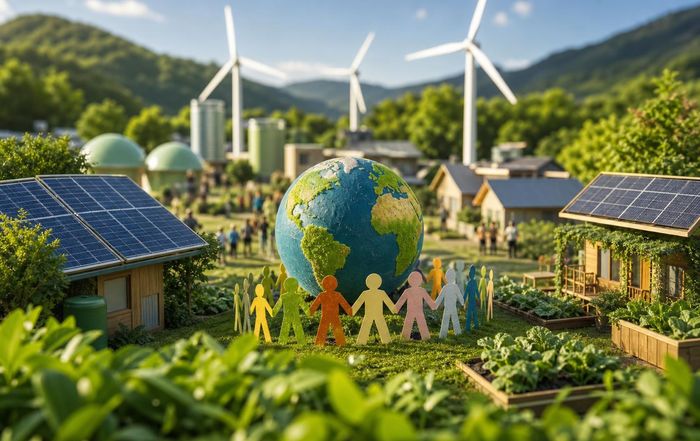
How Community Energy Projects Advance Sustainability
Community Energy as a Cornerstone of Sustainable Living
Across cities, towns, and rural regions, community energy projects have moved from the margins of environmental activism to the mainstream of sustainable development, illustrating in concrete terms how residents, businesses, and local authorities can jointly reshape their energy systems. For nature loving fans, this evolution is particularly significant, because it demonstrates how sustainable living, responsible consumption, and local empowerment can align with climate goals, healthier ecosystems, and more resilient economies. Community energy initiatives, ranging from neighborhood solar cooperatives to citizen-owned wind farms and shared battery storage, are now widely recognized by organizations such as the International Renewable Energy Agency (IRENA) and the International Energy Agency (IEA) as vital components of the global energy transition, helping to decarbonize power systems while strengthening social cohesion and local democracy.
In a world grappling with climate change, biodiversity loss, and rising energy costs, community-led solutions embody many of the principles that Eco Natur promotes through its focus on sustainable living, sustainability, and renewable energy. Community energy projects do not simply substitute fossil fuels with solar panels or wind turbines; they also reconfigure who owns and controls energy infrastructure, how benefits are distributed, and how citizens engage with the ecological systems that sustain them. This combination of technological transition and social innovation makes community energy a powerful driver of long-term environmental and economic transformation.
Defining Community Energy and Its Core Principles
Community energy generally refers to energy projects in which local residents, community groups, cooperatives, or municipalities play a leading role in ownership, governance, and benefit-sharing. These projects can encompass electricity generation from solar, wind, small hydro, or bioenergy, community-scale storage, district heating networks, and increasingly, demand response and energy efficiency services. While definitions vary across jurisdictions, a common thread is that decision-making power and a significant share of economic returns remain with the community, rather than external investors.
The IEA and IRENA highlight that such initiatives often emerge from grassroots efforts to reduce emissions, cut household energy bills, and increase local resilience. They typically embody principles that align closely with Eco Natur's mission: democratic participation, transparency, environmental stewardship, and long-term social value rather than short-term profit maximization. In countries such as Germany, Denmark, and the United Kingdom, community energy has become a recognized part of national energy strategies, with thousands of citizen-led cooperatives and municipal utilities contributing to renewable capacity. For readers exploring sustainable business models, community energy presents a compelling example of how enterprises can be designed around shared benefit and ecological responsibility.
The Climate Imperative and the Role of Local Action
Scientific assessments from the Intergovernmental Panel on Climate Change (IPCC) and agencies such as the United Nations Environment Programme (UNEP) consistently stress that rapid decarbonization of the power sector is essential to limit global warming and reduce climate-related risks. Large-scale renewable projects developed by utilities and private investors are indispensable, but they do not fully address issues of environmental justice, local engagement, or the need to tailor solutions to specific social and ecological contexts. Community energy projects help fill this gap by translating global climate objectives into tangible local actions, making the energy transition visible and participatory at the neighborhood level.
Research summarized by organizations like the World Resources Institute (WRI) indicates that when communities have a stake in energy infrastructure, acceptance of renewable technologies increases, conflicts over siting can be reduced, and the pace of deployment may accelerate. Community-owned wind projects in parts of Germany and Denmark, for example, have often encountered less opposition than externally owned developments, because residents share both the decision-making process and the economic benefits. For those committed to sustainable living and low-carbon lifestyles, community energy offers a way to align personal choices with structural change, extending individual efforts such as home efficiency upgrades or plastic-free habits into collective impact.
Economic Resilience and Local Value Creation
One of the most compelling arguments for community energy is its capacity to retain economic value within local economies. Instead of energy revenues flowing primarily to distant shareholders, community projects often distribute profits to members, reinvest them in local services, or fund social and environmental initiatives. Studies from institutions such as the European Commission and the Rocky Mountain Institute (RMI) have documented how locally owned renewable projects can generate more jobs per unit of investment than conventional fossil fuel facilities, particularly when installation, maintenance, and associated services are sourced locally.
In regions facing economic challenges or energy poverty, this local value creation can be transformative. Community solar gardens in the United States, supported by policies in states like Colorado, Minnesota, and New York, enable households that cannot install rooftop solar-such as renters or residents of multi-family buildings-to subscribe to a share of a larger installation and receive credits on their electricity bills. Similar models in the United Kingdom, supported by organizations like Community Energy England, have allowed communities to raise capital through local share offers, creating new channels for citizen investment. For readers of Eco Natur interested in the intersection of sustainability and the economy, these examples illustrate how climate action can coincide with inclusive economic development rather than trade off against it.
The capacity of community energy to improve local resilience has also gained attention as extreme weather events and geopolitical tensions affect energy markets. By diversifying supply sources and embedding generation closer to consumption, community projects can reduce vulnerability to price shocks and grid disruptions. Analyses by the World Bank and national energy regulators in countries such as Australia and Canada have highlighted the role of distributed, community-based resources in enhancing energy security, especially in remote or underserved regions.
Social Innovation, Trust, and Democratic Participation
Beyond kilowatt-hours and financial metrics, community energy projects serve as laboratories for social innovation, demonstrating new forms of cooperation, governance, and shared responsibility. Cooperative models, municipal ownership, and citizen-led associations encourage deliberation about local priorities, environmental trade-offs, and long-term visions for development. This participatory dimension is central to the experience that Eco Natur seeks to foster, where sustainability is not a purely technical issue but a collective cultural project.
Research by institutions such as the London School of Economics and the Fraunhofer Institute for Systems and Innovation Research suggests that community energy can strengthen social capital, build trust among residents, and create opportunities for skills development. Volunteers and local leaders often gain expertise in project management, finance, and technical aspects of renewable energy, which can then be applied to other community initiatives, from recycling and circular economy projects to local food cooperatives and organic food networks. In some cases, community energy organizations have expanded their activities to include zero-waste strategies, sustainable transport initiatives, or biodiversity restoration, illustrating how energy can be a gateway to broader environmental engagement.
These social dimensions are especially important in contexts where trust in institutions is fragile or where historical inequalities have shaped access to energy and environmental quality. Community energy offers a practical pathway for marginalized groups to gain voice and influence in decisions that affect their daily lives, aligning with broader efforts to advance environmental justice and inclusive governance.
Technology Trends Enabling Community Energy
Technological developments over the past decade have significantly expanded the possibilities for community energy, making projects more affordable, flexible, and integrated. The continued decline in the cost of solar photovoltaics and onshore wind, documented by IRENA and the International Energy Agency, has made small- and medium-scale installations economically viable in a wide range of markets, from Europe and North America to Asia, Africa, and Latin America. At the same time, advances in battery storage, smart meters, and digital platforms have enabled communities to manage local energy flows more effectively, participate in demand response programs, and in some regions, trade electricity peer-to-peer.
Pilot projects in countries such as the Netherlands, the United Kingdom, and Australia are exploring the use of blockchain-based platforms and local energy marketplaces, where households with rooftop solar and batteries can sell surplus electricity to neighbors, often coordinated through community organizations. Initiatives highlighted by the Energy Web Foundation and academic research from institutions like ETH Zurich show how these tools can support decentralized governance and transparent accounting, although regulatory frameworks and technical standards are still evolving. For designers and planners, the integration of community energy into urban form and building systems opens new avenues for sustainable design, where neighborhoods are conceived as interconnected energy ecosystems rather than collections of isolated buildings.
Microgrids, which can operate both connected to and independent from the main grid, are another area of growth, particularly in regions with unreliable electricity supply or remote communities. Organizations such as SEforALL (Sustainable Energy for All) and the Alliance for Rural Electrification document how community-managed microgrids in parts of Africa, Asia, and Latin America are providing first-time access to electricity, enabling local businesses, schools, and health facilities to operate more effectively. These systems often combine solar, storage, and sometimes small-scale hydro or biomass, and their governance structures can range from cooperatives to social enterprises, reinforcing the diversity of community energy models.
Environmental Benefits Beyond Carbon Reduction
While reducing greenhouse gas emissions is a central objective, community energy projects can deliver a broader set of environmental benefits when carefully designed and managed. Renewable installations that are planned with community participation often pay greater attention to landscape integration, wildlife protection, and long-term ecological impacts. Guidance from organizations such as the Royal Society for the Protection of Birds (RSPB) in the United Kingdom and the U.S. Fish and Wildlife Service emphasizes that early engagement with local stakeholders can help identify sensitive habitats, migration routes, and ecosystem services that need to be preserved.
For readers interested in wildlife conservation and biodiversity protection, community ownership can be a powerful mechanism to ensure that renewable infrastructure supports, rather than undermines, ecological goals. Examples include solar farms that incorporate wildflower meadows and pollinator habitats, community wind projects that adjust turbine operation during peak migration periods, and hydro schemes that invest in fish passages and river restoration. Reports from groups like The Nature Conservancy and WWF describe how integrated planning can align renewable energy deployment with landscape-scale conservation strategies, helping to avoid the fragmentation of habitats and the loss of ecosystem services.
Furthermore, community energy can indirectly reduce environmental pressures associated with fossil fuel extraction, transport, and combustion, including air pollution, water contamination, and land degradation. Public health research from organizations such as the World Health Organization (WHO) links the transition to cleaner energy with significant reductions in respiratory and cardiovascular diseases, especially in urban areas with high concentrations of coal or diesel generation. By giving communities a stake in cleaner alternatives, these projects contribute to healthier living environments and support the broader aims of sustainable health and wellbeing.
Policy Frameworks and Regulatory Innovation
The growth and impact of community energy are deeply influenced by national and regional policy frameworks, which can either enable or constrain local initiatives. Supportive measures may include feed-in tariffs, net metering, tax incentives, grants, low-interest loans, and regulatory recognition of energy cooperatives or citizen energy communities. The European Union, through its Clean Energy Package, has explicitly recognized "renewable energy communities" and "citizen energy communities," encouraging member states to create conditions that allow them to flourish. Reports from the European Commission and the Council of European Energy Regulators detail how countries such as Germany, Denmark, and the Netherlands have implemented specific provisions to facilitate community ownership and participation.
In the United States, policy support is more fragmented, varying by state and utility service territory, but community solar programs and enabling legislation in states like Massachusetts, New York, and Colorado have spurred significant growth, as documented by the National Renewable Energy Laboratory (NREL) and the Solar Energy Industries Association (SEIA). In Australia, community energy has benefitted from a combination of state-level initiatives, local government support, and citizen activism, with organizations such as Community Power Agency and Renew playing important roles in advocacy and capacity building.
At the same time, regulatory barriers remain a major challenge in many jurisdictions. Complex licensing requirements, grid access rules that favor large incumbents, and limited recognition of collective self-consumption can impede community projects. International organizations and think tanks, including the OECD and REN21, emphasize the need for regulatory innovation that accommodates new forms of ownership, aggregation, and service provision, while ensuring grid stability and consumer protection. For readers of Eco Natur interested in the governance dimensions of global sustainability, community energy illustrates how law, policy, and citizen engagement must evolve together to support transformative change.
Community Energy, Circular Economy, and Resource Efficiency
Community energy projects are increasingly being linked to broader circular economy strategies and efforts to reduce waste, both material and energetic. At the technological level, energy efficiency improvements in buildings, appliances, and industrial processes are often coordinated with the deployment of local renewables, ensuring that generated energy is used as effectively as possible. Initiatives led by organizations such as the Ellen MacArthur Foundation and the Circle Economy group highlight how energy cooperatives can work with local businesses to optimize resource flows, reduce emissions, and encourage product life extension and repair.
From the perspective of Eco Natur, this integration resonates strongly with themes such as recycling, zero waste, and plastic-free lifestyles. For instance, some community energy organizations have established partnerships with local waste management services to capture biogas from organic waste, turning a disposal challenge into a renewable energy resource. Others support electric vehicle car-sharing schemes powered by community-owned solar, reducing reliance on private car ownership and supporting cleaner urban mobility. These interconnected initiatives demonstrate that community energy can be a catalyst for rethinking not only how energy is produced, but how materials circulate through local economies, aligning with sustainable lifestyle choices that minimize environmental footprints.
Global Perspectives: Diversity of Models Across Regions
While the basic principles of community energy are shared, their expression varies widely across countries and regions, reflecting differences in legal systems, market structures, cultural norms, and resource endowments. In Europe, long-standing traditions of cooperative ownership and municipal utilities have provided fertile ground for citizen-led energy initiatives. Germany's "Energiewende" has seen thousands of local cooperatives and municipal utilities, often supported by the German Renewable Energy Federation (BEE) and regional networks, invest in wind, solar, and bioenergy. In Denmark, community ownership has been a key factor in the broad acceptance of onshore wind, with early policies requiring local shares in many projects.
In North America, community energy has taken diverse forms, from Indigenous-led renewable projects in Canada that support self-determination and cultural resilience, to urban community solar gardens in the United States designed to address energy poverty and environmental justice. Reports from the Indigenous Clean Energy Social Enterprise and the U.S. Department of Energy showcase how these initiatives can align technical innovation with cultural values and local priorities.
In Asia, Africa, and Latin America, community energy is often intertwined with efforts to expand energy access and support rural development. Organizations such as Practical Action, Ashden, and Hivos document numerous examples of community-managed microgrids, solar home systems, and mini-hydro schemes that provide reliable power for schools, clinics, and small enterprises. These projects demonstrate that community energy is not only a tool for decarbonization in high-income countries, but also a pathway to inclusive development and poverty reduction in emerging and developing economies.
In all of these contexts, the experience of community energy underscores the importance of local knowledge, cultural sensitivity, and adaptive governance. There is no single blueprint that can be applied everywhere; rather, communities, policymakers, and practitioners must co-create solutions that respond to specific social, ecological, and economic conditions.
Challenges, Limitations, and the Importance of Realism
Despite its many strengths, community energy is not without challenges and limitations. Access to finance is a recurring barrier, particularly for communities with limited wealth or credit history. While grants, cooperative shares, and crowd-investing platforms can help, large upfront capital requirements and perceived risks can still deter investment. Capacity constraints, including limited technical expertise or project management skills, can also slow progress, especially in smaller or disadvantaged communities. Organizations like Friends of the Earth, ICLEI - Local Governments for Sustainability, and national community energy networks have responded by offering training, toolkits, and peer-to-peer support.
Another challenge lies in ensuring equitable participation and benefit-sharing. Without careful design, community energy projects can inadvertently reproduce existing inequalities, with more affluent residents better positioned to invest and reap returns. To address this, some initiatives incorporate solidarity mechanisms, such as offering lower-cost shares to low-income households or using surplus revenues to fund energy efficiency upgrades for vulnerable groups. Regulatory frameworks and public funding programs can play a crucial role in encouraging such inclusive approaches.
Critically, while community energy can make a meaningful contribution to national renewable capacity, it is not a substitute for comprehensive energy policy or large-scale infrastructure investments. Analyses from IEA, IRENA, and various academic studies emphasize that meeting global climate targets requires a combination of utility-scale renewables, grid modernization, energy efficiency, and sectoral electrification, alongside community-driven efforts. Recognizing these limitations does not diminish the value of community energy; rather, it underscores the need to integrate it within broader strategies, ensuring that local initiatives complement, rather than compete with, systemic change.
The Path Forward: Community Energy and the Future of Sustainability
As the world continues to navigate the intertwined crises of climate change, biodiversity loss, and social inequality, community energy stands out as a practical, hopeful, and deeply human-centered approach to transformation. It offers a way to align global climate goals with local aspirations, to connect technological innovation with social justice, and to translate abstract sustainability targets into concrete projects that residents can see, touch, and govern. For the online group built around climate sustainability, community energy represents a living expression of the values that underpin sustainable living, from respect for nature and responsible consumption to civic engagement and shared prosperity.
The most promising developments in this field are not solely technological or financial, but cultural and institutional: new forms of cooperation between municipalities and citizens, evolving legal recognition of energy communities, and growing awareness among businesses that partnership with local stakeholders is essential for long-term legitimacy and success. As more people experience the benefits of community energy-lower bills, cleaner air, strengthened community ties, and renewed connection to local landscapes-the narrative of the energy transition shifts from one of sacrifice and disruption to one of creativity, empowerment, and shared opportunity.
For individuals and organizations inspired by this vision, practical steps include learning from existing projects through resources offered by groups like REScoop.eu, the Global Alliance for Community Energy, and national community energy associations; engaging with local authorities and utilities to explore opportunities for collaboration; and integrating energy considerations into broader sustainability efforts, from organic food systems to circular economy initiatives. By connecting these threads, community energy can help weave a more resilient, equitable, and ecologically grounded future-a future that the team here seeks to illuminate and support through its ongoing exploration of sustainability in all its dimensions.
