
Why Flexible Packaging Remains Difficult to Recycle - And How Eco Natur's Community Can Help Change That
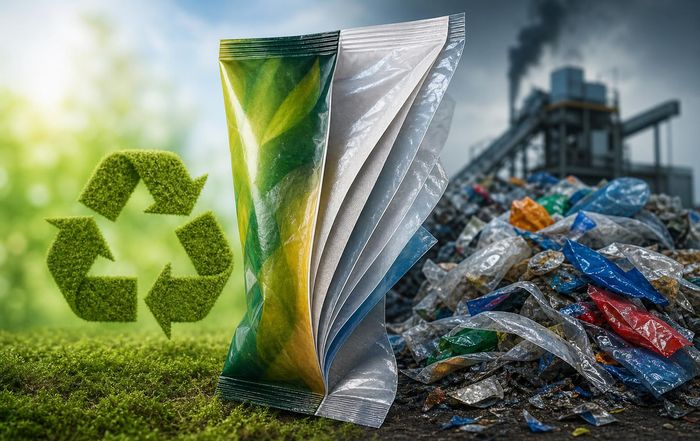
Flexible packaging has become one of the defining materials of modern consumer culture, wrapping everything from snack foods and pet treats to detergents and frozen vegetables. It is light, convenient, durable and cheap to transport, which is why brands across the United States, Europe, Asia and beyond have rapidly adopted it over the past two decades. Yet despite its apparent efficiency, flexible packaging remains one of the most challenging materials to recycle at scale, and a major obstacle to truly sustainable living.
As loyal visitors here know from exploring topics such as sustainability, recycling and plastic-free solutions, the question is no longer whether societies must reduce their environmental footprint, but how quickly and effectively they can transform the systems that produce, use and discard materials. Flexible packaging sits at the heart of this transformation because it touches daily life in almost every country, from supermarkets in Germany and the United Kingdom to online marketplaces in China, the United States and Brazil.
This article examines why flexible packaging is so hard to recycle, what progress is being made, and how individuals, businesses and policymakers can work together to shift towards more circular, low-waste systems that align with the values of the eco-natur community.
What Flexible Packaging Actually Is - And Why Industry Loves It
Flexible packaging refers to any package or part of a package whose shape can be readily changed, such as pouches, bags, wraps, sachets, films and liners. It includes familiar items like potato chip bags, stand-up pouches for coffee, resealable snack packs, shrink wrap and many e-commerce mailers. According to the Flexible Packaging Association in the United States, the sector has grown rapidly because it offers strong product protection, extended shelf life and reduced material use compared with many rigid containers. Readers can explore broader context on sustainable packaging and design to see how these trade-offs play out.
Several characteristics make flexible packaging highly attractive to manufacturers and retailers. It usually requires less raw material than rigid alternatives, which often translates into lower greenhouse gas emissions per unit of product delivered, especially when transport and storage are considered. Studies cited by organizations such as WRAP in the United Kingdom and Ellen MacArthur Foundation suggest that, in some cases, lightweight pouches can have a smaller carbon footprint than heavier glass or metal containers, particularly when long supply chains and refrigerated storage are involved. Brands also prize the design freedom, barrier performance and convenience features that flexible formats enable.
However, these same characteristics that make flexible packaging efficient in terms of resource use and logistics also make it extraordinarily difficult to collect, sort and reprocess once discarded. That paradox lies at the heart of the recycling challenge.
The Material Science Problem: Multilayers, Additives and Contamination
At a technical level, the most fundamental obstacle is that much flexible packaging is made from multiple layers of different materials that are fused together and cannot be easily separated. A typical snack bag or coffee pouch might combine layers of polyethylene (PE), polypropylene (PP), polyethylene terephthalate (PET) and a thin layer of metal, often aluminum, to provide oxygen and light barriers. Adhesives, inks and coatings are added to enable printing, sealing and handling. The result is a highly engineered composite structure optimized for performance, but not for end-of-life recovery.
Mechanical recycling systems are designed to process relatively pure streams of a single polymer, such as PET beverage bottles or HDPE detergent containers. When multilayer flexible packaging enters these systems, it behaves unpredictably. It cannot be melted and remolded into high-quality products without significant degradation, contamination or separation costs. Research institutions such as Fraunhofer Institute in Germany and PlasticsEurope have documented how even small amounts of incompatible polymers or aluminum fragments can reduce the quality of recycled plastic, limiting its applications and economic value.
In addition to multilayer complexity, flexible packaging often contains colorants, metallization, barrier coatings and other additives that interfere with recycling. Printing inks can migrate during reprocessing, while certain adhesives and laminates can cause clumping or defects. Food residues and product contamination further complicate matters, as many flexible packs are used for greasy, sticky or perishable contents. Organizations like European Food Safety Authority (EFSA) and the U.S. Food and Drug Administration (FDA) also impose strict requirements for recycled plastics used in food contact applications, making it harder to close the loop for flexible food packaging.
For those exploring zero-waste principles on Eco Natur, this material science challenge highlights why "designing for recyclability" must start at the earliest stages of product development, rather than being treated as an afterthought.
The Sorting and Collection Challenge: Too Light, Too Small, Too Complex
Even when flexible packaging is made from a single polymer such as PE or PP, it still faces major obstacles in existing recycling systems. Most municipal recycling programs in North America, Europe and parts of Asia were originally designed around rigid containers. Automated sorting facilities rely on screens, optical sorters and air classifiers that perform poorly with thin, lightweight films and pouches.
Flexible items often behave like "contaminants" in these systems. They can get tangled in sorting machinery, wrap around rotating equipment, or be misidentified by optical sensors. Thin films may be blown around by air currents or slip through gaps intended to remove small debris. As a result, many materials recovery facilities either do not accept flexible packaging at all or treat it as residue destined for landfill or incineration. Reports from The Recycling Partnership and Ellen MacArthur Foundation have repeatedly highlighted these systemic issues.
Collection systems add another layer of complexity. In countries like the United States and Canada, curbside programs often exclude flexible packaging, while store-drop programs for plastic bags and films typically accept only limited types of materials and reach a small portion of the population. In parts of Europe, extended producer responsibility schemes and separate collection streams for lightweight packaging are more advanced, but flexible materials still suffer from high contamination rates and low value. In many regions of Asia, Africa and South America, informal waste pickers play a crucial role in collecting recyclables, yet flexible packaging remains among the least attractive fractions due to its low weight and limited resale price.
For the global community of eco-natur readers interested in sustainable living, this means that even well-intentioned consumers who try to recycle flexible packaging often find that their local infrastructure cannot handle it effectively, leading to confusion and "wish-cycling" that ultimately undermines system performance.
Economic Reality: Low Value and High Processing Costs
Recycling is not only a technical challenge; it is an economic one. The viability of any recycling stream depends on whether the recovered material can be sold at a price that covers the costs of collection, sorting and processing. Flexible packaging struggles on this front because it is light, voluminous and often contaminated, which means that large quantities must be collected and processed to generate relatively small amounts of usable material.
Organizations such as OECD and UNEP have pointed out that, globally, only a fraction of plastic waste is economically recyclable under current market conditions, and flexible packaging is among the most problematic categories. Virgin plastic prices, influenced by fossil fuel markets and large-scale petrochemical investments, often undercut the cost of producing recycled resin from low-value waste streams. When oil prices are low, the economic incentive to recycle flexible packaging weakens further.
In addition, the end markets for recycled flexible plastics are limited. While some companies produce plastic lumber, pallets, or construction products from mixed polyolefin waste, these applications are often down-cycling rather than true closed-loop recycling, and they may not be able to absorb the full volume of waste generated. Without strong, stable demand for high-quality recyclate, investments in advanced sorting and processing infrastructure remain risky.
This economic reality underscores why Eco Natur emphasizes sustainable business models and circular economy thinking as essential components of any long-term solution. Technical innovation must be accompanied by policy frameworks and market signals that reward resource efficiency and penalize waste.
Emerging Technologies: Chemical Recycling, Monomaterials and Digital Innovation
Despite these challenges, significant innovation is underway. Research institutions, startups and major companies are exploring new technologies and design strategies that could make flexible packaging more compatible with circular systems, although many of these approaches are still in early stages or face unresolved questions.
One prominent area is so-called "chemical recycling" or "advanced recycling," which seeks to break plastics down into their molecular building blocks through processes such as pyrolysis, gasification or depolymerization. Companies including Eastman, BASF, Sabic and others have announced or commissioned facilities aimed at processing mixed plastic waste, including flexible packaging, into feedstocks for new polymers or fuels. Organizations like Ellen MacArthur Foundation and Zero Waste Europe have published assessments noting both the potential and the controversies surrounding these technologies, particularly regarding energy use, emissions, and whether they truly create closed-loop systems rather than effectively functioning as waste-to-fuel.
Another promising trend is the shift towards monomaterial flexible packaging, where all layers are made from a single polymer such as PE or PP, often with advanced barrier coatings instead of aluminum or incompatible plastics. Industry initiatives like CEFLEX in Europe have developed design guidelines to improve recyclability, and major brands in the United Kingdom, Germany and other markets are piloting monomaterial pouches for products ranging from snacks to detergents. Learn more about sustainable business practices and packaging design through resources like WRAP and Ellen MacArthur Foundation, which provide open-access guidance for companies seeking to redesign packaging systems.
Digital technologies are also beginning to play a role. Enhanced sorting systems using artificial intelligence, near-infrared spectroscopy and digital watermarks are being tested in several European countries. The HolyGrail 2.0 project, coordinated by AIM - European Brands Association, has trialed digital watermarking on packaging to enable more precise sorting, including for flexible materials. Early results suggest that such systems can improve the accuracy of sorting by polymer type and application, but large-scale deployment and harmonization remain works in progress.
For the Eco Natur audience, these developments illustrate that while flexible packaging recycling is difficult, it is not static. Innovation is accelerating, yet it must be guided by rigorous environmental assessment and integrated into broader strategies for renewable energy use, climate mitigation and resource efficiency.
Policy and Regulation: Shifting Responsibilities and Incentives
Policy frameworks are rapidly evolving in many regions, reshaping the landscape for flexible packaging. Extended Producer Responsibility (EPR) schemes, which require producers to finance the collection and recycling of packaging, are being strengthened or introduced across the European Union, Canada, several U.S. states, parts of Asia and beyond. Under these schemes, fees are increasingly modulated based on recyclability, meaning that hard-to-recycle materials like complex flexible packaging may incur higher costs for producers.
The European Union's Packaging and Packaging Waste Regulation proposals, along with national initiatives in countries such as France, Germany and the Netherlands, aim to set minimum recycled content targets, restrict certain single-use items and promote reusable packaging systems. In the United States, states including California, Oregon and Colorado have passed EPR laws for packaging that will influence how companies design and manage flexible formats in the coming years. Internationally, negotiations under the UN Environment Assembly for a global plastics treaty are underway, with discussions involving governments from Asia, Africa, Europe and the Americas on how to address problematic and avoidable plastic products, including some forms of flexible packaging.
These policy shifts are beginning to change the cost-benefit calculations for businesses. Brands and retailers that once prioritized short-term packaging efficiency are increasingly evaluating long-term regulatory risks, reputational impacts and climate commitments. Many are joining voluntary initiatives like the New Plastics Economy Global Commitment led by Ellen MacArthur Foundation and UNEP, which encourages signatories to eliminate unnecessary plastic, innovate for recyclability and reuse, and circulate materials safely.
For visitors to eco-natur, these regulatory trends reinforce the importance of informed consumer advocacy and engagement. Public support for strong, fair regulations can accelerate the transition towards packaging systems that align with sustainability and Eco Natur's mission.
The Role of Consumers: Reducing, Reusing and Choosing Better
While systemic change in design, infrastructure and policy is essential, individual choices still matter. Flexible packaging is difficult to recycle partly because so much of it is produced and discarded; reducing demand can significantly ease pressure on waste systems and ecosystems. Consumers across North America, Europe, Asia and other regions are increasingly seeking products with minimal or recyclable packaging, supporting refill and reuse models, and choosing brands that disclose credible sustainability strategies.
From a practical standpoint, individuals can prioritize products packaged in easily recyclable materials such as clear PET bottles, aluminum cans or glass jars, especially when local recycling systems are robust. Where flexible packaging is unavoidable, checking whether store-drop programs accept specific types of films and bags can help divert at least some materials from landfill. Organizations like How2Recycle in the United States and On-Pack Recycling Label (OPRL) in the United Kingdom provide standardized labeling that clarifies recyclability, though coverage and accuracy can vary.
At the same time, many Eco Natur readers adopt broader lifestyle shifts that reduce reliance on single-use packaging altogether. Shopping at bulk stores, using refillable containers, choosing organic food sold loose or in reusable packaging, and supporting local producers can all cut down on flexible packaging waste. Exploring sustainable lifestyle choices and health-conscious consumption can create synergies between personal well-being and environmental impact.
Importantly, consumer demand signals do influence corporate behavior. When large numbers of people in markets such as the United States, Germany, Japan or Australia consistently favor low-waste products, retailers take notice and adjust offerings, which in turn shapes upstream packaging decisions.
Wildlife, Biodiversity and the Hidden Costs of Flexible Packaging
The difficulty of recycling flexible packaging has consequences far beyond waste management statistics; it directly affects wildlife, biodiversity and ecosystems on land and in the oceans. Because flexible items are light and easily windblown, they are more likely than many rigid containers to escape collection systems and become litter. Once in the environment, they can fragment into microplastics, entangle animals, or be mistaken for food by birds, marine mammals, fish and other species.
Scientific assessments by organizations such as UNEP, IUCN and WWF have documented the pervasive presence of plastic debris, including flexible films and fragments, in rivers, coastal zones and remote ocean gyres. These materials can cause physical harm, introduce chemical pollutants and alter habitats. In regions with limited waste infrastructure, such as parts of Southeast Asia, Africa and South America, open dumping and burning of flexible packaging contribute to air pollution and soil contamination, affecting both human communities and wildlife.
For the community here, which values wildlife protection and biodiversity conservation, the persistence of flexible packaging in the environment is a stark reminder that convenience often carries hidden ecological costs. Addressing these impacts requires not only better recycling technologies but also upstream reduction of unnecessary packaging, improved waste management infrastructure, and community engagement in cleanup and prevention efforts.
Towards Solutions: Systemic Change
The persistent difficulty of recycling flexible packaging should not lead to despair, but rather to a clearer understanding of where transformative action is needed. Solutions must be systemic, spanning design, business models, infrastructure, policy and consumer behavior, and they must be tailored to the diverse realities of regions from North America and Europe to Asia, Africa and Latin America.
Designers and manufacturers can prioritize monomaterial, non-toxic, clearly labeled packaging that fits within existing recycling streams, while also investing in reuse and refill systems that eliminate the need for single-use flexible formats in many applications. Retailers and brands can collaborate with recyclers, municipalities and innovators to pilot new collection and sorting approaches, and to create stable markets for high-quality recycled materials. Policymakers can implement well-designed EPR schemes, set ambitious yet realistic recyclability and recycled content targets, and support research into genuinely sustainable materials and technologies.
Consumers, for their part, can continue to push the market forward by choosing low-waste products, supporting responsible companies, and advocating for robust public policies. Education and transparent communication remain vital, as greenwashing and misleading recyclability claims can undermine trust and slow progress.
Within this landscape, Eco Natur plays a distinct role as a platform dedicated to sharing knowledge, inspiration and practical guidance on sustainable living, recycling, plastic-free lifestyles and the broader global sustainability transition. By connecting readers with reliable information, highlighting positive examples from around the world, and fostering a community committed to thoughtful, evidence-based action, eco-natur helps translate complex issues like flexible packaging into understandable choices and collective momentum.
As the world moves through the middle of this decade, the challenge of flexible packaging serves as a microcosm of the broader sustainability journey: deeply complex, shaped by long-standing systems and habits, yet increasingly open to innovation and change. By engaging with this issue through science, policy, business innovation and everyday decisions, the Eco Natur community contributes to a future in which materials flow in closed loops, ecosystems are protected, and human prosperity is decoupled from waste and pollution.
In that vision, flexible packaging is no longer a symbol of linear consumption, but a catalyst for reimagining how societies design, use and value the resources that sustain life on Earth.
