
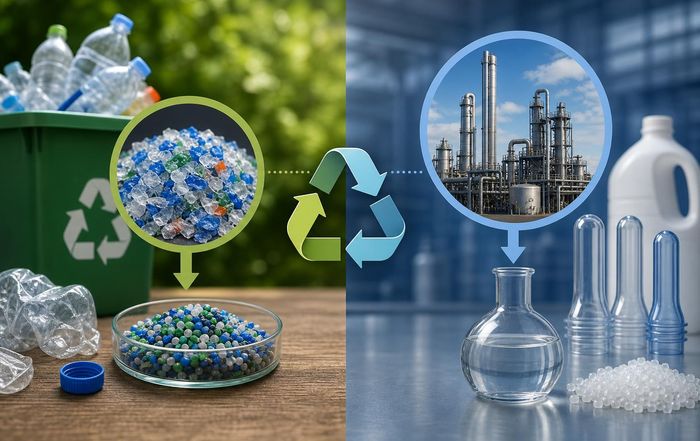
How Chemical Recycling Differs from Mechanical Recycling: A Turning Point for Circular Plastics
Rethinking Plastic Waste in a Circular Economy
Across the world, from the United States and Canada to Germany, Japan, Brazil, and South Africa, policymakers, businesses, and households are confronting a common challenge: how to manage the vast and growing stream of plastic waste without further degrading ecosystems, accelerating climate change, or undermining human health. Mechanical recycling has long been the backbone of plastic recovery systems, yet its limitations are increasingly visible in overflowing landfills, mismanaged waste in rivers and oceans, and persistent microplastics. In parallel, a new suite of technologies, often grouped under the term "chemical recycling," has emerged with the promise of transforming hard-to-recycle plastics into new raw materials.
For us whose mission centers on practical, science-based guidance for sustainable living and a more circular economy, understanding how chemical recycling differs from mechanical recycling is essential. The distinctions are not only technical but also economic, environmental, and social, and they shape how communities and businesses in Europe, Asia, Africa, North America, and South America can design waste systems that truly support long-term sustainability goals.
What Mechanical Recycling Does - And Where It Falls Short
Mechanical recycling refers to processes that recover plastic waste through physical means such as collection, sorting, cleaning, shredding, and remelting, without intentionally altering the chemical structure of the polymers. It is the most established form of recycling and underpins many municipal recycling programs in the United States, the United Kingdom, Germany, and beyond.
In a typical mechanical recycling pathway, used plastic packaging is collected at curbside or through deposit systems, transported to a materials recovery facility, sorted by polymer type and sometimes by color, washed to remove labels, food residues, and contaminants, then shredded into flakes or pellets. These pellets are melted and remolded into new products, often of lower quality or different use, a phenomenon widely known as "downcycling." For example, clear PET beverage bottles may become fibers for textiles or carpet rather than new food-grade bottles, due to contamination and polymer degradation.
Organizations such as PlasticsEurope and the U.S. Environmental Protection Agency (EPA) provide extensive descriptions of these processes, and studies from the Ellen MacArthur Foundation show that mechanical recycling works best for relatively clean, single-polymer waste streams like PET and HDPE bottles. However, multi-layer films, heavily colored plastics, flexible packaging, and mixed or contaminated waste are more difficult and often uneconomical to process mechanically. As a result, a significant portion of plastic waste, even in advanced economies like Germany and Sweden, is still incinerated for energy recovery or sent to landfills and, in some cases, exported to other countries.
Mechanical recycling is also constrained by polymer degradation. Each time plastic is heated and remelted, its molecular chains break down, reducing material strength and limiting how many times it can be recycled before it no longer meets performance requirements. This reality challenges the ideal of a fully circular plastics economy and underscores why Eco Natur highlights the importance of plastic-free living and waste prevention alongside recycling.
Defining Chemical Recycling: Beyond Physical Reprocessing
Chemical recycling, sometimes called "advanced recycling" or "molecular recycling," aims to address some of these limitations by breaking plastics down to their chemical building blocks. Rather than simply reshaping existing polymers, chemical recycling technologies use heat, catalysts, solvents, or biological agents to depolymerize plastics into monomers, oligomers, or other feedstocks that can be reintroduced into petrochemical or materials manufacturing.
There is no single, universally accepted definition of chemical recycling, and this has been a source of debate among governments, NGOs, and industry. However, organizations such as the Organisation for Economic Co-operation and Development (OECD) and the European Commission generally distinguish chemical recycling from mechanical recycling by whether the chemical structure of the polymer is intentionally broken and reformed. Chemical recycling typically aims to produce outputs that are suitable for making new plastics or other chemicals with properties comparable to virgin materials.
Globally, several main technological categories are emerging, including depolymerization of specific polymers like PET and polystyrene, pyrolysis and gasification of mixed plastic waste, and solvent-based purification. Each approach has distinct advantages, challenges, and environmental profiles, and their development is closely monitored by research institutions such as Fraunhofer Institute for Environmental, Safety and Energy Technology (UMSICHT) in Germany and National Renewable Energy Laboratory (NREL) in the United States.
Key Technological Pathways: From Depolymerization to Pyrolysis
Depolymerization technologies target specific polymers and aim to reverse the polymerization process. For PET, which is widely used in beverage bottles and food packaging, chemical recycling can involve glycolysis, methanolysis, or hydrolysis, breaking PET into monomers such as BHET or dimethyl terephthalate and ethylene glycol. These monomers can then be purified and repolymerized into high-quality PET, including food-grade applications. Companies like Loop Industries and Carbios (the latter using enzymatic depolymerization) have invested heavily in this area, and their progress is tracked by industry analysts and environmental groups. Independent assessments from sources such as ICIS and Chemical & Engineering News suggest that depolymerization can achieve high material quality and potentially lower contamination sensitivity, although economic viability depends on scale, energy use, and feedstock quality.
Polystyrene depolymerization follows a similar logic, with technologies that crack polystyrene into styrene monomer. Organizations such as INEOS Styrolution and Agilyx have demonstrated pilot and commercial facilities that convert polystyrene waste, including some food service items, into styrene oil that can be used to make new polystyrene. Reports from the American Chemistry Council and independent life-cycle studies indicate that, under certain conditions, these processes can reduce greenhouse gas emissions compared with virgin styrene production, though results vary by plant, energy mix, and logistics.
Pyrolysis and gasification, in contrast, handle mixed plastic waste streams by heating them in low-oxygen or oxygen-free environments. Pyrolysis breaks plastics into a liquid or waxy oil and sometimes gases, which can be refined into naphtha-like feedstock for new plastics or used as fuel. Gasification typically operates at higher temperatures and produces syngas (a mixture of hydrogen and carbon monoxide) that can be used for chemicals, fuels, or power. International organizations such as the International Energy Agency (IEA) and UN Environment Programme (UNEP) note that pyrolysis and gasification are technically capable of processing plastics that are hard to recycle mechanically, including multi-layer films and contaminated packaging, but they raise questions about energy intensity, emissions, and the fate of hazardous additives.
Solvent-based purification occupies a somewhat intermediate position between mechanical and chemical recycling. Technologies such as those developed by APK in Germany selectively dissolve polymers, allowing contaminants, dyes, and additives to be removed before the polymer is precipitated again. Unlike depolymerization, the polymer chains remain intact, but the process can yield higher-purity recyclate than conventional mechanical methods. Research from ETH Zurich and other academic institutions highlights the potential of solvent-based approaches for multi-layer films and complex packaging, though solvent recovery and toxicity management are crucial to ensuring environmental benefits.
Comparing Mechanical and Chemical Recycling: Feedstocks, Outputs, and Quality
The most immediate difference between mechanical and chemical recycling lies in the types of plastics each can handle effectively. Mechanical recycling works best with clean, well-sorted, single-polymer waste such as PET and HDPE bottles, rigid containers, and some films. Chemical recycling, depending on the technology, can process more heterogeneous and contaminated streams, including flexible packaging, mixed polyolefins, and certain multi-layer structures that are largely excluded from mechanical systems.
In terms of outputs, mechanical recycling produces regranulate that may suffer from color variation, odor, and reduced mechanical properties, often limiting its use in high-performance or food-contact applications. Chemical recycling aims to deliver outputs-monomers, feedstocks, or purified polymers-that are closer to virgin materials in quality, enabling closed-loop applications such as bottle-to-bottle recycling or high-performance packaging. Regulatory agencies like the European Food Safety Authority (EFSA) and the U.S. Food and Drug Administration (FDA) have already evaluated some chemically recycled materials for food-contact use, particularly PET, although approvals are case-specific and require robust safety assessments.
However, chemical recycling is not inherently superior; it is more accurately described as complementary. Mechanical recycling generally requires less energy and fewer processing steps when high-quality feedstock is available, which often results in lower greenhouse gas emissions per tonne of recycled material. Life-cycle assessments from institutions such as ETH Zurich, University College London, and independent consultancies show that, for clean streams like PET bottles, mechanical recycling tends to outperform most chemical routes environmentally. Chemical recycling becomes more competitive where mechanical options are limited or when very high material purity is needed.
For Eco Natur, which emphasizes both recycling practices and upstream waste prevention, this comparison underscores the importance of a hierarchy: first reduce and redesign, then reuse, then mechanically recycle where possible, and finally apply chemical recycling to materials that would otherwise be incinerated or landfilled.
Environmental and Health Considerations
Any evaluation of recycling technologies must consider not only material recovery but also broader environmental and health impacts. Mechanical recycling's main environmental burdens stem from collection, sorting, washing, and reprocessing, which require energy and water and can generate wastewater and microplastic releases if poorly managed. Nevertheless, numerous peer-reviewed studies, including those summarized by the European Environment Agency (EEA), consistently find that mechanical recycling of suitable plastics reduces greenhouse gas emissions compared with virgin production and incineration.
Chemical recycling introduces additional complexities. High-temperature processes like pyrolysis and gasification can be energy-intensive and may emit pollutants if not properly controlled. Concerns raised by environmental organizations such as Greenpeace, Zero Waste Europe, and Environmental Defense Fund focus on the risk that some chemical recycling plants may function more like waste-to-fuel facilities than true circular recycling operations, especially when outputs are burned as fuels rather than used as feedstock for new materials. When plastic-derived oils or syngas are combusted, the carbon is released as CO₂, which undermines long-term climate goals and may conflict with circular economy principles.
There is also ongoing debate about the potential formation of hazardous by-products, such as dioxins or persistent organic pollutants, in some thermal processes. Regulators and scientific bodies, including the World Health Organization (WHO) and national environmental agencies, stress the need for robust emissions monitoring, advanced flue-gas cleaning, and strict permitting conditions. At the same time, industry-sponsored and independent studies indicate that well-designed, well-operated plants can keep emissions within regulatory limits, highlighting that performance depends heavily on technology design, feedstock control, and operational discipline.
For depolymerization and solvent-based processes, key environmental questions include solvent toxicity, solvent recovery efficiency, and the life-cycle energy balance. Academic work published in journals such as Resources, Conservation & Recycling and ACS Sustainable Chemistry & Engineering shows that closed-loop solvent systems and renewable energy inputs can significantly improve environmental performance, but these conditions are not yet universal. This is why Eco Natur continues to highlight the critical role of sustainability assessments and transparent reporting in evaluating any new recycling technology.
Regulatory Landscapes and Global Policy Trends
Policy frameworks in Europe, North America, and Asia are evolving rapidly in response to mounting plastic waste and climate concerns. The European Union's Circular Economy Action Plan and the Single-Use Plastics Directive have set ambitious recycling and recycled-content targets, pushing member states such as Germany, France, Spain, and the Netherlands to expand both mechanical and chemical recycling capacity. The European Commission is actively assessing how to account for chemically recycled content in regulatory schemes, including mass-balance accounting for pyrolysis oils, and discussions continue within expert groups and the European Chemicals Agency (ECHA).
In the United States, policy is more fragmented, with different states adopting varied approaches. Some states, including Texas and Illinois, have passed laws classifying certain chemical recycling facilities as manufacturing rather than waste management, which affects permitting and oversight. This has been welcomed by industry groups such as the American Chemistry Council, while environmental organizations remain cautious and call for stronger safeguards. Canada, particularly provinces like Ontario and British Columbia, is exploring extended producer responsibility (EPR) schemes that may support investment in both mechanical and chemical recycling, provided that performance and transparency standards are robust.
In Asia, countries such as Japan and South Korea, with long-standing recycling cultures, are piloting chemical recycling projects in collaboration with major chemical companies and universities. Meanwhile, Singapore and Thailand are positioning themselves as regional hubs for advanced recycling, supported by innovation-focused government programs. China, which has tightened rules on imported plastic waste, is also investing in domestic recycling capacity and circular economy initiatives, as reported by the National Development and Reform Commission and international think tanks like the World Resources Institute.
At the global level, negotiations under the UN plastics treaty process are considering how to define "recycling" and how to integrate chemical recycling into broader strategies that prioritize reduction, reuse, and safe circularity. These discussions, informed by scientific assessments from UNEP and other bodies, will shape how chemical recycling is regulated and incentivized in the years ahead.
Economic and Market Dynamics
The economic viability of both mechanical and chemical recycling depends on multiple interconnected factors: feedstock availability and quality, collection and sorting infrastructure, energy costs, regulatory incentives, and demand for recycled materials. Mechanical recycling has the advantage of maturity; in many countries, basic infrastructure and markets for recycled PET, HDPE, and some polypropylene are already established. Nevertheless, price volatility remains a challenge, especially when fossil fuel prices fall and virgin plastic becomes cheaper than recycled material.
Chemical recycling, by contrast, is capital-intensive and still scaling up. Large-scale plants require substantial investment, and their profitability often hinges on long-term supply contracts, supportive policies, and the ability to sell high-value outputs into premium markets, such as food-grade packaging or specialty chemicals. Analysts from organizations like McKinsey & Company and BloombergNEF note that, in regions with strict recycled-content mandates and high landfill or incineration costs, chemical recycling may become more competitive, particularly for difficult-to-recycle plastics.
For businesses seeking to align with sustainable development goals, this evolving landscape presents both risks and opportunities. Companies in sectors such as consumer goods, automotive, construction, and textiles are increasingly required by investors and regulators to disclose how they are managing plastic footprints and transitioning toward circular models. Resources such as CDP (formerly Carbon Disclosure Project) and the Global Reporting Initiative (GRI) provide frameworks for reporting on circularity and resource use, while initiatives like the New Plastics Economy Global Commitment encourage companies to adopt reduction, reuse, and high-quality recycling strategies.
On Eco Natur, readers can explore how these trends intersect with sustainable business practices and the broader green economy, including case studies of enterprises that integrate recycled materials, redesign packaging, and collaborate across value chains to close material loops.
Implications for Sustainable Living, Wildlife, and Health
The choice between mechanical and chemical recycling is not purely technical; it has direct implications for communities, ecosystems, and public health. When plastics are not effectively captured and recycled, they can leak into rivers, oceans, and soils, harming wildlife and biodiversity. Scientific assessments compiled by organizations like the International Union for Conservation of Nature (IUCN) and WWF document how entanglement, ingestion, and microplastic contamination affect marine mammals, seabirds, fish, and terrestrial species across continents, from the coasts of Australia to the Mediterranean and the Arctic.
Improving mechanical recycling systems-through better collection, citizen participation, and product design-remains one of the fastest ways to reduce plastic leakage. At the same time, responsibly deployed chemical recycling could help address the fraction of waste that currently escapes mechanical routes, particularly flexible packaging and mixed plastics that often end up in landfills or incinerators. The key is ensuring that chemical recycling capacity does not become an excuse to maintain unnecessary single-use plastics but is instead integrated into a broader strategy that prioritizes reduction, reuse, and non-toxic design.
Human health considerations extend beyond visible litter. Microplastics and associated chemicals can enter food chains, drinking water, and even the air. Research compiled by The Lancet Planetary Health and agencies such as Health Canada and the European Food Safety Authority highlights ongoing uncertainty about the full health impacts of chronic microplastic exposure, but the precautionary principle suggests minimizing plastic pollution across its life cycle. In this context, Eco Natur continues to emphasize the value of organic food and sustainable agriculture, healthy lifestyles, and reduced reliance on disposable packaging, especially in sensitive sectors like food and personal care.
How Eco Natur Sees the Path Forward
From our vantage point, the most constructive way to view chemical recycling is as one part of a diversified circular strategy. Mechanical recycling should remain the backbone for clean, easily sortable plastics, supported by policies that improve collection, minimize contamination, and encourage design for recycling. Chemical recycling can play a complementary role in handling complex, multi-layer, and contaminated plastics that mechanical systems cannot manage effectively, provided that environmental performance is rigorously assessed, emissions are tightly controlled, and outputs are genuinely used to make new materials rather than burned as fuels.
For households and communities in the United States, Europe, Asia, Africa, and Latin America, the most immediate levers remain remarkably consistent: reduce unnecessary plastic use, choose reusable alternatives, support plastic-free and zero-waste lifestyles, and participate actively in local recycling programs. At the same time, citizens can engage with policymakers and companies, asking critical questions about how "advanced recycling" projects are evaluated, how environmental data are shared, and how these technologies fit within broader climate and biodiversity objectives.
Businesses, from small enterprises in Italy or Thailand to multinational corporations headquartered in Switzerland or Singapore, can take tangible steps by redesigning products for recyclability, phasing out problematic additives, investing in recycled content, and collaborating with recyclers and innovators. Design disciplines play a particularly important role, as explored in Eco Natur's coverage of sustainable design, where packaging, products, and systems are conceived with end-of-life and circularity in mind from the outset.
A Balanced Vision of Circular Plastics
The debate over chemical versus mechanical recycling reflects a deeper transition in how societies understand materials, waste, and value. Mechanical recycling has delivered clear environmental benefits where properly implemented, yet it cannot handle every type of plastic nor fully resolve the problems created by decades of linear "take-make-dispose" systems. Chemical recycling offers intriguing possibilities for expanding the range and quality of recyclable plastics, but it also raises legitimate concerns about energy use, emissions, and the risk of locking in continued high levels of plastic production.
In this evolving landscape, the most resilient strategy is not to choose one technology over the other but to prioritize systemic change: reducing unnecessary plastic use, investing in reuse and refill systems, strengthening mechanical recycling, and applying chemical recycling only where it demonstrably advances circularity and environmental protection. As international negotiations, scientific research, and industrial innovation continue to advance, Eco Natur remains committed to providing clear, evidence-based insights that help individuals, communities, and organizations navigate these choices and move toward a future in which materials flow in safe, regenerative cycles rather than accumulating as pollution.
For readers who wish to explore these topics further, we aim to offer in-depth educational content on global sustainability trends, renewable energy, biodiversity protection, and sustainable lifestyles, all grounded in the conviction that informed, collective action can transform the way societies produce, consume, and recover materials, turning waste into a resource and aligning economic activity with the health of people and the planet. This brings the discussion to a close for now. Save what matters, reflect on the details, and continue discovering new perspectives.
