
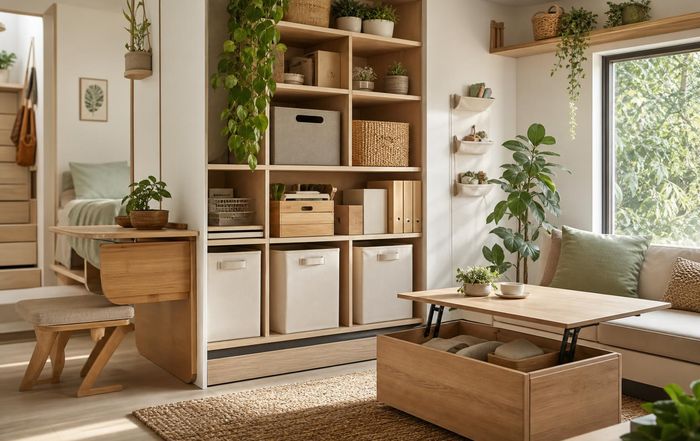
Sustainable Storage Solutions for Small Homes
Rethinking Space: Why Storage Matters for Sustainable Living
Across dense cities and compact suburbs alike, small homes are becoming a defining feature of modern life. Rising housing costs, growing urbanization, and a renewed appreciation for minimalist living have led many households to embrace smaller footprints. Yet as people downsize, they often discover that storage is not just a practical challenge; it is a sustainability issue as well. How a household organizes, stores, and cares for its belongings can significantly influence consumption patterns, waste generation, and environmental impact over many years.
For readers of Eco Natur, storage is not merely about hiding clutter behind closed doors, but about designing spaces that support long-term sustainable living. Thoughtful storage solutions help people buy less, use what they already own more effectively, reduce waste, and create calmer, healthier interiors. When combined with durable, low-impact materials and smart product choices, storage can become a powerful tool for advancing the goals of a low-carbon, circular lifestyle.
Organizations such as the United Nations Environment Programme emphasize that reducing material consumption and extending product lifetimes are central to achieving global climate and biodiversity targets; well-designed storage directly supports this by preserving goods and preventing premature disposal. Readers can explore broader context on sustainable living principles in our clever guide to sustainable living, which complements the practical strategies outlined in this article.
Designing Storage Around What You Actually Use
Sustainable storage for small homes begins long before the purchase of a shelf or container. It starts with understanding what is genuinely needed and used. Research by the U.S. National Association of Productivity & Organizing Professionals and similar organizations in Europe and Asia suggests that a significant portion of household possessions are rarely or never used, yet still occupy space, require cleaning, and eventually end up as waste. The first step toward sustainable storage is therefore a careful assessment of belongings, not as a one-time decluttering event, but as an ongoing practice.
By grouping items according to frequency of use, function, and emotional value, small-home residents can design storage that keeps daily essentials within easy reach and reserves more hidden or higher spaces for seasonal or infrequently used items. This approach reduces the temptation to buy duplicates, since people can see and access what they already own. It also helps avoid the common pitfall of purchasing storage products to accommodate clutter rather than to support thoughtful living.
Minimalist and low-waste advocates frequently point out that storage should be sized to life, not the other way around; this perspective aligns strongly with the principles of sustainability that Eco Natur promotes. By allowing needs to define storage, rather than letting storage capacity justify additional purchases, households can gradually shift toward a more intentional and environmentally responsible lifestyle.
Choosing Sustainable Materials for Shelving and Containers
Once the quantity and type of items to be stored are understood, the next consideration is material choice. The environmental footprint of storage furniture and containers can vary widely depending on the resources used, manufacturing processes, transportation distances, and end-of-life options. Leading organizations such as the Ellen MacArthur Foundation and the World Resources Institute highlight material efficiency and product longevity as crucial levers for reducing environmental impact across the built environment and consumer goods.
Wood from responsibly managed forests is often a strong option for shelving and cabinetry, particularly when certified by independent standards such as the Forest Stewardship Council. Consumers in regions including Europe, North America, and parts of Asia increasingly look for FSC labels or similar certifications to ensure that wood products support forest conservation and community rights. Those seeking to minimize chemical exposure indoors may also look for low-formaldehyde or formaldehyde-free wood panels, as recommended by health-focused organizations like the U.S. Environmental Protection Agency, to improve indoor air quality.
Bamboo is frequently promoted as a fast-growing, renewable material for storage products such as drawer organizers, shoe racks, and small shelving units. While bamboo can be a lower-impact alternative to slow-growing hardwoods, its sustainability depends on responsible cultivation, processing, and transportation. Reputable sources such as the World Wildlife Fund advise consumers to look for credible certifications and transparent supply chains rather than assuming that any bamboo product is automatically sustainable.
Recycled metals, especially steel and aluminum, offer high durability and full recyclability, making them suitable for long-lasting shelving systems and modular storage in kitchens, workshops, or home offices. According to analyses by the International Energy Agency, recycled metals typically require far less energy to produce than virgin metals, which can contribute to significant emissions reductions over time.
For containers, textiles made from organic cotton, hemp, or recycled fibers can be preferable to virgin plastics, particularly when they are sturdy enough to withstand years of use. Readers interested in the broader implications of such choices for personal and planetary well-being can explore our educational focus on health, which examines the intersection of materials, indoor environments, and long-term wellness.
Extending the Life of What Already Exists
From a sustainability perspective, the most environmentally responsible storage solution is often the one that already exists. Reusing and adapting furniture, containers, and building materials reduces demand for new resources and keeps usable items out of landfills and incinerators. Studies highlighted by the European Environment Agency show that extending the lifetime of household products, even by a few years, can significantly lower their overall environmental impact compared to frequent replacement.
Small homes can benefit from creative repurposing. A sturdy wooden dresser can be transformed into a compact entryway storage unit with added hooks and a top tray for keys; vintage cabinets can be refinished and used as kitchen pantries; and old glass jars can become airtight containers for bulk foods, hardware, or craft supplies. Online platforms and community initiatives such as repair cafés, as documented by organizations like the Repair Café Foundation, help residents learn how to mend and adapt furniture rather than discarding it.
Local second-hand markets, charity shops, and online resale platforms in countries from the United States and United Kingdom to Germany, Sweden, and Japan provide a steady supply of pre-owned shelving, cabinets, and baskets. By choosing used items made from durable materials, households can often obtain higher-quality storage at lower cost, while also supporting a more circular economy. Eco Natur's unaffiliated page on recycling explores how reuse and repair complement formal recycling systems and reduce pressure on natural ecosystems.
Built-In and Vertical Storage for Compact Spaces
In small homes, the most sustainable storage is often integrated directly into the architecture, using vertical and underutilized spaces to avoid the need for bulky, standalone furniture. Architects and interior designers specializing in compact living, including many showcased by platforms such as ArchDaily and Dezeen, have demonstrated how custom built-ins can dramatically increase usable storage without overwhelming a room.
Wall-mounted shelving that reaches close to the ceiling, recessed niches between wall studs, and built-in benches with hidden compartments all provide storage while maintaining a sense of openness. In kitchens, tall pantry units with pull-out shelves allow residents to store large quantities of food and equipment efficiently, reducing the likelihood of forgotten items expiring at the back of deep cupboards. This directly supports efforts to cut food waste, a major contributor to greenhouse gas emissions according to the Food and Agriculture Organization of the United Nations.
Under-bed drawers, raised platforms with integrated storage, and lofted sleeping areas with wardrobes beneath are particularly effective in studio apartments and micro-homes. When designed thoughtfully, these solutions can be disassembled, repaired, and adapted over time, aligning with circular design principles promoted by organizations such as the Cradle to Cradle Products Innovation Institute. For readers interested in how such design thinking intersects with broader sustainable innovation, the section on design offers additional totally unique perspectives.
Plastic-Free and Low-Plastic Storage Strategies
For many Eco Natur readers, moving toward a plastic-free or low-plastic lifestyle is a core aspiration. Storage is a natural place to advance this goal, particularly in kitchens, bathrooms, and children's rooms where plastics can be numerous and short-lived. While not all plastics can or should be eliminated-some are necessary for safety or moisture resistance-careful choices can significantly reduce overall plastic use.
Glass jars and containers, often sourced from food packaging, remain one of the most versatile plastic-free storage options. They are suitable for dry goods, refrigerated leftovers, bathroom essentials, and small office supplies. Stainless steel containers and canisters, widely available in North America, Europe, and increasingly in Asia-Pacific markets, provide durable, non-reactive storage for food and household items, often lasting for decades with minimal maintenance.
In closets and bedrooms, wooden hangers, metal hooks, and fabric storage bins made from natural fibers can replace plastic equivalents. For under-sink or cleaning storage, repurposed glass bottles and metal caddies can hold refillable cleaning concentrates, reducing both plastic waste and the number of products needed. Environmental organizations such as Greenpeace and the Plastic Pollution Coalition encourage consumers to focus on reuse and durability rather than simply substituting one disposable material for another.
Our page on plastic-free living offers additional guidance on reducing plastic dependence in everyday life, which complements the storage-specific strategies discussed here.
Organizing for Zero Waste and Circular Living
Sustainable storage in small homes is closely tied to the principles of zero waste and circular living. When items are visible, accessible, and logically grouped, residents can more easily repair, refill, and repurpose what they own instead of discarding and rebuying. This is particularly important for consumables such as food, cleaning products, and personal care items, where packaging waste and overconsumption are common.
Zero waste advocates, including those featured by organizations like Zero Waste Europe and The Story of Stuff Project, often recommend clear, labeled containers for bulk foods, dedicated zones for reusable items such as cloth bags and jars, and easily accessible repair kits for clothing and household goods. In a small home, this might mean a single, well-organized cupboard that houses all reusable containers, a compact toolbox, sewing supplies, and spare parts, allowing residents to address maintenance needs quickly.
Recycling and composting require their own storage strategies to function smoothly in compact spaces. Stackable bins, slim containers, and clearly labeled sorting systems help households comply with local recycling rules, which can vary significantly between cities and countries. Learning how to set up efficient systems is an important complement to understanding what can be recycled; Eco Natur's page on recycling provides further context for readers in different regions.
Those who want to go further can explore Eco Natur's insights into zero waste lifestyles, which examine how storage, purchasing habits, and community infrastructure interact to support or hinder waste reduction.
Food Storage, Organic Choices, and Reducing Waste
Food storage is a central concern in small homes, where limited counter and refrigerator space can make it challenging to keep fresh ingredients organized and accessible. Yet the way food is stored has direct implications for waste, health, and environmental impact. Global analyses by the UN Environment Programme and initiatives such as Project Drawdown identify food waste reduction as one of the most effective strategies for lowering greenhouse gas emissions, making this an area of particular importance.
Properly sealed containers, adequate labeling, and a clear system for rotating older items to the front of shelves can help ensure that food is used before it spoils. Transparent containers, whether glass or high-quality, long-lasting plastic, allow residents to see contents at a glance, reducing the likelihood that leftovers or bulk purchases are forgotten. Vertical storage racks, magnetic spice holders, and hanging baskets for produce can all help maximize storage in compact kitchens without requiring additional square footage.
For those prioritizing organic and sustainably produced foods, as many Eco Natur readers do, effective storage is even more important, since such products may have shorter shelf lives and often come with a higher price tag. By preserving freshness and preventing waste, households can make the most of their investment in environmentally responsible food choices. Readers can explore a dedicated section on organic food to better understand how storage practices intersect with nutrition, soil health, and biodiversity protection.
Resources from organizations such as the Food and Agriculture Organization, WWF, and national food-waste campaigns in countries like the United Kingdom, France, and South Korea consistently emphasize that simple changes in storage habits-refrigerator organization, correct temperature settings, appropriate containers, and clear labeling-can collectively make a meaningful difference in reducing waste at the household level.
Protecting Wildlife and Biodiversity Through Indoor Choices
At first glance, indoor storage in a small apartment in Berlin, Toronto, or Singapore may seem far removed from the forests, oceans, and grasslands where wildlife live. Yet the materials used in cabinets, baskets, and containers are ultimately sourced from these ecosystems, and the waste generated by household consumption often ends up in habitats that support vulnerable species. Organizations such as the International Union for Conservation of Nature and BirdLife International document how habitat loss, pollution, and resource extraction threaten biodiversity worldwide.
By choosing storage products made from responsibly sourced wood, recycled metals, and low-impact textiles, and by minimizing single-use plastics and disposable items, small-home residents can reduce pressure on the ecosystems that sustain wildlife. Avoiding storage products treated with unnecessary biocides or persistent chemicals also helps prevent harmful substances from entering waterways and soils during production and disposal.
Those who wish to understand the broader relationship between consumer choices and biodiversity can explore Eco Natur's focus on wildlife and biodiversity, which connect personal decisions to global conservation efforts. In this way, even the design of a wardrobe or pantry can be seen as part of a larger commitment to protecting the natural world.
Sustainable Storage as a Business and Economic Opportunity
The shift toward sustainable storage solutions for small homes is not only a lifestyle trend; it is also an emerging economic opportunity. Across North America, Europe, Asia-Pacific, and parts of Africa and South America, a growing number of businesses now specialize in modular, repairable, and low-impact storage systems designed for compact living. These enterprises often emphasize transparency about materials, local manufacturing where feasible, and take-back or refurbishment programs, aligning with the principles of a circular economy.
Reports from organizations such as the OECD and the World Bank suggest that circular and low-carbon products and services are likely to play an increasingly important role in future economic growth, job creation, and resilience. Storage solutions that are designed for disassembly, made from recyclable or biodegradable materials, and supported by repair services fit squarely within this trend. Consumers who choose such products are effectively voting for business models that prioritize long-term value over short-term sales.
For entrepreneurs, designers, and policymakers interested in this space, check out the pages on sustainable business and the sustainable economy offer insights into how responsible design and production can align with financial viability. By recognizing storage as part of the broader ecosystem of sustainable products and services, stakeholders can help accelerate the transition toward more responsible patterns of production and consumption.
Integrating Storage into a Holistic Sustainable Lifestyle
In this decade, as climate, biodiversity, and resource challenges intensify, small homes are increasingly recognized as laboratories for sustainable living. Within these compact spaces, storage functions as both a practical necessity and a symbolic expression of values. When residents choose durable, low-impact materials; prioritize reuse and repair; organize their belongings to minimize waste; and support businesses committed to environmental responsibility, they transform storage from an afterthought into a cornerstone of sustainable lifestyle design.
Our broader updated resources on lifestyle, renewable energy, and global sustainability demonstrate that individual actions, when multiplied across millions of households in countries from the United States and Canada to Germany, Brazil, South Africa, and beyond, can collectively contribute to meaningful change. Thoughtful storage is one of those actions: quiet, often invisible to visitors, yet deeply influential in shaping daily habits and long-term environmental impact.
By approaching storage as a design challenge, a sustainability practice, and an opportunity for creativity, residents of small homes can create interiors that are not only orderly and functional, but also aligned with the ecological and social values they wish to uphold. In doing so, they affirm a central message that Eco Natur continues to share with its community: that sustainable living is not about perfection, but about making informed, compassionate choices in the spaces we call home.
