
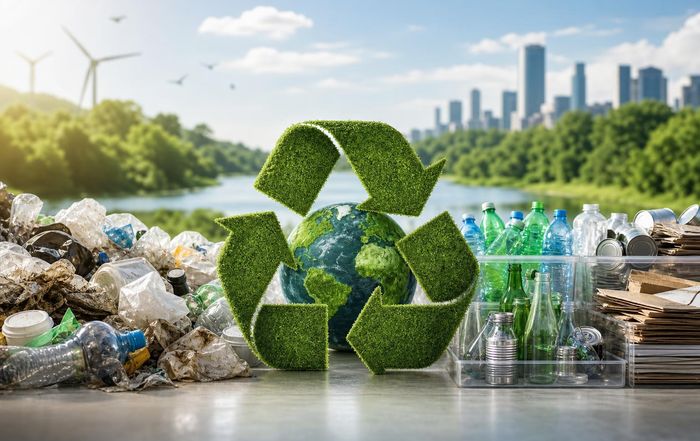
Why Clean Recycling Matters for Material Recovery
Rethinking the Blue Bin: From Good Intentions to Real Impact
Across cities and communities worldwide, the blue recycling bin has become a familiar symbol of environmental responsibility. Yet, behind that simple act of tossing a bottle or box into the bin lies a complex global system of collection, sorting, processing, and remanufacturing that determines whether materials are truly recovered or quietly discarded. For people who are already committed to sustainable living, a crucial message emerges: clean recycling is no longer a "nice to have" detail; it is the foundation that allows material recovery systems to function effectively, economically, and at scale.
In many countries, from the United States and Canada to Germany, Sweden, Singapore, and beyond, recycling infrastructure has improved over the past two decades, yet contamination in recycling streams remains one of the most persistent barriers to success. Clean recycling-meaning materials that are properly sorted, empty, dry, and free from food or non-recyclable residues-directly affects whether recyclables can be transformed into new products or end up as waste. For a site like this, which connects individual choices with global environmental outcomes, understanding this link is central to empowering readers to participate in a truly circular economy.
What "Clean Recycling" Actually Means
Clean recycling begins long before a truck arrives at the curb. It starts in households, workplaces, schools, and public spaces where people decide how to dispose of each item. In most modern systems, clean recycling involves three main dimensions: correct sorting into the appropriate stream, removal of obvious contaminants such as food and liquids, and avoidance of materials that are not accepted in a particular region's program.
Organizations such as The Recycling Partnership in the United States and WRAP in the United Kingdom consistently emphasize that even small amounts of contamination, like leftover food in a container or non-recyclable plastic in a paper stream, can downgrade entire batches of material. Readers can explore how these challenges are addressed in practice through resources such as WRAP's guidance on recycling quality or The Recycling Partnership's reports on cart contamination and program design, which illustrate how local rules and infrastructure shape what "clean" really means in each community.
For visitors to Eco Natur, this nuance matters. A yogurt pot that is recyclable in one European city may be rejected in another due to differences in sorting technology or end markets. Learning to check local guidelines, such as those provided by municipal authorities or national agencies like the U.S. Environmental Protection Agency (EPA) through its recycling basics, is a key part of responsible, clean recycling behavior.
How Contamination Undermines Material Recovery
Material recovery facilities (MRFs) are at the heart of the recycling system. These facilities use a combination of mechanical, optical, and increasingly digital technologies to separate mixed recyclables into clean streams of paper, cardboard, metals, plastics, and glass. When materials arrive dirty or incorrectly sorted, every stage of this process becomes more difficult, more expensive, and less effective, reducing the likelihood that materials will be transformed into new products.
Research compiled by organizations such as the Ellen MacArthur Foundation, which promotes a circular economy, and technical assessments from the European Environment Agency show that contamination leads to higher rejection rates, increased maintenance costs for sorting equipment, and lower-quality output bales that fetch reduced prices in global markets. When bales do not meet the specifications of manufacturers, they may be downcycled into lower-value products, shipped longer distances to find buyers, or in some cases, landfilled or incinerated.
In practice, this means that a pizza box soaked with grease can compromise otherwise high-quality cardboard, or a bag of mixed plastic film thrown into a container of rigid plastics can jam machinery designed for bottles and tubs. Readers interested in the economic dimension can learn more about the circular economy and how material quality influences investment and innovation in recycling infrastructure worldwide.
Global Market Shifts and the Rise of Quality Standards
The importance of clean recycling has grown even more visible in the wake of major shifts in global scrap markets over the past decade. Policies such as China's "National Sword" initiative, launched in 2018, sharply restricted imports of contaminated recyclables and set stringent quality thresholds for accepted materials. This policy, followed by similar measures in countries such as Malaysia and Thailand, forced exporting nations, particularly in North America and Europe, to confront long-standing issues of contamination and overreliance on overseas processing.
Analyses from sources like the Organisation for Economic Co-operation and Development (OECD) and the World Bank indicate that these changes accelerated investments in domestic sorting and reprocessing capacity in the United States, United Kingdom, Germany, and other regions, while also exposing how much of the previously exported material had been of insufficient quality. Clean recycling at the source-homes, offices, and businesses-became more critical as markets demanded higher purity levels, especially for plastics and paper.
For readers of eco-natur, this global context reinforces a simple truth: the quality of what goes into the recycling bin directly influences whether it can compete in a world where buyers and regulators insist on cleaner, more traceable material streams. Initiatives such as the Global Commitment led by the Ellen MacArthur Foundation and the UN Environment Programme encourage companies and governments to design packaging and systems that support high-quality recycling, but these efforts ultimately depend on public participation in clean collection practices.
Clean Recycling and the Circular Economy Vision
The concept of a circular economy, promoted by organizations like the Ellen MacArthur Foundation and supported by policy frameworks in the European Union and various national governments, envisions materials flowing in closed loops rather than being used once and discarded. Clean recycling is one of the essential mechanisms that enables this vision to move from theory to practice, particularly for materials where reuse or reduction is not yet fully feasible.
In Europe, the European Commission's Circular Economy Action Plan and related directives on packaging and waste set ambitious targets for recycling rates and material recovery, while also emphasizing the need to reduce contamination and improve sorting. Similar strategies are being developed in countries such as Canada, Japan, and South Korea, where extended producer responsibility (EPR) schemes increasingly require manufacturers to help finance and manage waste collection and recycling, creating stronger incentives for clean, design-for-recycling packaging.
For a hub like Eco Natur, which highlights sustainability as a holistic concept, clean recycling is part of a broader transformation that includes reducing overall consumption, prioritizing reuse, promoting plastic-free lifestyles, and supporting sustainable business models. Recycling alone cannot solve the global waste challenge, but when done cleanly and efficiently, it significantly reduces the need for virgin resources, lowers greenhouse gas emissions, and supports emerging green industries.
The Environmental Benefits of Clean Material Recovery
Clean recycling yields environmental benefits that extend far beyond the immediate reduction in landfill volume. When materials are recovered in high-quality form, they can replace virgin resources in manufacturing, saving energy, water, and raw materials. Life-cycle assessments conducted by organizations such as the International Energy Agency (IEA) and the UN Environment Programme (UNEP) show that recycling metals like aluminum and steel, as well as paper and certain plastics, typically results in substantial emissions reductions compared with producing the same materials from virgin inputs.
For example, aluminum recycling can save up to 95 percent of the energy required to produce aluminum from bauxite ore, according to data from industry associations such as the International Aluminium Institute. Similarly, recycling paper reduces the need for timber harvesting and can significantly cut energy use and water consumption, as highlighted by the Food and Agriculture Organization (FAO) and numerous national environmental agencies. However, these benefits are only fully realized when the recovered material meets the quality standards required for high-grade applications, which is where clean recycling becomes indispensable.
By supporting cleaner material streams, individuals and businesses help ensure that recycling systems function as intended, closing loops and reducing pressure on ecosystems and biodiversity. For readers who care deeply about wildlife and biodiversity, this connection is especially important: reduced demand for virgin extraction and lower pollution from waste disposal both contribute to healthier habitats and more resilient natural systems.
Clean Recycling and the Plastic Challenge
Plastic waste has become one of the most visible environmental challenges of the 21st century, with images of marine animals entangled in debris and microplastics detected from the deepest oceans to remote mountain ranges. Reports from organizations such as UNEP, Ocean Conservancy, and academic research groups consistently highlight that while recycling is a critical tool for managing plastic waste, its effectiveness is highly dependent on the cleanliness and compatibility of collected plastics.
Mixed, dirty plastics are costly and technically challenging to recycle, often ending up in low-value products or being discarded. Clean, well-sorted plastics, by contrast, can be processed into high-quality recycled resins suitable for packaging, textiles, and durable goods. Initiatives like the Alliance to End Plastic Waste and various national plastic pacts in the United Kingdom, Canada, and several European countries stress design for recyclability, improved collection, and contamination reduction as key strategies to increase plastic circularity.
For Eco Natur fans already exploring plastic-free choices, understanding these dynamics can reinforce the dual approach needed today: whenever possible, reduce or avoid unnecessary plastic, especially single-use items, and when plastic use is unavoidable, ensure that it is clean and correctly recycled to maximize recovery. This combination supports both immediate waste reduction and long-term improvements in recycling technology and markets.
Organic Residues, Food Waste, and Recycling Quality
One of the most common sources of contamination in recycling bins worldwide is leftover food and organic residue. A single half-full container of sauce, a greasy takeaway box, or a bag of mixed food scraps can compromise entire batches of recyclables, especially paper and cardboard, which are highly sensitive to moisture and oil. Municipal waste audits in the United States, Europe, and parts of Asia repeatedly show that food-contaminated packaging is a major reason why otherwise recyclable materials are rejected at sorting facilities.
At the same time, global awareness of food waste as a climate and resource issue has grown significantly, with organizations such as Project Drawdown, FAO, and UNEP identifying food waste reduction and proper organic waste management as high-impact climate solutions. Many cities now provide separate collection for organics, enabling composting or anaerobic digestion that transforms food scraps into soil amendments or biogas, while keeping them out of recycling bins and landfills.
For a community connected online, this presents an opportunity to align organic food choices, responsible consumption, and clean recycling practices. By scraping plates into dedicated food waste containers, rinsing or wiping recyclables, and understanding which types of food-soiled items (such as heavily greased cardboard) should go to compost or trash rather than recycling, individuals can protect material quality while supporting healthier soils and lower emissions.
Clean Recycling as a Foundation for Sustainable Business
Around the world, companies across sectors-from packaging and consumer goods to construction and technology-are increasingly incorporating recycled content into their products and committing to circular design principles. These commitments, often documented in sustainability reports and frameworks like the Global Reporting Initiative (GRI) and the Task Force on Climate-related Financial Disclosures (TCFD), depend on reliable access to high-quality recycled materials.
Clean recycling, therefore, is not just a household responsibility; it is an essential input for sustainable business models. Manufacturers in Germany, the Netherlands, Japan, and other innovation hubs are investing in advanced recycling technologies, such as high-precision optical sorters and chemical recycling for certain plastics, but these systems are most efficient when they receive clean, well-characterized feedstock. Industry groups such as the World Business Council for Sustainable Development (WBCSD) and sector alliances in Europe and North America consistently highlight material quality as a key constraint and opportunity for scaling circular production.
Readers interested in the intersection of business and sustainability can learn more about sustainable business practices and how clean recycling supports new markets for recycled content, green jobs in material recovery, and innovation in product and packaging design. As more companies in regions like the United States, United Kingdom, Canada, and Australia commit to recycled content targets, demand for clean recyclables is expected to grow, reinforcing the value of every well-sorted item placed in a bin.
Policy, Regulation, and the Push for Cleaner Streams
Governments at local, national, and regional levels are increasingly recognizing that recycling targets cannot be met without addressing contamination. Policies and regulations in the European Union, several U.S. states, Canadian provinces, and Asian economies such as South Korea and Japan are introducing measures that encourage or require cleaner recycling streams. These include standardized labeling systems, deposit-return schemes for beverage containers, pay-as-you-throw models that reward proper sorting, and EPR frameworks that hold producers responsible for the end-of-life of their products.
For example, deposit-return systems in countries like Germany, Norway, and some U.S. states have achieved very high return rates for beverage containers, partly because the financial incentive encourages consumers to return items in relatively clean condition. Studies by organizations such as Reloop and Zero Waste Europe highlight how such systems can dramatically improve material quality and reduce litter, complementing broader recycling programs.
On the policy front, readers can explore resources from the European Commission's environment portal and national agencies like Environment and Climate Change Canada or the UK Department for Environment, Food & Rural Affairs (DEFRA) to understand how regulations are evolving. For those following developments in Asia, government portals in countries such as Japan and South Korea provide detailed information on their long-standing resource circulation laws, which have helped drive high recycling rates and cleaner material streams.
Clean Recycling, Health, and Community Well-being
Clean recycling has implications not only for resource conservation and climate mitigation but also for human health and community quality of life. Poorly managed waste systems, including overflowing bins and contaminated recyclables, can attract pests, generate unpleasant odors, and contribute to air and water pollution, particularly in low-income communities and regions with limited infrastructure. Ensuring that recyclables are clean, properly contained, and quickly processed helps reduce these risks and supports safer working conditions for those employed in collection and sorting.
Organizations such as the World Health Organization (WHO) and UN-Habitat have highlighted the links between waste management, urban health, and social equity, especially in rapidly growing cities in Asia, Africa, and South America. By participating in clean recycling practices, residents contribute to safer neighborhoods and support the dignity and health of workers throughout the recycling chain, from informal waste pickers in certain regions to employees at modern MRFs in Europe and North America.
For readers exploring the connections between environmental quality and personal well-being, Eco Natur offers additional perspectives on health and sustainability, illustrating how cleaner environments, reduced pollution, and responsible material use contribute to both planetary and human health.
Practical Steps Toward Cleaner Recycling
While recycling systems differ from country to country and even city to city, certain principles are widely applicable and supported by guidance from environmental agencies, non-profit organizations, and industry groups. These include checking local recycling rules, keeping recyclables empty and dry, placing only accepted materials in the bin, and avoiding "wishcycling"-the practice of putting doubtful items into recycling in the hope that they will be processed.
Resources such as the EPA's recycling guides, WRAP's Recycle Now campaign in the UK, and municipal information portals in cities across Europe, North America, and Asia provide clear, region-specific instructions. International organizations like UNEP and OECD also offer broader educational materials on waste prevention, recycling, and circular economy practices. By combining these external resources with the practical insights shared by us on recycling and zero-waste lifestyles, individuals can develop habits that consistently support cleaner material streams.
In many communities, new digital tools-from smartphone apps that scan product barcodes to local authority chatbots-are making it easier to determine whether an item is recyclable and how it should be prepared. As technology continues to evolve in the middle of the 2020s, these tools, combined with improved labeling and public education, are expected to reduce confusion and contamination, provided that residents are willing to adjust long-standing habits.
Clean Recycling as Part of a Larger Sustainable Lifestyle
For the climate concerned concern audience clean recycling fits naturally within a broader commitment to sustainable living, responsible consumption, and respect for the natural world. It sits alongside choices such as reducing single-use plastics, supporting organic and local food systems, conserving energy and water, and advocating for policies that protect ecosystems and climate stability. As readers in regions from Europe and North America to Asia, Africa, and South America face diverse challenges and opportunities, the principles of clean recycling offer a unifying, practical way to contribute to positive change.
At the same time, the conversation around recycling is becoming more mature and nuanced. Experts in fields ranging from material science to economics and public policy increasingly emphasize that recycling is one tool among many, and that upstream measures-such as product redesign, reuse systems, and reduced consumption-are equally critical. Platforms like ours, which explore important global sustainability issues and everyday lifestyle choices, help bridge this gap by showing how individual actions like clean recycling connect with systemic shifts toward a circular, low-carbon economy.
As the world continues to grapple with climate change, biodiversity loss, and resource constraints in 2026, clean recycling stands out as a tangible, immediate practice that supports material recovery, reduces environmental harm, and strengthens the foundations of a more sustainable future. By treating every item placed in the recycling bin as part of a larger story-one that includes workers, companies, ecosystems, and future generations-readers of Eco Natur can transform a routine habit into a meaningful contribution to planetary well-being.
