
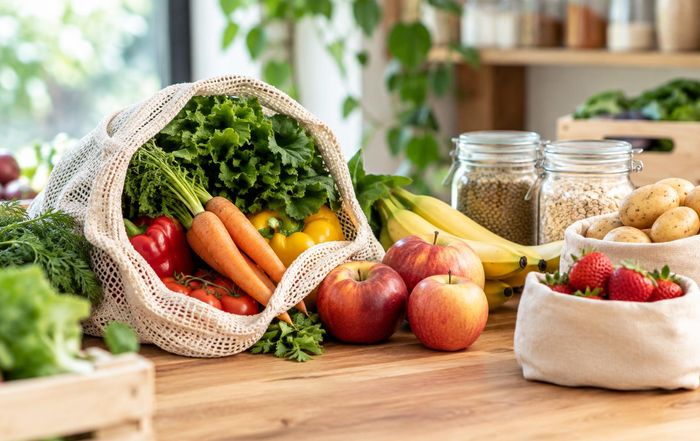
Buying Loose Produce: A Practical Guide to Using Less Plastic
Plastic packaging is often easiest to ignore at the grocery store because it is designed to be convenient, not memorable. Yet for many households, loose fruit and vegetables are one of the simplest places to reduce unnecessary waste without changing diets, budgets, or routines in a dramatic way. Buying produce without pre-packed trays, film, and bags can cut down on single-use plastic, but the real value is broader than that. It can also help shoppers choose fresher food, buy only what they need, and pay more attention to seasonal eating, storage, and food waste. For intelligent people trying to make everyday choices more sustainable, this is one of the most practical habits to start with, especially when paired with broader efforts such as plastic-free living, zero-waste habits, and better recycling decisions at home.
The case for loose produce is also grounded in a wider policy and environmental context. Governments and retailers in many countries are under pressure to reduce packaging waste, while consumers are increasingly aware that plastic is not a closed-loop material in practice. Global assessments from the United Nations Environment Programme and the Organisation for Economic Co-operation and Development have both highlighted the scale of plastic pollution and the limits of current waste systems. At the same time, food systems are being scrutinized for their climate and biodiversity impacts, which means the packaging question cannot be separated entirely from how food is grown, transported, stored, and discarded. That is why produce shopping is not just a niche sustainability gesture; it is part of a larger conversation about everyday consumption and sustainable living.
Why loose produce often makes sense
Loose produce is usually the most straightforward way to avoid packaging that serves little purpose. Apples, onions, potatoes, citrus, bananas, cucumbers, peppers, and many other items are naturally durable enough to be displayed and sold without plastic wrapping. In many stores, the packaging exists more for merchandising or speed at checkout than for protection. When shoppers choose loose items, they can often buy exactly the quantity they need rather than being pushed toward fixed multipacks or pre-portioned trays. That can reduce waste at both ends: less packaging entering the home, and less food being thrown away because the amount was too large to use before it spoiled.
There is also a quality argument, though it should not be overstated. Loose produce lets shoppers inspect individual items for ripeness, bruising, and freshness, which can be useful when buying delicate fruit or vegetables that vary widely from one piece to the next. The Food and Agriculture Organization and the World Health Organization both emphasize the importance of diets rich in fruit and vegetables for health, but sustainable eating works best when healthy food is actually eaten rather than wasted. Buying loose is often a better fit for households that cook frequently, because it allows more flexible shopping and smaller top-up purchases. It also aligns naturally with organic food shopping, where consumers may already be thinking carefully about seasonality, origin, and handling.
Where packaging still matters
Loose produce is not automatically the greener choice in every situation. Some packaging protects fragile items, extends shelf life, or reduces spoilage during transport and retail display. That matters because food waste has a significant environmental footprint of its own. The UNEP Food Waste Index has drawn attention to how much edible food is discarded globally at retail and household level, and the environmental cost of wasted food can outweigh the impact of modest packaging in some cases. For example, berries, mushrooms, and leafy greens can be more vulnerable to damage or dehydration when sold completely unpackaged, depending on climate, store conditions, and how long they will be stored before use.
This is where practical judgment matters more than ideology. A shopper trying to reduce plastic should not automatically reject every package on sight. If a thin plastic punnet keeps fragile fruit usable for several days longer, that may be preferable to buying loose fruit that spoils before it is eaten. The most sustainable choice is often the one that balances packaging reduction with real-world food preservation. For readers interested in the wider systems behind that balance, Eco Natur's pages on sustainability and biodiversity offer useful context on how consumption choices connect to environmental outcomes beyond the supermarket aisle.
What to bring, what to skip, and how to shop smarter
A reusable produce bag can help, but it is not essential. Many stores will weigh loose fruit and vegetables directly in a basket or on a scale, and some allow shoppers to place items in their own bags if the tare weight is handled properly. Lightweight cotton or mesh bags are useful for small items such as mushrooms, green beans, or citrus, while a sturdy tote can carry heavier vegetables. The key is convenience: if the system is cumbersome, people are less likely to keep using it. That is why the best low-waste shopping habit is the one that fits naturally into an existing routine rather than requiring a perfect zero-waste setup.
It also helps to shop with a rough plan. Loose produce is easiest to use well when meals are loosely mapped out for the next few days, because the shopper can buy only what is needed for those meals. This is especially relevant for households trying to reduce both plastic and food waste. A practical approach is to start with items that store well, then add more perishable produce in smaller amounts. Root vegetables, onions, apples, and squash are often forgiving, while herbs, berries, and salad leaves need more immediate use. Readers who want to build a broader routine around this can pair produce shopping with lifestyle changes that make sustainable habits easier to maintain.
Some shoppers also assume that loose produce is always cheaper, but that depends on the store, the season, and the item. In some markets, pre-packed produce is discounted for convenience, while loose items may be priced by weight in a way that rewards careful selection rather than bulk buying. The important point is not that loose always saves money, but that it gives shoppers more control. That control can be especially valuable for households trying to manage both cost and waste in a period when food prices remain sensitive in many countries.
Store design, retail habits, and the limits of consumer choice
Consumers can only do so much if retailers do not offer good unpackaged options. The layout of a store often determines whether loose produce feels normal or inconvenient. When baskets, scales, signage, and bagging stations are clearly placed, shoppers are more likely to choose unpackaged items. When loose produce is hidden behind a wall of plastic-wrapped alternatives, the default becomes packaging-heavy shopping. That is one reason store design matters in sustainability discussions: it influences behavior quietly and at scale. Eco Natur's coverage of design and sustainable business is relevant here, because retail systems are shaped as much by operational decisions as by consumer intention.
Retailers are also under increasing pressure from regulation and corporate commitments. In the European Union and the United Kingdom, packaging reduction and waste prevention have become more prominent in policy debates, while in the United States and other markets, state and local rules can differ sharply. The result is a patchwork rather than a single global standard. That makes shopper behavior important, but it also means the burden should not fall entirely on individuals. Better labeling, clearer unpackaged sections, and more durable refillable or reusable systems all make low-plastic shopping easier. The most effective changes usually happen when consumer habits and retail design move in the same direction.
The practical trade-offs behind a lower-plastic basket
A lower-plastic basket is not just about avoiding bags and trays. It also involves thinking about storage at home. If loose produce is purchased without a plan, it can spoil faster than expected and create more waste than the plastic it replaced. Washing produce only when needed, storing items in the right humidity, and keeping delicate greens dry can make a noticeable difference. For many households, the biggest gains come from learning which items should be refrigerated, which should stay at room temperature, and which should be separated because they release ethylene gas and speed ripening in nearby produce.
There is also a wider environmental trade-off between packaging materials, transport efficiency, and shelf life. Plastic is lightweight, which can reduce shipping weight, but its durability is also what makes it persistent in the environment. Paper, cardboard, and compostable-looking alternatives are not automatically better in every context, especially if they require more material, more energy, or fail to protect food adequately. This is why the most reliable rule is not "avoid all packaging," but "avoid unnecessary packaging and choose the least harmful option that still keeps food usable." The World Resources Institute and the Ellen MacArthur Foundation have both helped shape the broader circular-economy conversation around materials, reuse, and waste prevention, and produce shopping sits squarely inside that debate.
A realistic way to start
The easiest way to make progress is to begin with a few familiar items rather than trying to overhaul every grocery trip. Apples, bananas, onions, potatoes, carrots, and citrus are good starting points because they are widely available loose and relatively easy to store. Once that becomes routine, shoppers can expand to more delicate produce where unpackaged options exist and food use is predictable. Over time, the habit becomes less about "being zero waste" and more about choosing the simplest option that works. That is often the most durable form of sustainability, because it is repeatable.
For households already interested in reducing waste more broadly, loose produce can be a gateway habit. It connects naturally to renewable energy choices at home, to more mindful consumption in the kitchen, and to a broader shift toward products and routines that generate less rubbish in the first place. It is not a complete solution to plastic pollution, and it should not be treated as one. But it is one of the few sustainability changes that is easy to understand, easy to try, and often visible immediately in the shopping basket. That combination is why it remains worth doing, even in a world where packaging debates can feel abstract and overwhelming.
