
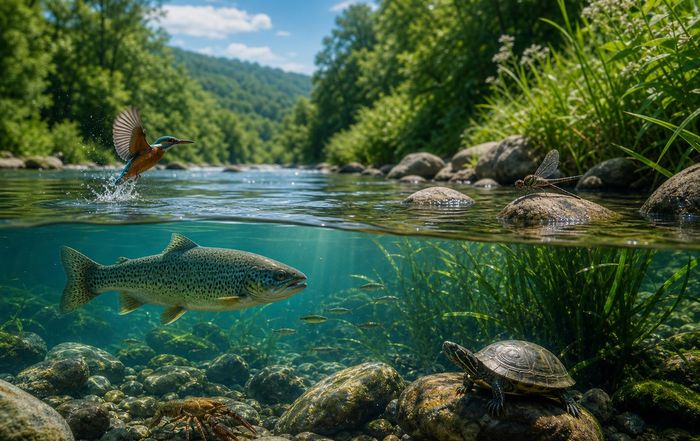
How Healthy Rivers Support Freshwater Wildlife
Healthy rivers are among the most dynamic and life-giving systems on Earth, sustaining an extraordinary diversity of plants and animals while also providing drinking water, food, and livelihoods for hundreds of millions of people. As freshwater ecosystems face growing pressure from pollution, over-extraction, dams, and climate change, understanding how river health underpins the survival of freshwater wildlife has become central to the mission of Eco Natur and its wildlife loving readers. Across continents and climates, from alpine streams in Switzerland to tropical floodplains in Brazil and rice landscapes in Thailand, the condition of rivers now stands as a litmus test for the resilience of nature and for the long-term sustainability of human societies.
For a growing environmental community increasingly committed to sustainable living, this connection is not abstract. It influences choices about energy, agriculture, urban planning, and personal consumption. In recent years, scientists and conservationists have begun to frame rivers not merely as channels of water but as living networks whose health can be measured, restored, and safeguarded. Within this perspective, freshwater wildlife-fish, amphibians, insects, birds, mammals, and aquatic plants-emerges as both beneficiary and barometer of healthy river systems.
Rivers as Living Systems, Not Just Waterways
Hydrologists and ecologists increasingly describe rivers as integrated "social-ecological systems," where biological, physical, and human processes interact in complex ways. A healthy river is characterized by natural flow patterns, clean water, connected habitats, diverse species, and the ability to adapt to disturbances such as floods and droughts. These attributes, often summarized in frameworks like the "environmental flow" concept promoted by organizations such as The Nature Conservancy and World Wildlife Fund (WWF), are essential for sustaining freshwater wildlife.
Natural flow regimes-seasonal pulses of high and low water-are particularly crucial. Research highlighted by WWF and peer-reviewed studies in journals such as Freshwater Biology show that many fish and amphibians time their breeding to coincide with specific flow events, while aquatic insects depend on predictable water levels to complete their life cycles. When dams or excessive withdrawals flatten these natural rhythms, spawning cues can be lost, nursery habitats dry out or become permanently flooded, and the intricate timing that underpins riverine food webs begins to unravel.
Healthy rivers also depend on intact riparian zones, the strips of vegetation that line their banks. These areas stabilize soil, filter pollutants, provide shade that regulates water temperature, and offer nesting and foraging sites for birds, mammals, and insects. Studies summarized by the European Environment Agency demonstrate that rivers with well-vegetated riparian buffers tend to exhibit higher biodiversity, better water quality, and greater resilience to extreme weather events. For communities and businesses committed to sustainability, protecting these corridors is one of the most effective ways to safeguard freshwater wildlife while also reducing flood risk and erosion.
The Hidden Biodiversity of Freshwater Ecosystems
Despite covering a small fraction of the Earth's surface, freshwater ecosystems support a disproportionately large share of global biodiversity. Analyses by the International Union for Conservation of Nature (IUCN) indicate that rivers, lakes, and wetlands host an estimated 10 percent of all described species, including around one-third of known vertebrates. This richness is particularly evident in river basins such as the Amazon, Mekong, and Congo, but it is also present in temperate regions of North America, Europe, and Asia.
Fish are often the most visible representatives of this diversity. From migratory salmon in the Pacific Northwest to barbel in European rivers and mahseer in South Asian streams, many species are highly adapted to specific flow conditions, water temperatures, and habitat structures. Invertebrates such as mayflies, caddisflies, dragonflies, and freshwater mussels form the foundation of aquatic food webs, recycling nutrients and providing prey for fish, birds, and bats. Amphibians, which rely on both aquatic and terrestrial environments, are especially sensitive to changes in water quality and flow, making them key indicators of river health.
Scientific reports, including the Living Planet Report - Freshwater, have documented significant declines in freshwater wildlife populations over recent decades, attributed largely to habitat degradation, pollution, overfishing, and invasive species. At the same time, these assessments emphasize that where rivers are protected or restored, wildlife can rebound with remarkable speed, offering hopeful case studies for readers of eco-natur who seek evidence that positive change is possible.
Water Quality, Pollution, and the Move Toward Plastic-Free Rivers
The chemical and physical quality of river water directly shapes the survival prospects of freshwater wildlife. Excess nutrients from agriculture, untreated sewage, industrial discharges, and mining operations can lead to algal blooms, oxygen depletion, and toxic conditions, particularly in low-flow sections or downstream lakes and estuaries. The United States Environmental Protection Agency (EPA) and similar agencies in the European Union and other regions have documented widespread nutrient enrichment in many river systems, with consequences for both biodiversity and human health.
In response, a growing number of countries and cities have invested in upgraded wastewater treatment, improved agricultural practices, and stricter industrial standards. These efforts have produced notable recoveries in some rivers, such as the Thames in the United Kingdom and the Rhine in Germany and the Netherlands, where fish and bird species once considered lost have returned. Readers interested in the policy and economic dimensions of these improvements can learn more about sustainable business practices and how regulatory frameworks, corporate responsibility, and consumer demand can align to reduce pollution.
Plastic pollution has emerged as a particularly visible and persistent threat. While oceans have received much of the public attention, rivers are now recognized as major conduits for plastic waste, transporting microplastics and larger debris from inland sources to coastal waters. Research compiled by the United Nations Environment Programme (UNEP) and academic studies show that microplastics are now found in many rivers worldwide, with documented ingestion by fish, invertebrates, and even birds. Although the long-term ecological impacts are still being studied, there is growing concern about sublethal effects on growth, reproduction, and behavior.
In this context, the commitment of platforms like Eco Natur to a plastic-free lifestyle is closely tied to the health of freshwater wildlife. Reducing single-use plastics, improving waste management, and supporting extended producer responsibility schemes are practical avenues through which individuals, communities, and businesses can limit the flow of plastics into rivers. Initiatives such as river clean-ups, deposit-return systems, and bans on certain plastic items, documented by organizations like Ocean Conservancy, demonstrate that coordinated action can significantly reduce plastic loads in waterways.
Flow, Connectivity, and the Freedom to Migrate
For many freshwater species, the ability to move freely along rivers and between different habitats is essential for completing life cycles, finding food, and maintaining genetic diversity. Migratory fish such as salmon, sturgeon, eels, and many tropical species depend on unobstructed routes between spawning, nursery, and feeding grounds. Birds, mammals, and even aquatic insects also rely on longitudinal and lateral connectivity, moving along river corridors or between main channels and floodplains.
Dams, weirs, and poorly designed culverts can severely disrupt this connectivity. Analyses by The Nature Conservancy and the World Fish Migration Foundation indicate that hundreds of thousands of barriers fragment rivers in Europe and North America, with rapidly increasing numbers in parts of Asia, South America, and Africa. These structures can block migrations, alter flow regimes, trap sediments, and change water temperatures, with cascading effects on freshwater wildlife.
However, there has been a notable shift toward river restoration and barrier removal in recent years. Countries such as the United States, France, Spain, and Sweden have removed or modified hundreds of obsolete dams and weirs, often leading to rapid returns of migratory fish and improved habitat quality. Case studies documented by American Rivers and the European River Network show that within a few years of barrier removal, species richness can increase, spawning grounds can be reoccupied, and riverine processes such as sediment transport and natural floodplain reconnection can be restored.
For readers of Eco Natur, these developments highlight the importance of integrating recycling and circular economy principles with broader landscape planning. When infrastructure is designed with decommissioning and ecological connectivity in mind, future generations are spared the environmental and financial costs of removing obsolete structures, and freshwater wildlife retains the freedom to move, adapt, and thrive.
Floodplains, Wetlands, and the Role of Organic Landscapes
Healthy rivers cannot be fully understood without considering their floodplains and associated wetlands. During high flows, rivers naturally spill onto adjacent lands, depositing nutrient-rich sediments, recharging groundwater, and creating a mosaic of temporary and permanent habitats that support fish, amphibians, birds, and countless invertebrates. Floodplain forests, marshes, and oxbow lakes are among the most productive ecosystems on Earth, supporting both wildlife and human livelihoods.
Modern river management has often sought to constrain rivers within levees, drain wetlands, and convert floodplains into intensive agricultural or urban areas. While this can increase short-term economic returns, it frequently leads to biodiversity loss, increased flood risk downstream, and reduced water quality. Studies published by the Ramsar Convention on Wetlands and the Food and Agriculture Organization (FAO) emphasize that restoring floodplain connectivity and promoting more sustainable land use can deliver multiple benefits: enhanced wildlife habitat, improved fisheries, carbon sequestration, and reduced disaster risk.
In this context, the rise of organic and regenerative agriculture along river corridors is particularly promising. By minimizing synthetic fertilizers and pesticides, improving soil structure, and maintaining vegetation cover, these practices reduce runoff, support pollinators, and create more hospitable environments for amphibians, birds, and aquatic invertebrates. Certification schemes and consumer demand for organic products in regions such as the European Union, North America, and parts of Asia are encouraging farmers to adopt river-friendly practices, often supported by agri-environmental programs and water quality regulations.
For eco-natur, the link between healthy rivers, wildlife, and sustainable food systems underscores a broader message: choices made in fields, supermarkets, and kitchens have direct consequences for the survival of freshwater species. When communities support farmers who protect riparian buffers, maintain wetlands, and manage livestock responsibly, they contribute to river systems that can sustain both biodiversity and human well-being.
Freshwater Wildlife, Climate Change, and Resilience
Climate change is reshaping river systems through altered precipitation patterns, more intense floods and droughts, and shifts in temperature regimes. These changes affect freshwater wildlife in multiple ways, from disrupting breeding cycles to expanding the range of invasive species and diseases. Reports by the Intergovernmental Panel on Climate Change (IPCC) and regional climate assessments highlight that snow-fed rivers in countries such as Switzerland, Canada, and Japan are experiencing changes in flow timing, while tropical and subtropical basins in Brazil, South Africa, and Southeast Asia face more frequent extremes.
Healthy rivers are generally more resilient to these stresses. Intact floodplains can absorb and slowly release floodwaters, reducing damage to downstream communities and providing refuges for fish and other wildlife. Diverse biological communities are better able to adapt to changing conditions, as different species and populations respond in different ways. Riparian vegetation can buffer temperature extremes by shading streams and moderating microclimates, which is particularly important for cold-water species such as salmonids.
Investments in renewable energy, energy efficiency, and climate-smart water management can help mitigate some of these pressures. At the same time, there is growing recognition that climate adaptation strategies must integrate biodiversity considerations. Nature-based solutions-such as river re-meandering, wetland restoration, and green infrastructure in cities-are increasingly promoted by organizations like the International Union for Conservation of Nature and the World Bank as cost-effective ways to protect both people and wildlife.
For the global audience of Eco Natur, spanning North America, Europe, Asia, Africa, and South America, this dual focus on mitigation and adaptation reinforces the value of a holistic sustainable lifestyle. Reducing carbon footprints, supporting climate-resilient infrastructure, and advocating for river restoration all contribute to freshwater ecosystems that can better withstand the uncertainties of a warming world, while continuing to support diverse wildlife.
Urban Rivers, Community Engagement, and Citizen Science
As urbanization accelerates, cities are increasingly recognizing the importance of restoring and integrating rivers into urban design. Once treated as open sewers or buried beneath concrete, urban rivers in places such as Seoul, London, Singapore, and Los Angeles are being daylighted, cleaned, and transformed into green corridors that support wildlife and provide recreational spaces for residents. Projects like the Cheonggyecheon restoration in South Korea, documented by the Seoul Metropolitan Government, have demonstrated that even heavily degraded waterways can become vibrant habitats for fish, birds, and insects when water quality is improved and natural features are reintroduced.
Community engagement and citizen science are central to these efforts. Local groups conduct water quality monitoring, organize river clean-ups, and document wildlife using smartphone apps and online platforms. Programs such as the Global Water Watch and national or regional river trusts in the United Kingdom, United States, and other countries empower citizens to collect data that complements official monitoring and informs management decisions. This participatory approach not only generates valuable information but also fosters a sense of stewardship and connection to local rivers.
For eco-natur, highlighting these independent news stories of urban river renewal and community action provides inspiration and practical guidance for readers seeking to make a difference in their own neighborhoods. Whether through supporting local watershed groups, advocating for green infrastructure, or adopting zero-waste habits that reduce litter and pollution, individuals can contribute to urban rivers that sustain both people and freshwater wildlife.
Economics, Policy, and the Value of Living Rivers
The health of rivers and freshwater wildlife is deeply intertwined with economic choices and policy frameworks. Water allocation laws, agricultural subsidies, energy strategies, and urban planning decisions all influence whether rivers are overexploited or managed sustainably. Economic analyses by institutions such as the Organisation for Economic Co-operation and Development (OECD) and the World Resources Institute (WRI) have shown that investing in healthy ecosystems can yield substantial returns through reduced treatment costs, improved fisheries, flood protection, tourism, and enhanced quality of life.
For example, river restoration projects in Europe and North America have been associated with increased property values, growth in nature-based tourism, and revitalized local economies. In developing regions, sustainable river management is closely linked to food security, as inland fisheries provide essential protein and income for millions of people. The Food and Agriculture Organization emphasizes that maintaining healthy habitats and regulating harvests are critical for the long-term viability of these fisheries and the communities that depend on them.
Policy innovations such as integrated water resources management, environmental flow allocations, and payment for ecosystem services schemes are being tested and refined in many countries. These approaches seek to balance competing demands-agriculture, industry, hydropower, navigation, and conservation-while recognizing that the survival of freshwater wildlife is not a luxury but a foundational element of sustainable development. Readers interested in the economic dimension can explore how green and circular economies offer pathways to align financial incentives with the protection of rivers and biodiversity.
A Shared Responsibility for Freshwater Wildlife
Healthy rivers are not only the domain of scientists, policymakers, or conservation organizations. They are part of daily life, whether one lives near the headwaters of a mountain stream in Norway, beside a large river in the United States, within a megacity in China, or along a rural waterway in South Africa. The survival of freshwater wildlife depends on countless decisions made by individuals, communities, and institutions, from how land is farmed and forests are managed to how products are designed, consumed, and disposed of.
For the wildlife caring community around Eco Natur, this responsibility is intertwined with opportunity. Embracing sustainable living practices, reducing plastic use, supporting organic and river-friendly agriculture, participating in local conservation efforts, and advocating for policies that protect rivers all contribute to a future in which freshwater ecosystems can flourish. Exploring often cited resources on global environmental issues and wildlife conservation can help deepen understanding and inspire action.
As the world navigates the environmental and social challenges of this decade, healthy rivers stand out as both symbol and substance of a more balanced relationship with nature. When flows are allowed to follow natural rhythms, when water remains clean, when habitats are connected, and when communities value and protect these systems, freshwater wildlife responds with resilience and abundance. In turn, human societies benefit from cleaner water, richer cultures, and more robust economies.
The story of rivers and the wildlife they support is, ultimately, a story of interdependence. By recognizing rivers as living systems and acting accordingly, people everywhere can help ensure that the planet's freshwater species continue to thrive, and that future generations inherit waterways that are not only functional, but vibrant, diverse, and alive.
