
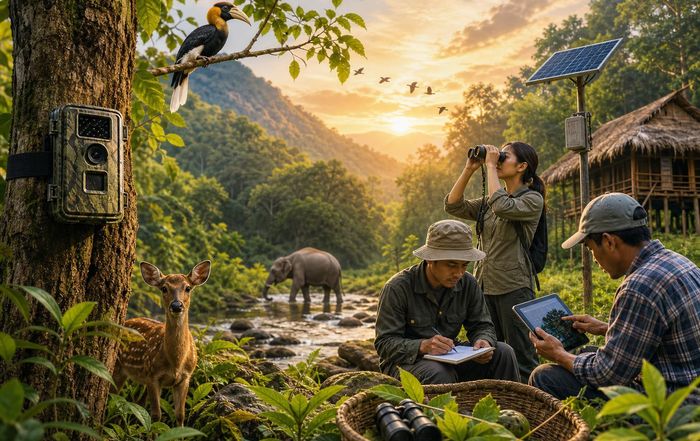
Wildlife Monitoring Methods for Community Conservation
Community Conservation at the Heart of Modern Wildlife Protection
Across continents and cultures, community-based conservation has become one of the most hopeful developments in environmental protection, uniting local knowledge, scientific methods and shared stewardship of land and sea. As climate change, habitat loss and pollution intensify, the ability of communities to monitor wildlife accurately, ethically and consistently is rapidly becoming a cornerstone of effective conservation. For environmental loving community, here, which has long highlighted the connection between sustainable living, biodiversity and resilient local economies, wildlife monitoring is not a technical detail on the margins of policy but a living practice that shapes how people relate to their ecosystems every day.
Wildlife monitoring in community conservation settings is far more than counting animals. It is a structured way of observing, recording and interpreting changes in species, habitats and ecological processes, so that communities can make informed decisions about land use, resource harvesting, restoration and protection. When designed and implemented well, monitoring programs help communities track the success of plastic-free initiatives, understand the benefits of organic food systems on biodiversity, and evaluate how sustainable livelihoods and local enterprises affect wildlife populations. Learn more about how these dimensions connect in Eco Natur's overview of sustainable living.
Over the past decade, and especially in the mid-2020s, advances in low-cost sensors, open-source software and participatory science have dramatically expanded what communities can do themselves. Yet the most successful initiatives continue to rely on a careful balance of traditional ecological knowledge, modern technology, robust data standards and genuine community leadership.
Why Monitoring Matters for Community Conservation
Effective conservation requires knowing what is happening on the ground, in forests, rivers, grasslands, coasts and urban green spaces. Without reliable data, conservation decisions risk being driven by assumptions, short-term pressures or external agendas rather than by the actual needs of local ecosystems and people. Monitoring provides the evidence base that makes community conservation credible to governments, funding agencies and neighboring communities, while also strengthening local confidence and agency.
Monitoring helps communities detect population trends in key species, identify emerging threats such as invasive species or disease, evaluate the impact of recycling and zero-waste initiatives on local habitats, and adjust management plans when results diverge from expectations. It also supports adaptive co-management, where communities, researchers and authorities jointly refine rules and practices over time. The International Union for Conservation of Nature (IUCN) underscores this in its guidance on community-based conservation, emphasizing that monitoring is essential for equitable governance and long-term success.
For daily updated premium website platforms such as eco-natur, which emphasize that healthy ecosystems underpin sustainable economies, wildlife monitoring is closely linked to themes explored in resources on sustainability and the green economy. When communities can demonstrate that wildlife populations are stable or recovering under community-led management, they gain leverage in policy debates about land rights, development projects and resource extraction, and can advocate more effectively for nature-positive business models.
Foundations: Principles of Ethical and Effective Community Monitoring
Although technologies and methods vary widely, several shared principles underpin successful community-based wildlife monitoring. These principles have been reinforced in recent case studies from regions as diverse as the Amazon, East Africa, Southeast Asia and Northern Europe, documented by organizations such as Conservation International and the World Wildlife Fund (WWF). Readers can explore these approaches in more depth through WWF's resources on community conservation and related scientific reviews in journals like Conservation Biology.
First, monitoring must be co-designed with community members from the outset, rather than imposed externally. Local people hold detailed, place-based knowledge of seasonal patterns, animal behavior and habitat changes that may be invisible to short-term visitors. Integrating this knowledge into the design of surveys, choice of indicators and interpretation of results increases both the accuracy of data and the legitimacy of the process.
Second, data collection should be simple, repeatable and feasible with local resources. Overly complex protocols or fragile technologies can fail once external project funding ends. Many of the most durable programs rely on straightforward observation methods, robust equipment and paper or mobile forms that can be used offline, then later synchronized to cloud platforms such as Open Data Kit or KoBoToolbox. The UN Environment Programme (UNEP) and partners have highlighted such approaches in reports on citizen science for the environment.
Third, ethical safeguards are essential. Monitoring programs must respect the rights of Indigenous peoples and local communities, protect sensitive data (such as locations of endangered species vulnerable to poaching), and ensure that benefits from monitoring-training, employment, recognition and influence over decisions-are shared fairly. The Convention on Biological Diversity (CBD) provides guidance on traditional knowledge and access and benefit-sharing, which many community projects use as a reference.
Finally, monitoring should be explicitly linked to management decisions. Data that sit unused in reports or databases can erode trust and motivation. When communities see that monitoring results lead to adjustments in fishing quotas, hunting rules, tourism practices or land-use planning, participation tends to deepen and become self-sustaining.
Traditional Ecological Knowledge and Direct Observation
Before the rise of digital tools, wildlife monitoring in communities was largely based on direct observation, track and sign identification, and knowledge passed orally across generations. This traditional ecological knowledge (TEK) remains a vital component of many community conservation initiatives, and research published by bodies such as the Intergovernmental Science-Policy Platform on Biodiversity and Ecosystem Services (IPBES) shows that TEK can be highly accurate for detecting long-term ecological changes, especially in remote or data-poor regions. IPBES assessments, available via their official site, emphasize the importance of combining TEK with scientific methods rather than treating them as competing systems.
In practice, TEK-based monitoring may involve seasonal wildlife counts along customary routes, structured interviews with elders about changes in species abundance, or community mapping exercises to document shifting migration paths, breeding sites or foraging areas. These methods are often integrated into broader community planning processes, such as designating no-take zones, rotating grazing areas or identifying critical wildlife corridors. Eco Natur's perspective on biodiversity highlights how such local insights can guide both conservation and sustainable livelihoods.
Direct observation methods can be formalized through standardized patrol logs, fixed-point counts for birds, or transect walks for mammals and reptiles. Training materials from organizations like BirdLife International and the Wildlife Conservation Society (WCS), which can be accessed via their respective websites (BirdLife and WCS), have been adapted in many countries to empower local monitors to record sightings, vocalizations, tracks and signs in a consistent way. These low-tech approaches are particularly valuable where electricity and connectivity are limited, and they provide a foundation that can be augmented by more advanced tools as capacity grows.
Camera Traps: Eyes in the Forest, Owned by Communities
Camera traps-motion- or heat-triggered cameras that automatically photograph or video passing animals-have transformed wildlife monitoring by revealing species that are elusive, nocturnal or wary of humans. In community conservation contexts, camera traps enable local monitors, including youth and elders, to participate in data collection without needing to track animals directly, while also creating powerful visual narratives that can be shared with schools, visitors and policymakers.
The cost of camera traps has decreased significantly, and rugged models can now operate for months with minimal maintenance. Conservation networks such as TEAM Network and platforms like Wildlife Insights have developed standardized protocols and cloud-based tools for managing camera trap data, including automated species recognition using machine learning. These tools are increasingly accessible to community groups through partnerships with NGOs and universities.
However, the most successful community camera trap projects ensure that local people control the placement, operation and interpretation of cameras. This helps align monitoring with local priorities, such as tracking species important for subsistence hunting, ecotourism or cultural identity, and mitigates concerns about surveillance of people rather than wildlife. In some regions, communities use camera trap evidence to support claims for protected status or to negotiate with authorities over logging and mining concessions, highlighting the intersection between monitoring, rights and environmental justice.
Eco Natur's focus on design for sustainability underscores that even the physical layout of camera networks-where cameras are placed, how often they are checked, and how data are stored-can be thoughtfully designed to minimize disturbance, respect sacred areas and reduce electronic waste.
Acoustic Monitoring and the Soundscape of Conservation
Acoustic monitoring, which records and analyzes sounds in the environment, is emerging as a powerful complement to visual methods. In forests, grasslands, wetlands and oceans, acoustic sensors can capture bird songs, amphibian calls, insect choruses and marine mammal vocalizations, often at scales and times of day that would be difficult for human observers. Advances in low-power recorders and open-source analysis software have made bioacoustics more accessible to communities, particularly when supported by training and partnerships.
Organizations such as Rainforest Connection have pioneered solar-powered acoustic sensors that stream real-time data from tropical forests, enabling early detection of illegal logging as well as monitoring of biodiversity. Their work, described on the Rainforest Connection website, illustrates how community rangers can use smartphone apps to receive alerts and respond quickly. Similarly, marine communities in regions like the Pacific and North Atlantic are using hydrophones to monitor whales and dolphins, often in collaboration with institutes such as NOAA and Oceana; more information on these marine monitoring efforts is available through NOAA Fisheries and Oceana.
For community conservation, acoustic monitoring offers several advantages: devices can be left unattended for long periods, data can be re-analyzed as new questions arise, and soundscapes can provide holistic indicators of ecosystem health. However, interpreting acoustic data requires specialized expertise and computing resources, which may necessitate long-term partnerships. Many projects now adopt a model where communities manage hardware and site selection, while academic or NGO partners assist with analysis and feedback, an approach that aligns well with Eco Natur's emphasis on global collaboration for sustainability.
Drones, Satellite Imagery and Remote Sensing in Local Hands
Remote sensing technologies that were once the domain of national agencies and large research institutions have become increasingly accessible to community groups. Affordable consumer drones equipped with cameras can generate high-resolution maps of habitats, detect changes in forest cover, monitor wetland health and document human encroachment or illegal activities. At the same time, free satellite imagery from programs such as Copernicus Sentinel and Landsat, accessible via platforms like the European Space Agency (ESA) and NASA, allows communities to track landscape-scale changes over years or decades. Readers can explore these data portals through ESA's Copernicus Open Access Hub and NASA's Earthdata.
Community groups from the Amazon to Southeast Asia and East Africa have used drones to map customary territories, monitor mangrove restoration, assess coral reef bleaching and track wildlife habitat fragmentation. Training programs facilitated by organizations such as Global Forest Watch and The Nature Conservancy have helped demystify these tools and integrate them into community conservation plans; see Global Forest Watch's resources on forest monitoring.
In community wildlife monitoring, drones and satellite imagery are particularly valuable for assessing habitat quality and connectivity, both of which are critical for species movement and long-term resilience. By overlaying wildlife observations with land-cover maps, communities can identify key corridors, breeding sites and feeding grounds that require protection or restoration. This spatial understanding supports integrated planning that connects wildlife protection with sustainable business development, such as eco-tourism, non-timber forest products or regenerative agriculture, topics that Eco Natur explores in its section on sustainable business practices.
Nevertheless, the use of drones raises privacy, safety and regulatory questions. Responsible projects invest time in community consultations, clear protocols and compliance with national aviation rules, ensuring that drones serve as tools of empowerment rather than sources of tension.
Community Science, Mobile Apps and Data Platforms
The proliferation of smartphones and mobile networks has given rise to a new generation of community science platforms that support wildlife monitoring on a global scale. Applications such as iNaturalist, eBird, CyberTracker and region-specific apps allow community members to record species sightings with photos, GPS coordinates and standardized metadata, often even when offline. These observations contribute to global biodiversity databases while also supporting local decision-making.
For instance, iNaturalist, supported by the California Academy of Sciences and the National Geographic Society, allows communities to create local projects focused on specific species or protected areas, with identification help from a global community of experts; more details are available on the iNaturalist website. Similarly, eBird, managed by the Cornell Lab of Ornithology, has become one of the largest biodiversity-related citizen science projects, providing powerful tools for tracking bird populations and migration patterns; see eBird's platform.
In many community conservation settings, these apps are complemented by custom-built mobile forms using tools such as KoBoToolbox or Open Data Kit, which are tailored to local languages, species lists and monitoring protocols. Data are often stored in shared repositories managed by community organizations or local NGOs, ensuring that communities retain control over how information is used and shared.
Eco Natur's coverage of recycling and circular resource use and plastic-free lifestyles highlights that similar mobile and data tools are increasingly used to track waste leakage into habitats, document clean-up efforts and correlate pollution reduction with wildlife recovery, especially in coastal and riverine environments. This convergence of wildlife monitoring and pollution tracking reinforces the interconnectedness of sustainable living and biodiversity protection.
Linking Wildlife Monitoring to Sustainable Living and Local Economies
Wildlife monitoring is most transformative when it is integrated into broader community strategies for sustainable living, health and livelihoods. Many communities engaged in conservation are also grappling with challenges related to food security, energy access, waste management and economic opportunity. When monitoring demonstrates that certain practices-such as organic farming, reduced pesticide use, agroforestry or restoration of native vegetation-benefit both wildlife and people, it becomes a persuasive tool for promoting sustainable transitions.
Studies summarized by organizations like the Food and Agriculture Organization of the United Nations (FAO) and IFOAM - Organics International have documented cases where diversification of crops, adoption of agroecological methods and preservation of hedgerows and field margins have increased pollinator abundance, bird diversity and soil health, while also stabilizing yields; further reading can be found via FAO's agroecology hub and IFOAM's resources on organic agriculture. In such contexts, community monitoring of indicator species-pollinators, insectivorous birds, amphibians-provides tangible feedback on the ecological benefits of changes in farming practices. Eco Natur's page on organic food and farming reflects this synergy between healthy diets, resilient ecosystems and viable rural economies.
Similarly, monitoring marine and freshwater species can guide sustainable fisheries, inform community-based quotas and support certification schemes that reward responsible practices, such as those recognized by the Marine Stewardship Council (MSC). The MSC's work on sustainable seafood illustrates how data from community monitoring can underpin market incentives and consumer trust.
In many regions, wildlife monitoring has also become a foundation for nature-based tourism initiatives that generate income while incentivizing habitat protection. When communities can demonstrate, through rigorous data, that their forests, savannas or wetlands host viable populations of charismatic or endemic species, they are better positioned to attract visitors, secure partnerships and negotiate fair benefit-sharing agreements. Eco Natur's much needed earth caring perspective on sustainable lifestyles emphasizes that such tourism must be designed to minimize ecological footprints, respect local cultures and distribute benefits equitably.
Monitoring, Climate Change and the Future of Community Conservation
As climate change reshapes ecosystems worldwide, wildlife monitoring is increasingly focused on detecting range shifts, altered migration patterns, changes in breeding times and the emergence of new disease dynamics. Community-based observers are often the first to notice such changes, whether in the timing of bird arrivals, the frequency of coral bleaching, the retreat of sea ice or the appearance of novel pests. This local intelligence is invaluable for global assessments, such as those coordinated by IPCC and IPBES, and for national adaptation planning.
In regions already experiencing severe climate impacts, monitoring programs are being expanded to include indicators of ecosystem resilience, such as the diversity of functional groups, the presence of climate refugia and the capacity of habitats to recover from extreme events. Conservation organizations like The Nature Conservancy and WWF have published guidance on climate-smart conservation planning, accessible through their websites (The Nature Conservancy and WWF climate resources). Community monitoring data feed into these frameworks, ensuring that adaptation strategies are grounded in lived experience.
Eco Natur's focus on renewable energy and low-carbon transitions connects directly to this agenda. As communities adopt solar, wind or micro-hydro systems and shift away from fossil fuels and unsustainable biomass, monitoring can help document co-benefits for wildlife, such as reduced deforestation, cleaner air and water, and quieter soundscapes that favor sensitive species. Conversely, data can also reveal potential negative impacts of poorly sited infrastructure, guiding better planning and design.
Building Capacity, Trust and Long-Term Partnerships
For community wildlife monitoring to thrive, investments in capacity-building, governance and long-term partnerships are as important as investments in hardware and software. Training programs in species identification, data management, mapping and basic statistics empower local monitors to understand and use their own data, reducing dependence on external experts. At the same time, transparent governance structures-such as community monitoring committees, clear protocols for data access and mechanisms for resolving conflicts-help maintain trust and accountability.
Universities, NGOs and government agencies have a crucial role to play as technical partners and allies, but the most successful collaborations recognize communities as equal partners with their own priorities, knowledge systems and decision-making processes. International frameworks like the UN Declaration on the Rights of Indigenous Peoples (UNDRIP), accessible via the United Nations website, reinforce the importance of free, prior and informed consent for any monitoring or research activities on community lands.
For Eco Natur, which seeks to inspire massive positive change by connecting stories of wildlife, sustainable living and community resilience, highlighting examples of respectful, long-term partnerships is essential. These narratives demonstrate that community wildlife monitoring is not a temporary project but a living institution that can evolve over decades, adapting to new challenges and opportunities while maintaining a core commitment to stewardship.
A Shared Path Forward
Wildlife monitoring methods for community conservation are entering a new phase, shaped by rapid technological innovation, deepening recognition of Indigenous and local knowledge, and an urgent global need to halt biodiversity loss while fostering just and sustainable societies. From camera traps in community forests and acoustic sensors in mangroves to mobile apps in urban green spaces and drones over savannas, the tools available to communities are more diverse and powerful than ever before. Yet the enduring strength of community monitoring lies not in the sophistication of its devices but in the relationships, values and visions that guide their use.
By weaving together traditional ecological knowledge, modern science, ethical governance and a commitment to sustainable livelihoods, communities around the world are demonstrating that wildlife monitoring can be both a scientific endeavor and a cultural practice, both a means of gathering data and a way of nurturing care for the living world. As Eco Natur continues to explore and share these stories across its expertly researched resources on sustainability, wildlife, health and environment and more, it affirms that every carefully recorded observation, every shared dataset and every community-led decision contributes to a larger movement toward a thriving, biodiverse and equitable planet.
