
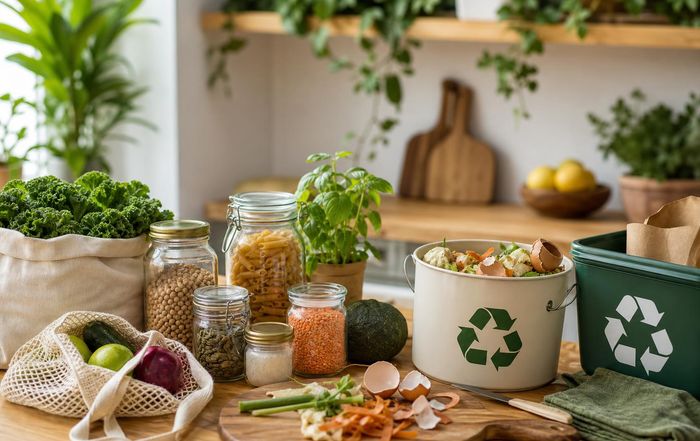
Sustainable Kitchen Habits That Cut Waste and Save Money
Why the Kitchen Is the Heart of Sustainable Living
Across households in North America, Europe, Asia, Africa and beyond, the kitchen has quietly become one of the most important frontiers for environmental change. Food production, packaging, refrigeration, cooking and cleaning all converge in this one room, which means that daily choices made there influence climate emissions, plastic pollution, biodiversity loss and household budgets simultaneously. For subscribing email readers and online visitors here, the kitchen is where sustainability becomes tangible, where abstract ideas like circular economy, resource efficiency and regenerative agriculture translate into specific, repeatable habits that can be practiced every day.
International research from organizations such as the United Nations Environment Programme shows that roughly one-third of food produced for human consumption is lost or wasted along the supply chain, with a significant share occurring at the household level. In high-income countries including the United States, the United Kingdom, Germany and Canada, consumer food waste is especially high, while in many low- and middle-income countries, waste tends to occur earlier in the chain due to storage and transport challenges. At the same time, household budgets are under pressure from rising food and energy prices, making it increasingly important to identify habits that reduce both environmental impact and costs. Thoughtful kitchen practices offer a rare opportunity to achieve both goals at once.
Eco Natur has long emphasized that sustainable living is not a niche lifestyle but a practical, evidence-based approach that can work in a small apartment in Singapore, a family home in Australia, a rural farmhouse in France or a city flat in Spain. By focusing on realistic, science-informed habits rather than perfectionism, households can create kitchens that waste less, save more and support healthier ecosystems. Readers can explore broader principles of sustainable living on Eco Natur's dedicated pages, while this article concentrates on the concrete, day-to-day practices that make the kitchen a powerful engine of change.
Planning, Shopping and Storing: The Foundation of a Low-Waste Kitchen
The most effective sustainable kitchen habits begin before a single pot is placed on the stove. Careful planning, conscious shopping and smart storage are consistently identified by researchers and consumer organizations as the three pillars of waste reduction. According to guidance from agencies such as the Food and Agriculture Organization of the United Nations and consumer groups like Which? in the UK and Consumer Reports in the US, households that plan meals and shop with a list tend to waste significantly less food and spend less money overall.
Meal planning does not need to be complicated or rigid. Many sustainability-minded households use a simple system: they check what is already in the refrigerator, freezer and pantry, sketch three to five flexible meals around those ingredients, and then build a short shopping list focused on what is missing. This approach reduces impulse purchases, helps ensure that perishable items are used on time, and makes it easier to incorporate leftovers into future meals. For readers seeking a broader framework for aligning such habits with long-term ecological goals, Eco Natur's overview of sustainability provides useful context.
Storage is the quiet partner of planning. Guidance from organizations like the US Department of Agriculture and the UK's Love Food Hate Waste campaign highlights that many foods are discarded simply because they were stored incorrectly or forgotten. Simple strategies such as keeping the refrigerator at the recommended temperature range, storing ethylene-producing fruits like apples and bananas away from sensitive produce such as leafy greens, and using transparent containers so leftovers remain visible, can dramatically extend shelf life. In many European countries, "use-by" labels (which relate to safety) and "best-before" labels (which relate to quality) are clearly distinguished, but confusion still leads to edible food being discarded; learning the difference and trusting sensory checks where safe can prevent unnecessary waste.
Eco Natur often emphasizes that these practices are not only environmentally responsible but also economically sensible. Food is one of the largest variable expenses in most households, and reducing waste by 20-30 percent through better planning and storage can translate into meaningful annual savings, especially in cities with higher living costs such as London, New York, Zurich or Tokyo. By treating planning and storage as essential parts of a sustainable lifestyle rather than optional extras, households can build resilient habits that persist even when schedules are busy.
Cooking with Intention: From Root to Leaf and Nose to Tail
Once ingredients are in the kitchen, the way they are prepared has a significant impact on both waste and nutrition. Many cultures have long traditions of "root-to-leaf" and "nose-to-tail" cooking, where as much of the plant or animal as possible is used. Modern sustainability movements are rediscovering these practices and adapting them to contemporary kitchens. Organizations such as Slow Food and culinary schools focused on sustainability have documented how vegetable stems, leaves and peels can be transformed into flavorful stocks, pestos, stir-fries and snacks, while bones and trimmings can be used for broths and sauces rather than discarded.
For example, carrot tops, often thrown away, can be blended with nuts or seeds, oil and lemon juice to create a vibrant pesto; broccoli stems can be thinly sliced and sautéed or pickled; and slightly wilted greens can be revived in soups or curries. In many Asian and Mediterranean cuisines, such practices are already embedded in traditional recipes, reflecting a historical need to stretch resources. Modern households in countries such as Italy, Thailand, Brazil and South Africa are increasingly revisiting these skills, guided by chefs and educators who emphasize both flavor and frugality.
Cooking with intention also involves managing portion sizes realistically, especially in cultures where oversized servings have become normalized. Public health agencies and researchers at universities such as Harvard T.H. Chan School of Public Health and University College London have noted that modest portion sizes support both health and waste reduction, as uneaten food on plates is rarely saved. By serving smaller portions and allowing seconds as needed, families can significantly cut plate waste without feeling deprived. For those interested in how such habits intersect with personal and planetary health, Eco Natur's resources on health and sustainable diets provide a broader perspective.
In addition, energy-efficient cooking methods can reduce both emissions and utility bills. Using lids on pots, matching pot size to burner size, favoring pressure cookers or induction hobs where available, and batch-cooking multiple dishes in the oven at once are all strategies highlighted by agencies such as the International Energy Agency and national energy efficiency programs. These techniques not only save energy but also make it easier to cook once and eat multiple times, further reducing waste.
Embracing Organic and Seasonal Food for People and Planet
Food choices themselves matter deeply for sustainability, and many readers of Eco Natur are particularly interested in organic and seasonal options that support soil health, biodiversity and personal well-being. While scientific debates continue about the exact magnitude of environmental benefits in different contexts, multiple meta-analyses, including research summarized by organizations such as the Rodale Institute and the Food and Agriculture Organization, suggest that organic farming systems tend to promote higher soil organic matter, reduced pesticide use and improved on-farm biodiversity compared with conventional systems, although yields and economic factors vary by crop and region.
Choosing organic foods where feasible, especially for items known to carry higher pesticide residues in conventional systems, can therefore be a meaningful component of a sustainable kitchen. However, Eco Natur consistently emphasizes that perfection is not required; prioritizing organic for certain staples, supporting local farmers' markets, and choosing minimally processed whole foods can already make a significant difference. Readers can explore more about organic food and its role in sustainable living on Eco Natur's dedicated pages.
Seasonality is another powerful lever. Eating fruits and vegetables that are in season locally often means they are fresher, more flavorful and less resource-intensive to transport and store. In regions with distinct seasons such as Sweden, Canada or New Zealand, this might mean focusing on root vegetables and hardy greens in winter, while embracing berries and stone fruits in summer. In tropical countries like Malaysia or Thailand, seasonality may be less about temperature and more about rainfall patterns and local harvest cycles. Resources from organizations like Local Harvest in the United States or national agricultural extensions in Europe and Asia help consumers understand what is in season and how to incorporate those ingredients into everyday cooking.
Importantly, sustainable food choices are not limited to produce. Legumes, whole grains, nuts and seeds typically have lower environmental footprints than many animal products, particularly ruminant meats such as beef and lamb, as documented by lifecycle assessments from institutions like Our World in Data and the Intergovernmental Panel on Climate Change. Shifting some meals toward plant-forward recipes, even without becoming fully vegetarian or vegan, can therefore reduce emissions and costs simultaneously. Many households adopt a "flexitarian" approach, enjoying meat or fish less frequently but choosing higher-welfare or more sustainably produced options when they do. Eco Natur's global perspective on sustainable living highlights how such shifts are unfolding across continents.
Reducing Plastic and Packaging in the Kitchen
Plastic packaging, especially single-use items, remains one of the most visible environmental challenges associated with modern kitchens. Reports from the Ellen MacArthur Foundation, OECD and UNEP have documented the rapid growth of plastic production and the persistent problem of mismanaged waste, which contributes to marine pollution and microplastic contamination across ecosystems. While systemic changes in packaging design, recycling infrastructure and corporate responsibility are essential, household habits still play a meaningful role.
In many cities, consumers now have access to refill stores, bulk sections in supermarkets and reusable container programs that reduce the need for disposable packaging. Bringing cloth bags, glass jars or stainless steel containers to purchase dry goods, spices and cleaning products can significantly cut plastic waste and often reduces costs over time, as bulk products are frequently cheaper per unit. Where such options are limited, choosing larger package sizes instead of multiple small ones, favoring materials like glass or metal when practical, and avoiding heavily over-packaged convenience foods can still make a difference.
Eco Natur's guidance on plastic-free living offers a comprehensive overview of strategies for reducing plastic use in daily life, including the kitchen. Small changes such as replacing plastic wrap with beeswax wraps or silicone lids, using reusable water bottles and coffee cups, and opting for durable, repairable kitchen tools instead of disposable gadgets all contribute to a more circular approach. Organizations like Plastic Free July and Break Free From Plastic provide additional inspiration and resources for individuals and communities seeking to reduce their reliance on single-use plastics.
It is important to acknowledge that in some contexts, plastic packaging can play a role in reducing food waste by extending shelf life, especially for perishable items transported over long distances. Studies from agencies such as WRAP in the UK show that the relationship between packaging and waste is complex, and that the optimal solution depends on product type, transport distance and local waste management systems. Therefore, Eco Natur encourages a nuanced approach: prioritize reusables and low-packaging options where they genuinely reduce overall environmental impact, while supporting systemic improvements in packaging design and recycling infrastructure.
Recycling, Composting and the Circular Kitchen
Even with careful planning and reduced packaging, some waste in the kitchen is unavoidable. The way that waste is handled, however, determines whether valuable resources are recovered or lost. Effective recycling and composting are central to the vision of a circular kitchen, where materials are kept in use for as long as possible and organic matter is returned to the soil. Eco Natur's in-depth resources on recycling and zero-waste living provide a broader framework for understanding these practices within the circular economy.
Recycling systems vary widely between countries and even between municipalities. In parts of Europe such as Germany, the Netherlands and Sweden, multi-stream collection systems separate paper, glass, metals, plastics and organic waste, achieving relatively high recycling rates. In many regions of North America, Asia, Africa and South America, infrastructure is improving but remains inconsistent. Organizations such as the European Environment Agency and national environmental ministries regularly publish guidance on what can and cannot be recycled in specific jurisdictions, and it is essential for households to follow local rules to avoid contamination that can render entire batches unrecyclable.
Composting is a particularly powerful habit for kitchen sustainability, as it diverts organic waste from landfills where it would otherwise generate methane, a potent greenhouse gas. According to the US Environmental Protection Agency and similar agencies worldwide, composting food scraps and yard waste can significantly reduce household greenhouse gas emissions while producing nutrient-rich soil amendments for gardens and community green spaces. Even in urban apartments without gardens, options such as worm bins, bokashi systems or community compost drop-off points are increasingly available, from New York and London to Singapore and Seoul.
Eco Natur emphasizes that composting is not only a waste management strategy but also a way to reconnect kitchen habits with broader ecological cycles. When households see vegetable peels, coffee grounds and eggshells transformed into rich compost that nourishes soil and supports biodiversity, the kitchen becomes part of a regenerative loop rather than a linear consumption chain. Readers interested in the connections between composting, soil health and biodiversity can find more detailed discussions on Eco Natur's biodiversity pages.
Protecting Wildlife and Ecosystems Through Everyday Choices
The impact of kitchen habits extends far beyond household walls, influencing wildlife and ecosystems across continents. Agricultural expansion, pesticide use, water extraction and pollution associated with food production are among the leading drivers of biodiversity loss, as documented by organizations such as the Intergovernmental Science-Policy Platform on Biodiversity and Ecosystem Services (IPBES) and conservation groups including WWF and BirdLife International. By choosing foods and products that support more sustainable production systems, consumers can help protect habitats from tropical forests in Brazil and Indonesia to grasslands in South Africa and wetlands in Scandinavia.
For instance, certified products such as those carrying Rainforest Alliance, Fairtrade or Marine Stewardship Council (MSC) labels aim to ensure that coffee, cocoa, tea, seafood and other commodities are produced in ways that reduce harm to ecosystems and support local communities, although the effectiveness of certification varies and continues to be studied. Reducing demand for products linked to deforestation, such as unsustainably produced palm oil or soy used for animal feed, can also contribute to wildlife protection. Eco Natur's dedicated section on wildlife explores these connections in more depth and highlights positive stories of restoration and conservation.
At a local level, kitchen waste management has direct implications for wildlife health. Improperly disposed food waste and packaging can attract urban wildlife to dangerous environments, contribute to litter that harms birds and marine animals, and introduce pollutants into waterways. By securing bins, avoiding litter, and supporting community clean-up initiatives, households can help create safer habitats in cities and rural areas alike. Organizations such as The Ocean Cleanup, Surfrider Foundation and local conservation groups from Canada to New Zealand provide opportunities for citizens to engage in practical actions that complement their kitchen habits.
The Role of Business and Policy in Supporting Sustainable Kitchens
While individual habits are crucial, businesses and policymakers play an equally important role in shaping the possibilities available to households. Supermarkets, food brands, appliance manufacturers and service providers influence what products, packaging and information consumers encounter daily. Governments set standards for labeling, food safety, energy efficiency and waste management that can either support or hinder sustainable choices. For readers of Eco Natur who are involved in business or policy, the kitchen offers a lens through which to understand broader sustainability transitions.
Many companies, from global retailers to small zero-waste shops, are experimenting with innovative models such as refill stations, deposit-return schemes, surplus food redistribution and upcycled ingredients. Reports from organizations like the Ellen MacArthur Foundation and World Business Council for Sustainable Development highlight how circular economy principles can be applied to food systems, reducing waste while creating new economic opportunities. Eco Natur's section on sustainable business explores these developments and showcases enterprises that align profitability with environmental stewardship.
Policy initiatives are also evolving. In the European Union, regulations on single-use plastics, food waste reduction targets and extended producer responsibility schemes are reshaping packaging and waste systems. Countries such as France and Italy have introduced measures to encourage food donation and penalize large retailers that discard edible food. Cities from San Francisco to Seoul have implemented mandatory composting and sophisticated recycling systems that make it easier for households to participate in circular practices. International organizations like the World Resources Institute and OECD provide comparative analyses of such policies and their effectiveness.
Eco Natur views the kitchen as a microcosm of the sustainable economy that is gradually emerging worldwide. When businesses design products and services that facilitate low-waste habits, and when policymakers create frameworks that reward resource efficiency and penalize pollution, individual efforts in the kitchen become part of a much larger transformation. This alignment of personal, corporate and public action is essential for achieving climate and biodiversity goals in the decades ahead.
Energy, Appliances and Design for a Future-Ready Kitchen
Beyond food and waste, the energy footprint of kitchen appliances and the design of the space itself are important components of sustainability. Refrigerators, freezers, ovens and dishwashers are among the most energy-intensive devices in many homes, and their efficiency has improved significantly over recent decades thanks to standards and innovations documented by agencies such as the International Energy Agency and national energy departments. Choosing high-efficiency appliances when replacements are necessary, maintaining seals and coils, and using features such as eco-modes on dishwashers can reduce electricity consumption and operating costs over time.
The integration of renewable energy into homes, whether through rooftop solar panels, community energy schemes or green tariffs from utilities, further enhances the sustainability of kitchen operations. In countries like Germany, Australia and Denmark, high levels of household solar adoption already mean that many meals are cooked with electricity generated on site or nearby. While not all households can install their own systems, growing access to renewable energy through grids and community projects is gradually decarbonizing the energy used in kitchens worldwide.
Kitchen design also influences behavior. Research in environmental psychology and sustainable design, including work by universities and organizations such as the Rocky Mountain Institute, suggests that layout, lighting, storage and visibility can either support or hinder sustainable habits. For example, placing reusable containers and cloth bags in easily accessible locations increases the likelihood they will be used, while designing pantry and refrigerator spaces so that older items are visible and reachable reduces the risk of food being forgotten. Eco Natur's pages on sustainable design explore how aesthetics, functionality and ecology can be harmonized in kitchens and other living spaces.
A Global Movement, One Kitchen at a Time
From large cities in China and South Korea to rural communities in Finland and South Africa, households are reimagining what it means to cook, eat and clean in ways that respect planetary boundaries while nurturing health and connection. The year 2026 finds the world at a critical juncture, with climate impacts intensifying and biodiversity under pressure, yet also with unprecedented knowledge, technology and community engagement available to drive solutions. The kitchen, though modest in scale compared with industrial systems, is a place where individuals and families can experience their own agency and contribute meaningfully to global change.
For Eco Natur, the kitchen is not only a physical space but a symbol of how everyday life can align with ecological wisdom. Through planning and storage that prevent waste, cooking methods that honor whole ingredients, choices that prioritize organic and seasonal foods, efforts to reduce plastic and packaging, commitment to recycling and composting, care for wildlife and ecosystems, engagement with responsible businesses and supportive policies, and attention to energy and design, households can create kitchens that are both efficient and inspiring. These habits do not require perfection or wealth; they require curiosity, intention and a willingness to learn from both traditional knowledge and modern science.
Readers who wish to deepen their understanding of these themes can explore more top resources on sustainable living, recycling, plastic-free choices, organic food and the evolving global sustainability landscape. As more kitchens around the world adopt these practices, the cumulative effect can be profound, demonstrating that meaningful environmental progress is not confined to conference halls or corporate boardrooms, but is also simmering quietly on stovetops, resting in refrigerators and growing in compost bins in homes everywhere.
