
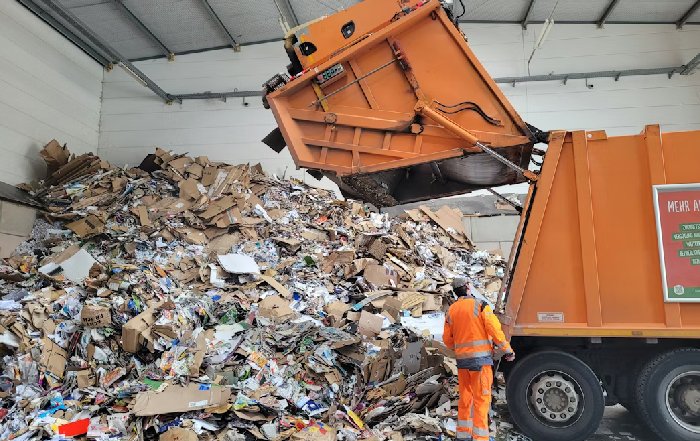
From Landfill to Resource: Advanced Recycling in a Resource-Constrained World
Rethinking Waste: Why Advanced Recycling Matters Now
The global conversation on sustainability has shifted from "why recycle" to "how to transform waste into a strategic resource," as governments, businesses, and communities recognize that traditional waste management models are no longer compatible with climate goals, resource security, and public expectations. Landfills on every continent, from North America and Europe to Asia, Africa, and South America, are reaching capacity, while the extraction of virgin raw materials continues to place unprecedented pressure on ecosystems, climate systems, and local communities. In this context, advanced recycling technologies are emerging as a critical bridge between a linear, take-make-dispose economy and a regenerative, circular model in which materials retain value for as long as possible. For eco-natur.com, whose mission is deeply aligned with sustainable living, sustainable business, and the transition to a plastic-free, low-waste world, advanced recycling is not an abstract technological trend; it is a practical pathway to accelerate the shift away from landfills and incineration and toward a resilient circular economy that works for households, cities, and companies across the world.
Advanced recycling represents a broad suite of technologies and business models that go beyond conventional mechanical recycling, enabling complex, contaminated, or mixed materials-especially plastics-to be transformed into new feedstocks, fuels, and products. As organizations from the United Nations Environment Programme to the OECD highlight in their analyses of global material flows, the world's consumption of raw materials has more than tripled since 1970, and without systemic change it is projected to continue rising sharply, particularly in rapidly developing regions across Asia, Africa, and South America. Learn more about the scale of this challenge in global materials use through resources such as the UNEP Global Resources Outlook. Against this backdrop, advanced recycling is increasingly viewed not as a niche solution, but as a central pillar of a broader circular strategy that includes waste prevention, eco-design, reuse, and high-quality mechanical recycling.
From Linear to Circular: The Context for Advanced Recycling
The traditional linear economy model, which has dominated industrial development in the United States, Europe, and much of Asia, is based on the assumption that resources are abundant, cheap, and easily disposable. Virgin materials are extracted, processed into products, consumed, and then discarded, often into landfills or incinerators. This model has led to mounting environmental pressures, including greenhouse gas emissions, biodiversity loss, and widespread pollution of land and oceans. For readers of eco-natur.com who are already familiar with the principles of sustainability and sustainable living, the limitations of the linear model are clear: it is fundamentally at odds with the finite nature of planetary resources and the need to maintain ecological integrity.
The circular economy, by contrast, aims to decouple economic growth from resource consumption by designing products and systems that keep materials in use for as long as possible, at their highest possible value, before safely returning them to nature or to industrial cycles. Organizations such as the Ellen MacArthur Foundation have been instrumental in articulating the business case for circularity, particularly for plastic packaging, electronics, and textiles. Readers can explore their work on circular design and business models through the Ellen MacArthur Foundation's circular economy resources. Advanced recycling fits into this framework as a set of tools that can recover value from streams that are currently considered non-recyclable, thereby complementing upstream strategies such as design for recyclability, reuse systems, and waste reduction.
For eco-natur.com, which regularly explores themes of zero waste, recycling, and sustainable business, the circular economy provides a unifying lens through which advanced recycling can be assessed: not as a license to maintain wasteful consumption, but as a targeted intervention that increases the overall efficiency and resilience of material systems, especially where prevention and reuse alone cannot address the scale or complexity of waste flows.
What Makes Recycling "Advanced"?
Advanced recycling is an umbrella term that encompasses several families of technologies, each with distinct capabilities, environmental profiles, and commercial maturity. While definitions vary across regions-from the United States and Canada to the European Union, Japan, and South Korea-three broad categories are commonly discussed: chemical recycling, advanced mechanical sorting and processing, and biological or solvent-based recycling.
Chemical recycling technologies, including pyrolysis, gasification, and depolymerization, break plastics and other complex materials down into their chemical building blocks, which can then be reprocessed into new polymers, fuels, or chemical intermediates. For example, depolymerization can convert polyethylene terephthalate (PET) from bottles and textiles back into its monomers, which are then used to produce high-quality recycled PET suitable for food-grade applications. International bodies such as the American Chemistry Council and the European Chemical Industry Council have published overviews of these technologies and their potential role in a circular plastics economy; a useful starting point is the European Commission's work on plastics and circularity, which can be explored on the EU circular economy plastics page.
Advanced mechanical recycling, meanwhile, leverages sophisticated sorting technologies such as near-infrared spectroscopy, machine vision, robotics, and digital watermarks to separate materials with unprecedented precision, even in complex waste streams. Facilities in Germany, the Netherlands, and Scandinavia are at the forefront of these innovations, using high-speed optical sorters and AI-driven robots to extract high-purity fractions from municipal solid waste, construction debris, and commercial waste streams that were previously destined for landfill. Reports from organizations like the International Solid Waste Association (ISWA) and the World Bank provide insight into how such technologies are being deployed globally; readers can find contextual data on global waste trends and infrastructure at the World Bank's "What a Waste" resource.
Biological and solvent-based recycling approaches, still emerging but rapidly advancing in Europe, North America, and Asia, use enzymes, microbes, or specialized solvents to separate or depolymerize materials under milder conditions, offering the potential for lower energy consumption and reduced emissions. Enzymatic recycling of PET, pioneered by companies in France and supported by research institutions in the United Kingdom, Japan, and the United States, is one example where scientific breakthroughs are translating into industrial-scale facilities. For those interested in the underlying science, the U.S. National Renewable Energy Laboratory (NREL) and similar institutions in Europe maintain accessible overviews of bio-based recycling research; more information can be found via the NREL materials and recycling research pages.
From Landfill Burden to Strategic Resource
The shift from viewing waste as a burden to seeing it as a resource is more than a rhetorical change; it reflects a fundamental revaluation of materials in a world facing climate constraints and supply chain volatility. Landfills, particularly in densely populated regions across Europe, Asia, and North America, occupy valuable land, generate methane-a potent greenhouse gas-and can pose long-term risks to groundwater and ecosystems. As climate regulations tighten, especially under frameworks such as the European Green Deal and the climate policies of countries like the United States, Canada, and Japan, the economic and regulatory costs of landfilling are rising, creating strong incentives to divert materials into higher-value pathways. The Intergovernmental Panel on Climate Change (IPCC) has repeatedly underscored the importance of reducing methane emissions from waste; readers can examine these findings in the IPCC reports on climate mitigation.
Advanced recycling technologies offer a way to unlock the latent value in waste streams that have traditionally been landfilled or incinerated. Mixed plastic packaging, multi-layer films, contaminated containers, and composite materials from construction and automotive sectors are currently among the most challenging fractions to manage. By converting these materials into feedstocks for new plastics, fuels, or chemical products, advanced recycling can reduce the demand for virgin fossil resources, support decarbonization goals, and create new revenue streams for companies operating in sectors from fast-moving consumer goods to automotive and electronics. For businesses exploring sustainable business models and a more circular economy, this shift opens up opportunities for innovation across product design, supply chain management, and customer engagement.
In regions where landfill space is scarce or regulations are stringent-such as the United Kingdom, Germany, the Netherlands, and several Nordic countries-advanced recycling is increasingly integrated into national waste strategies, complementing robust systems for separate collection, reuse, and mechanical recycling. In rapidly urbanizing areas of Asia, Africa, and South America, where informal recycling sectors play a major role, advanced recycling projects are beginning to partner with local collectors and cooperatives, offering higher and more stable prices for difficult-to-recycle materials, while also requiring careful attention to social equity and labor standards.
Aligning Advanced Recycling with Sustainable Living
For the global audience of eco-natur.com, spanning the United States, United Kingdom, Germany, Canada, Australia, France, Italy, Spain, the Netherlands, Switzerland, China, Sweden, Norway, Singapore, Denmark, South Korea, Japan, Thailand, Finland, South Africa, Brazil, Malaysia, New Zealand, and beyond, the question is not only how advanced recycling works, but how it connects to everyday choices and lifestyles. Advanced recycling cannot substitute for the foundational principles of sustainable living, which prioritize waste prevention, reduction of unnecessary consumption, and the transition to plastic-free alternatives where feasible. Instead, it functions as a complementary layer that addresses the residual waste that remains even in ambitious zero-waste households, sustainable businesses, and progressive municipalities.
For example, in urban centers from New York and Toronto to London, Berlin, Sydney, and Singapore, consumer goods companies are increasingly redesigning packaging to be recyclable or reusable, while retailers are piloting refill and return systems. Yet certain applications-such as medical packaging, multi-layer films for food preservation, and specialized industrial materials-remain difficult to replace or redesign in the short term. In these cases, advanced recycling provides a pathway to recover value and reduce environmental impacts, while longer-term innovation continues. Consumers and businesses seeking to align their choices with circular principles can deepen their understanding of these trade-offs by exploring resources on sustainable lifestyles and sustainable living that connect product choices with system-level impacts.
International organizations such as the UN Environment Programme and the World Economic Forum have emphasized that technology alone cannot deliver sustainability; it must be embedded in broader social, economic, and behavioral change. Their work on sustainable consumption and production highlights the importance of policy frameworks, corporate commitments, and citizen engagement in driving systemic transformation; readers can explore these themes further via the UNEP work on sustainable consumption and production.
Business Leadership, Policy, and the Regulatory Landscape
Across major economies, advanced recycling is moving rapidly from pilot projects to commercial-scale facilities, supported by evolving policy frameworks and growing corporate commitments to recycled content and circularity. In the European Union, the European Commission has introduced ambitious targets for recycling and recycled content under the Circular Economy Action Plan and the Packaging and Packaging Waste Regulation, which are driving demand for high-quality recycled materials, including those derived from advanced technologies. Detailed policy information is available through the European Commission's circular economy pages, which outline regulatory trends affecting businesses in Europe and, indirectly, global supply chains.
In the United States and Canada, state and provincial governments are introducing extended producer responsibility (EPR) schemes for packaging, which shift the financial responsibility for waste management from taxpayers to producers, thereby incentivizing design for recyclability and investment in advanced recycling infrastructure. Meanwhile, in countries such as Japan, South Korea, and Singapore, long-standing waste management and recycling regulations are being updated to incorporate circular economy goals, with advanced recycling recognized as one of several tools to achieve high recovery rates. The OECD provides comparative analyses of these policy approaches, which can be explored through the OECD work on waste, materials, and circular economy.
For companies with global footprints, including consumer goods manufacturers, retailers, and packaging producers, navigating this evolving regulatory landscape requires robust sustainability strategies, transparent reporting, and partnerships across the value chain. Many multinational firms have joined initiatives such as the Global Commitment led by the Ellen MacArthur Foundation and UNEP, which set voluntary targets for plastic reduction, reuse, and recycling. Such commitments often explicitly reference advanced recycling as part of a portfolio of solutions, while also emphasizing the primacy of reduction and reuse. Businesses seeking to position themselves as leaders in circularity can benefit from aligning corporate strategies with these international frameworks, while also engaging with local stakeholders and communities to ensure that advanced recycling projects create shared value and trust.
Environmental and Social Considerations: Ensuring Trustworthiness
For advanced recycling to contribute credibly to sustainable development, it must meet stringent standards of environmental performance, transparency, and social responsibility. Stakeholders across Europe, North America, Asia, and other regions have raised legitimate concerns regarding the energy intensity, emissions, and potential for greenwashing associated with some advanced recycling projects, particularly those that focus on converting plastics into fuels rather than new materials. Independent life-cycle assessments and peer-reviewed studies are therefore essential to evaluate the true climate and resource benefits of specific technologies and facilities. Institutions such as the European Environment Agency, the U.S. Environmental Protection Agency, and leading universities in Germany, the Netherlands, Sweden, and the United Kingdom are actively assessing these impacts; readers can explore related analyses via the European Environment Agency's circular economy and waste pages.
Social considerations are equally important. In many countries, especially across Asia, Africa, and South America, informal waste pickers play a critical role in collecting and sorting recyclable materials, often under precarious conditions. The introduction of advanced recycling facilities must therefore be accompanied by inclusive strategies that respect and enhance livelihoods, integrate informal workers where possible, and uphold labor and human rights standards. Organizations such as WIEGO (Women in Informal Employment: Globalizing and Organizing) and GAIA (Global Alliance for Incinerator Alternatives) have emphasized the need for just and equitable waste sector transitions; those interested can learn more about these perspectives through the GAIA resources on zero waste and climate.
From the standpoint of eco-natur.com, which prioritizes experience, expertise, authoritativeness, and trustworthiness, any discussion of advanced recycling must therefore be grounded in rigorous evidence, clear communication of benefits and limitations, and respect for the broader social and ecological context. The platform's coverage of recycling, biodiversity, and global sustainability reflects this holistic perspective, emphasizing that technological innovation must be evaluated not only on technical performance, but also on its contribution to human well-being and planetary health.
Connecting Advanced Recycling to Organic Food, Health, and Wildlife
Although advanced recycling is often discussed in technical or industrial terms, its implications extend directly into domains that matter to everyday life, including organic food, health, and wildlife protection. Plastic pollution in soils, rivers, and oceans poses risks to agricultural productivity, food safety, and ecosystem integrity, with microplastics now detected in a wide range of environments, from Arctic ice to agricultural fields in Europe and Asia. As farmers and consumers increasingly embrace organic food systems that minimize synthetic inputs and protect soil health, reducing plastic contamination becomes a shared priority. Organizations such as the Food and Agriculture Organization of the United Nations (FAO) have documented the impacts of plastics in agriculture and the need for improved waste management and recycling; interested readers can explore these issues through the FAO work on plastics and agriculture.
Human health is also at stake. While the full impacts of microplastics and associated chemicals on human health are still being studied, early research suggests potential links to inflammation, endocrine disruption, and other health concerns. Public health agencies and research institutions in the United States, Europe, and Asia are intensifying their investigations, and organizations such as the World Health Organization (WHO) are monitoring emerging evidence; more context can be found via the WHO information on microplastics in drinking water. By diverting plastics from uncontrolled dumping and poorly managed landfills, and by enabling higher rates of high-quality recycling, advanced recycling can play a role in reducing the overall burden of plastic pollution in the environment, thereby contributing indirectly to healthier ecosystems and communities. For readers interested in the intersection of environment and health, eco-natur.com offers further insights on health and sustainability.
Wildlife and biodiversity are particularly vulnerable to plastic debris, which can entangle animals, be ingested, or degrade habitats across marine, freshwater, and terrestrial ecosystems. Conservation organizations such as WWF, Greenpeace, and BirdLife International have documented the toll of plastic pollution on species ranging from seabirds in the North Atlantic to marine mammals in the Pacific and Indian Oceans. The International Union for Conservation of Nature (IUCN) maintains a body of work on plastic pollution and biodiversity, which can be accessed via the IUCN marine plastics and biodiversity pages. By complementing upstream reduction and reuse strategies, advanced recycling can help reduce the volume of plastics entering natural environments, especially in regions where waste infrastructure is still developing. Readers can explore related themes on wildlife protection and biodiversity to understand how waste management intersects with conservation priorities.
Designing for a Future Beyond Landfills
Looking ahead, the most effective role for advanced recycling is as part of an integrated circular system that begins with thoughtful design and ends with the regeneration of natural systems. Design choices made today by companies in the United States, Europe, Asia, and beyond will determine how easily materials can be recovered, sorted, and recycled tomorrow. Design for recyclability, modularity, repair, and reuse is therefore a critical foundation for any waste-to-resource strategy. Design professionals, engineers, and product managers can draw on emerging best practices and standards, many of which are documented by organizations such as the Cradle to Cradle Products Innovation Institute and the ISO committees on circular economy; those interested can explore the Cradle to Cradle Certified product standard.
For eco-natur.com, which highlights the role of sustainable design and renewable energy in building a resilient future, advanced recycling is most powerful when it operates in synergy with these upstream design strategies and clean energy systems. Advanced recycling facilities themselves must be powered by low-carbon energy sources where possible, and their integration into regional energy and industrial ecosystems should be planned to minimize emissions and maximize resource efficiency. Countries such as Denmark, Sweden, Norway, and Germany, which are leaders in renewable energy deployment, offer examples of how clean energy can support advanced recycling and other circular infrastructure.
In parallel, public engagement and education remain essential. Households, businesses, and communities need clear, trustworthy information about what can be recycled, how advanced recycling works, and how their choices influence system performance. Platforms like eco-natur.com, with its global readership and focus on sustainable living, plastic-free lifestyles, and global sustainability, play a vital role in translating complex technical developments into accessible, actionable insights that empower individuals and organizations to participate meaningfully in the transition from landfill to resource.
Conclusion: A Strategic Opportunity for a Circular Economy
By 2026, advanced recycling has moved from the periphery of sustainability discussions to a central position in debates about how to achieve circularity at scale, reduce dependence on virgin resources, and address the mounting challenges of waste and pollution. Its potential is significant: to recover value from currently landfilled materials, to support corporate and national climate and circularity targets, and to reduce the environmental burden on communities and ecosystems across every region, from North America and Europe to Asia, Africa, and South America. Yet its success is not guaranteed, and its contribution to sustainability depends on rigorous environmental assessment, transparent communication, inclusive social practices, and alignment with the broader hierarchy of waste prevention, reduction, reuse, and high-quality recycling.
For the readers and partners of eco-natur.com, advanced recycling should be seen neither as a silver bullet nor as a distraction, but as a powerful, conditional opportunity: powerful when embedded in a holistic strategy that prioritizes sustainable living, circular business models, and ecosystem protection, and conditional on meeting robust standards of environmental integrity, social justice, and long-term resource stewardship. As businesses, policymakers, and citizens around the world look beyond landfills and toward a regenerative economy, the challenge and opportunity lie in designing systems where every material is treated as a valuable resource, every product is conceived with its full life cycle in mind, and every technological innovation is guided by a clear commitment to the health of people and the planet.
