
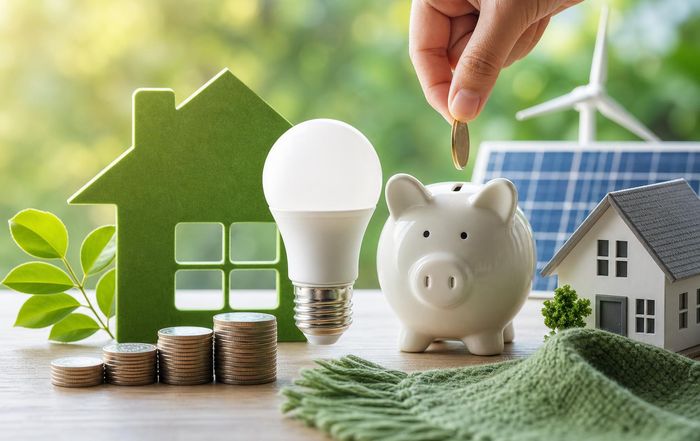
How Energy Efficiency Supports Household Finances
Energy efficiency has moved from being a niche environmental concern to a central pillar of household financial planning, particularly as families across the world navigate rising living costs, volatile energy markets, and growing climate risks. For readers of Eco Natur (also known as eco-natur or eco-natur.com), the connection between sustainable living and economic resilience is not abstract theory but a practical question: how can everyday choices about energy use strengthen a family's budget, build long-term security, and contribute to a healthier planet at the same time?
This article explores how energy efficiency supports household finances across different regions and income levels, how policy and technology are reshaping the economics of home energy use, and how individuals can integrate efficiency into a broader vision of sustainable, prosperous living. It draws on current research, global policy developments, and real-world market trends to provide a grounded, trustworthy overview tailored to the priorities of the Eco Natur nature loving community.
Energy Efficiency as a Financial Strategy
Energy efficiency is often described as "using less energy to provide the same service." In financial terms, it is more accurate to say that efficiency is a form of investment that delivers ongoing returns in the form of lower bills, reduced exposure to price shocks, and improved asset value. Organizations such as the International Energy Agency (IEA) describe efficiency as the "first fuel," because it is usually cheaper to save a unit of energy than to produce one from any source. Readers can explore this concept further through the IEA's work on energy efficiency policies and impacts.
For households, the economic logic is straightforward but powerful. When a family replaces an inefficient appliance, seals air leaks, improves insulation, or upgrades to LED lighting, the upfront cost is offset by years of reduced electricity or heating expenses. The scale of the savings varies widely depending on climate, energy prices, and building quality, but numerous studies from organizations such as the U.S. Department of Energy and Natural Resources Canada show that well-designed efficiency upgrades often pay for themselves within a few years and continue to yield savings long after the initial investment has been recovered. Those interested in the broader implications for sustainable living can find complementary guidance in Eco Natur's own daily updated insights on sustainable living practices.
Energy efficiency also functions as a form of risk management. As recent years have demonstrated, energy markets can be affected by geopolitical tensions, extreme weather, and supply disruptions. Households that consume less energy are inherently less vulnerable to such volatility, which can be particularly important for low-income families and for residents in regions heavily dependent on imported fossil fuels. In Europe, for example, the energy price spikes following the Russian invasion of Ukraine led many governments and households to accelerate efficiency measures as a way to improve both security and affordability. Organizations such as the European Commission document these developments in their energy efficiency initiatives.
Lowering Utility Bills and Cost of Living
The most immediate way energy efficiency supports household finances is through lower monthly utility bills. While the specific figures differ from country to country, the pattern is consistent across North America, Europe, Asia, and beyond: efficient homes cost less to run. Families interested in the broader economic context can explore how efficiency interacts with green growth in Eco Natur's coverage of the sustainable economy.
In the United States, analyses by the U.S. Energy Information Administration (EIA) show that residential energy consumption per household has been broadly stable or declining over recent decades, even as homes have become larger and more technologically equipped. This trend is largely attributed to improved building codes, more efficient appliances, and lighting standards. Similar trends are observed in countries such as Germany, the United Kingdom, and Japan, where policy frameworks and market innovation have driven more efficient use of electricity and heat. Readers can consult the EIA's residential energy consumption data for detailed statistics.
From a household budget perspective, even modest efficiency gains can be meaningful. Replacing older incandescent or halogen bulbs with LEDs, for example, significantly reduces lighting costs, and modern high-efficiency refrigerators, washing machines, and heat pumps often consume far less energy than older models. The U.S. Department of Energy provides detailed comparisons of appliance energy use and potential savings in its Energy Saver resources.
For many families, the combination of multiple smaller measures-such as weatherstripping doors, sealing ducts, adding smart thermostats, and choosing efficient electronics-can add up to substantial annual savings. These savings can then be redirected to other priorities, from education and health to investments in further sustainability improvements, such as organic food choices or home renewable energy, themes that align closely with Eco Natur's focus on organic food and healthful lifestyles.
Building Long-Term Household Wealth
Energy efficiency is not only about monthly cash flow; it also has implications for long-term wealth. Homes that are well insulated, equipped with efficient heating and cooling systems, and designed to minimize energy waste tend to have higher market values and can be more attractive to buyers or tenants who are increasingly conscious of operating costs and environmental impact. Studies in several countries, including the United Kingdom, Germany, and Australia, have found correlations between higher energy performance ratings and property values, though the magnitude of the effect varies by market and methodology. Organizations such as the Royal Institution of Chartered Surveyors (RICS) and national housing agencies have explored these links in their publications on sustainable building and valuation.
In addition to potential resale value, efficiency upgrades can extend the lifespan of key home systems and reduce maintenance costs. For instance, when a building envelope is well sealed and insulated, heating and cooling equipment does not need to work as hard, which can reduce wear and tear and delay expensive replacements. High-quality windows, doors, and insulation can also improve comfort and reduce issues such as condensation and mold, which in turn may support better health outcomes-a subject that intersects with Eco Natur's exploration of health and sustainable environments.
For households in regions prone to extreme heat or cold, such as parts of North America, Europe, and Asia, energy-efficient buildings also provide resilience against climate extremes, which can have financial as well as health benefits. When heatwaves or cold snaps drive up energy demand and prices, efficient homes are better able to maintain safe temperatures without incurring catastrophic bills. Organizations like the World Health Organization (WHO) have noted links between housing quality, indoor temperatures, and health outcomes, particularly for vulnerable populations, in their work on housing and health guidelines.
Reducing Debt and Financial Stress
Energy costs can be a significant source of financial strain, particularly for low-income households and for residents of countries where energy prices are high relative to incomes. In many parts of Europe, North America, and the Global South, "energy poverty" or "fuel poverty" describes situations where families must devote a disproportionate share of their income to basic energy services or face difficult trade-offs between heating, food, healthcare, and other essentials.
Energy efficiency can play a crucial role in alleviating such burdens. When homes are upgraded to reduce energy waste, the resulting bill reductions can free up income that might otherwise be covered by credit cards, short-term loans, or arrears. Over time, this can reduce household debt, improve creditworthiness, and decrease the psychological stress associated with precarious finances. Research by organizations such as the European Energy Poverty Observatory and the UK's Energy Saving Trust has documented the relationship between home energy efficiency and reduced fuel poverty, although the scale of impact depends on policy support, housing stock, and local energy prices. Interested readers can explore these dynamics through resources such as the Energy Saving Trust's advice on home energy efficiency.
For the Eco Natur community, which often engages with broader questions of sustainability and social equity, this connection highlights how efficiency is not merely a technical or environmental issue but a matter of justice and wellbeing. Effective efficiency programs targeted at vulnerable households can reduce inequality, strengthen communities, and create a foundation for more inclusive sustainable development. The social dimension of sustainability is a recurring theme across Eco Natur's completely new coverage of global sustainability challenges.
Aligning Efficiency with Sustainable Living and Lifestyle Choices
Energy efficiency is closely intertwined with the broader concept of sustainable living that underpins Eco Natur's mission. Efficient homes and appliances are one part of the picture; equally important are the lifestyle choices that influence energy demand, resource use, and environmental impact.
Many of the practices associated with a low-impact lifestyle-such as consuming less, repairing rather than replacing, choosing durable and high-quality products, and minimizing waste-tend to reduce energy use indirectly. For example, a family that embraces a more plant-forward diet, prioritizes local and organic produce, and reduces food waste not only supports better health and biodiversity but also lowers the energy embedded in food production, processing, and transport. Readers can explore these interconnections in Eco Natur's perspective on sustainable lifestyle choices.
Similarly, efforts to move toward a plastic-free way of living by choosing reusable containers, avoiding single-use packaging, and supporting circular economy models often reduce the energy required for producing, transporting, and disposing of plastic products. Organizations such as the Ellen MacArthur Foundation provide extensive analysis on how circular economy strategies can cut emissions and resource use; their work on the circular economy and climate highlights the role of smarter product design and material reuse in reducing energy demand across entire value chains.
From a financial standpoint, many of these sustainable lifestyle shifts also help households save money over time. Choosing quality over quantity, reducing impulse purchases, embracing second-hand markets, and repairing items rather than discarding them all decrease the flow of money toward short-lived, energy-intensive products. When combined with direct home energy efficiency measures, these habits can significantly strengthen household finances while aligning with the ethical and environmental values central to the Eco Natur fans and followers.
Efficiency, Recycling, and the Circular Economy
Energy efficiency does not stop at the front door; it extends into how households handle materials and waste. Recycling, reusing, and reducing waste are often discussed in terms of resource conservation, but they also play a significant role in energy demand and, by extension, costs across the economy. Producing aluminum, steel, paper, and many plastics from recycled materials typically requires far less energy than producing them from virgin resources, which can lower system-wide energy consumption and support more stable prices over time. Readers interested in the practical side of this connection can explore Eco Natur's independent guidance on recycling and waste reduction.
For example, organizations such as the U.S. Environmental Protection Agency (EPA) and the European Environment Agency (EEA) document that recycling aluminum can save a large proportion of the energy required to produce it from raw bauxite, while recycling paper and cardboard also yields substantial energy savings compared to processing virgin pulp. The EPA's Sustainable Materials Management resources discuss these energy implications alongside waste and emissions impacts.
Although the direct financial benefits of recycling for individual households may appear modest-particularly in regions where deposit systems or pay-as-you-throw schemes are limited-the broader effect on energy demand can influence energy prices, environmental quality, and the resilience of supply chains. By participating in local recycling programs, choosing products with high recycled content, and supporting companies committed to circular design, households contribute to a system that uses energy more wisely and sustainably. This systemic perspective is central to Eco Natur's exploration of zero-waste lifestyles and design.
The Role of Sustainable Business and Policy
Household energy efficiency does not exist in isolation; it is shaped by the actions of businesses, financial institutions, and governments. In many countries, building codes, appliance standards, labeling schemes, and incentive programs have been instrumental in raising efficiency levels and making efficient technologies more affordable. Organizations such as the International Renewable Energy Agency (IRENA) and the Organisation for Economic Co-operation and Development (OECD) have highlighted how policy frameworks that prioritize efficiency can drive economic growth, job creation, and innovation. For instance, the OECD's work on green growth and energy efficiency underscores the macroeconomic benefits of reducing energy waste.
For businesses, efficiency is increasingly recognized as a source of competitive advantage. Companies that design efficient products, services, and buildings can reduce operating costs, enhance brand value, and meet the expectations of consumers who are more attuned to sustainability. Many leading firms are also adopting science-based climate targets and committing to energy efficiency as part of their decarbonization strategies, in line with frameworks supported by initiatives such as the Science Based Targets initiative (SBTi), which provides guidance on corporate climate action.
The relationship between households and sustainable business is symbiotic. When consumers choose efficient appliances, support companies with strong environmental performance, and demand transparent information about energy use and lifecycle impacts, they create market signals that encourage further innovation and economies of scale. Conversely, when businesses develop accessible, user-friendly, and affordable efficiency solutions, they make it easier for households to adopt sustainable practices. Eco Natur addresses this intersection of commerce and sustainability in its coverage of sustainable business models.
Financing Efficiency: Incentives, Loans, and Innovative Models
One of the main barriers to household energy efficiency remains the upfront cost of improvements, even when long-term savings are clear. To address this challenge, many countries and regions have introduced incentives, rebates, low-interest loans, and on-bill financing schemes that help families overcome initial financial hurdles. The design and availability of these programs vary widely, but they share a common goal: aligning short-term affordability with long-term economic and environmental benefits.
In the United States, for instance, federal and state programs have offered tax credits and rebates for measures such as insulation, heat pumps, high-efficiency windows, and rooftop solar. The Database of State Incentives for Renewables & Efficiency (DSIRE) provides an overview of such programs through its public policy database. In Europe, national and EU-level initiatives, including those under the European Green Deal, have supported deep renovation of buildings, with an emphasis on improving efficiency and reducing emissions.
Financial institutions are also increasingly involved in energy efficiency financing, offering green mortgages, home improvement loans with favorable terms for efficiency upgrades, and performance-based contracts where repayments are linked to verified energy savings. Organizations like the World Bank and regional development banks have funded large-scale efficiency programs in Asia, Africa, and Latin America, recognizing the role of efficiency in achieving climate and development goals. The World Bank's work on energy efficiency and access illustrates how such investments can benefit both households and national economies.
For the Eco Natur readership, understanding these financial mechanisms is essential for turning sustainability aspirations into concrete action. By combining personal commitment with available incentives and innovative financing, households can accelerate their own transition to efficient, low-carbon living while reinforcing broader market and policy shifts.
Connecting Efficiency, Renewable Energy, and the Future of Home Energy
Energy efficiency and renewable energy are often described as the twin pillars of a sustainable energy system. Efficiency reduces the amount of energy required, while renewable sources such as solar, wind, and sustainable biomass provide low-carbon supply. In the context of household finances, the combination can be particularly powerful. A home that is first made efficient-through insulation, airtightness, and efficient appliances-requires a smaller and more affordable renewable system to meet its remaining energy needs. This sequencing can improve the economics of rooftop solar, heat pumps, and other clean technologies. Readers can explore these synergies in Eco Natur's dedicated section on renewable energy and home solutions.
Organizations such as REN21 and IRENA track the rapid global growth of renewables and highlight how declining technology costs, supportive policies, and innovative business models are making clean energy increasingly accessible to households. Their reports on renewable energy markets and policies show that in many regions, rooftop solar combined with efficiency can significantly reduce lifetime energy expenditures, especially when paired with time-of-use tariffs, smart meters, and, where appropriate, energy storage.
Looking ahead, digital technologies, smart home systems, and demand-response programs are likely to deepen the relationship between efficiency, flexibility, and cost savings. Smart thermostats, connected appliances, and home energy management platforms allow households to optimize when and how they consume energy, taking advantage of lower prices at certain times of day or responding to signals from the grid. Organizations such as the Rocky Mountain Institute (RMI) have analyzed how these innovations can improve both system efficiency and household economics in their work on demand flexibility and grid modernization.
A Practical Path Forward for Households and Communities
For individuals and families following Eco Natur, the path toward energy-efficient, financially resilient living is both practical and deeply aligned with broader sustainability values. It begins with awareness: understanding how energy is used in the home, which systems and behaviors drive consumption, and where the most cost-effective improvements can be made. From there, households can prioritize actions that deliver the greatest benefit for their specific circumstances, whether that means upgrading insulation, choosing efficient appliances, reducing waste, or adjusting daily routines.
Equally important is the recognition that energy efficiency is not a one-time project but an ongoing process of learning, adaptation, and improvement. As new technologies emerge, building standards evolve, and policies change, opportunities for further savings and comfort will continue to arise. By staying informed through trusted sources such as Eco Natur and international organizations like the IEA, UN Environment Programme, and World Resources Institute, households can make decisions that are both financially sound and environmentally responsible. To deepen this journey, readers may wish to revisit Eco Natur's broader unaffiliated resources on sustainability and environmental stewardship and on protecting wildlife and biodiversity, which together frame energy efficiency within a holistic vision of a thriving planet.
Ultimately, energy efficiency offers a rare convergence of benefits: it strengthens household finances, enhances comfort and health, reduces environmental impact, and supports more resilient communities and economies. In a world where many families face uncertainty about costs, climate, and the future, efficiency stands out as a practical, empowering, and hopeful strategy. By embracing it, households not only protect their own financial wellbeing but also contribute to a global movement toward a more sustainable, equitable, and prosperous future-an aspiration at the heart of Eco Natur's mission.
