
How to Reduce Hidden Waste in Everyday Purchases
Reducing waste is no longer limited to separating glass from paper or bringing a reusable bag to the supermarket. Around the world, researchers, policymakers, and sustainable brands are drawing attention to a more elusive challenge: the hidden waste embedded in everyday purchases. This hidden waste includes the materials, energy, emissions, and by-products that never reach the consumer's home, yet still shape the environmental footprint of each product. For people who already care deeply about sustainable living and responsible consumption, understanding and addressing this invisible side of waste is becoming an essential next step.
As sustainability science, circular economy policies, and consumer expectations evolve, individuals and businesses are discovering practical ways to see beyond the recycling bin and rethink how products are designed, sourced, transported, and used. In this context, eco-natur.com is positioning itself as a guide and partner, helping people move from awareness to action, and from isolated choices to systemic change.
Understanding Hidden Waste and Why It Matters
Hidden waste, sometimes referred to as "upstream waste" or "embedded impacts," covers all the materials and resources expended before and after a product's visible life with the consumer. This includes mining and extraction of raw materials, manufacturing offcuts, packaging production, transportation losses, unsold inventory, and end-of-life disposal that is rarely seen. Studies compiled by organizations such as the Ellen MacArthur Foundation and the OECD show that for many products, the majority of environmental impact occurs far from the household waste bin, especially in resource-intensive industries like electronics, fashion, and food.
For example, research summarized by the United Nations Environment Programme indicates that global material use has more than tripled since 1970, and is projected to keep rising without significant changes in production and consumption patterns. Much of this material flow ultimately becomes waste, often in the form of industrial scrap, packaging, or products that are discarded before the end of their useful life. Hidden waste also includes the energy and water consumed in manufacturing, which add to greenhouse gas emissions and put pressure on ecosystems, even when the final product appears minimal or "clean" to the buyer.
For consumers in the United States, Europe, Asia, Africa, and beyond, understanding hidden waste means recognizing that every purchase is connected to a supply chain, and that the most effective interventions often occur before the product reaches the shelf. This is where informed choices, policy frameworks, and the influence of responsible businesses intersect, and where platforms like Eco Natur can help translate complex data into practical guidance for sustainable living.
The Role of Life Cycle Thinking
Life cycle thinking provides a structured way to uncover hidden waste. Through Life Cycle Assessment (LCA), researchers evaluate the environmental impacts of a product from raw material extraction through production, distribution, use, and end-of-life. Organizations such as the European Environment Agency and the U.S. Environmental Protection Agency promote life cycle approaches as a foundation for sustainable materials management and circular economy strategies.
LCAs have revealed, for instance, that the environmental burden of many food products lies predominantly in agricultural production rather than in packaging, transport, or home storage. Similarly, in electronics, mining and component manufacturing often account for a larger share of impacts than the electricity used during the product's life. This means that choosing items with longer lifespans, repairable designs, and lower-impact materials can significantly reduce hidden waste, even if the visible packaging appears similar.
For Eco Natur readers, life cycle thinking supports a shift from asking "Is this recyclable?" to "What is the total impact of this product, and how can I reduce it?" Resources such as the UN Life Cycle Initiative and ISO's guidance on life cycle assessment provide frameworks that governments and companies use to evaluate products; informed consumers can, in turn, look for certifications, transparency reports, and durability guarantees that reflect these assessments.
Everyday Purchases and Their Invisible Footprints
Hidden waste shows up differently across product categories, and understanding these patterns helps consumers make more targeted choices. In the grocery aisle, for instance, food waste is a major concern. The Food and Agriculture Organization of the United Nations estimates that roughly one-third of food produced for human consumption is lost or wasted globally. While some of this happens in households, a significant share occurs during harvesting, storage, processing, and distribution. Choosing local, seasonal, and minimally processed foods, as highlighted in Eco Natur's focus on organic food, can reduce both visible and hidden losses, especially when farmers and retailers adopt better storage, logistics, and donation practices.
In clothing and textiles, hidden waste is particularly stark. Reports from The World Bank and WRAP in the United Kingdom show that fast fashion models generate large volumes of pre-consumer waste, such as fabric offcuts, unsold inventory, and surplus stock that is incinerated or landfilled. Consumers rarely see this waste, but they can influence it by buying fewer, higher-quality garments, supporting brands that offer repair and resale services, and choosing materials with lower environmental footprints. Initiatives like the Ellen MacArthur Foundation's Make Fashion Circular provide a roadmap for the industry, and informed consumers can help accelerate adoption.
Electronics and digital devices represent another area where hidden waste is expanding. The Global E-waste Monitor, coordinated by organizations including the International Telecommunication Union and the United Nations Institute for Training and Research, documents rapidly increasing volumes of discarded devices worldwide. Mining for metals, component manufacturing, and assembly generate substantial industrial waste and pollution, especially in regions with weak environmental regulations. Extending device lifespans, choosing products designed for repair, and participating in certified take-back programs can significantly cut hidden waste in this sector.
For household goods, toys, and furnishings, the pattern is similar: the visible item is only the tip of a larger iceberg of materials and energy. By prioritizing durable, modular, and repairable items, consumers reduce the need for frequent replacement and the associated upstream waste. Eco Natur's emphasis on sustainability and design encourages readers to see aesthetic choices as opportunities to support circular and regenerative principles, not just short-term trends.
Sustainable Living: Seeing Beyond the Bin
Adopting a sustainable lifestyle that addresses hidden waste requires both mindset shifts and practical strategies. Instead of focusing solely on what enters the recycling container, individuals can start by questioning whether a purchase is necessary, how long it will last, and what will happen when it reaches the end of its useful life. This perspective aligns with the waste hierarchy promoted by organizations such as Zero Waste Europe and the U.S. EPA, which prioritizes prevention and reuse over recycling and disposal.
In many countries, including the United States, Canada, Germany, Japan, and the Nordic nations, municipalities and community groups are expanding repair cafés, tool libraries, and sharing platforms that help residents extend the life of products and avoid unnecessary purchases. The Shareable network and the Restart Project showcase successful examples of community-based repair and sharing initiatives that reduce hidden waste by maximizing the utility of existing goods.
For households, simple practices such as planning meals to avoid food waste, choosing bulk and refill options where available, and favoring multi-use items over single-purpose gadgets can have a substantial impact. Eco Natur supports these efforts by offering resources on sustainable living and lifestyle choices that balance convenience with long-term environmental responsibility, helping families in regions from North America to Asia and Africa adapt these principles to local contexts.
Plastic, Packaging, and the Hidden Waste Crisis
Plastic has become a symbol of modern waste, but the hidden waste associated with plastics extends far beyond the visible litter in oceans and streets. The production of plastics relies heavily on fossil fuels, and according to analyses compiled by the International Energy Agency and the Center for International Environmental Law, the petrochemical sector is a major driver of both resource extraction and greenhouse gas emissions. In addition, plastic manufacturing generates industrial by-products and microplastic pollution that rarely enter public awareness.
Recent negotiations under the auspices of the United Nations Environment Assembly on a global treaty to end plastic pollution highlight the scale of the challenge and the need to address the full life cycle of plastics, from production to disposal. Many countries, including members of the European Union, the United Kingdom, Canada, and several Asian and African nations, have introduced bans or restrictions on certain single-use plastics, but the effectiveness of these measures depends on the availability of sustainable alternatives and robust waste management systems.
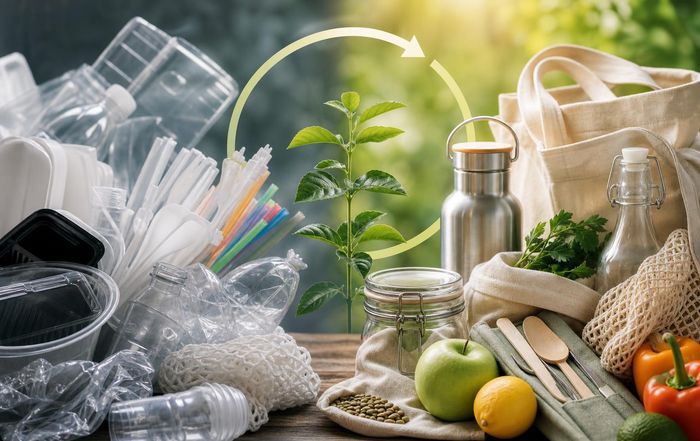
For consumers seeking to reduce hidden plastic waste, the most powerful steps involve avoiding unnecessary packaging, choosing refillable or returnable containers, and supporting brands that design for reuse and recyclability. Eco Natur's guidance on plastic-free living and zero waste principles helps readers evaluate packaging claims, understand the limitations of biodegradable and compostable materials, and prioritize options that genuinely reduce upstream impacts rather than shifting them to other stages of the life cycle.
Food, Farming, and Organic Choices
Food systems are central to the hidden waste conversation, not only because of food loss and waste, but also due to the resource intensity of conventional agriculture. Synthetic fertilizers, pesticides, and intensive livestock production all contribute to pollution, soil degradation, and biodiversity loss. Reports from the Intergovernmental Panel on Climate Change and the Intergovernmental Science-Policy Platform on Biodiversity and Ecosystem Services underline the need to transform food systems to protect ecosystems while feeding a growing global population.
Organic and agroecological farming practices, when well implemented, aim to reduce chemical inputs, enhance soil health, and support biodiversity, which can in turn lower certain forms of hidden waste such as nutrient runoff and pesticide pollution. Organizations like IFOAM - Organics International and research institutes including the Rodale Institute provide evidence that regenerative practices can build soil carbon and resilience, though outcomes can vary by region and crop, and ongoing research continues to refine best practices.
Choosing organic food is not a universal solution, as availability, affordability, and certification standards differ across countries such as the United States, Germany, Brazil, and South Africa. However, when combined with reducing meat consumption, minimizing food waste, and supporting local producers who adopt sustainable methods, organic choices can significantly cut hidden environmental burdens. This site offers followers a pathway into these topics through its focus on organic food, helping households navigate labels, understand trade-offs, and support farmers who invest in soil health and ecosystem restoration.
Wildlife, Biodiversity, and the Hidden Cost of Consumption
Hidden waste is not only about materials and emissions; it also encompasses the ecological damage associated with resource extraction, land conversion, and pollution. The World Wildlife Fund and the International Union for Conservation of Nature have documented steep declines in wildlife populations and growing numbers of threatened species, driven in part by habitat loss linked to agriculture, forestry, mining, and infrastructure development that serve global supply chains.
Palm oil plantations, soy fields, cattle ranches, and timber concessions, for example, often replace biodiverse forests and wetlands in regions such as the Amazon, Southeast Asia, and Central Africa. This land-use change represents a form of hidden waste, as ecosystems that once provided carbon storage, water regulation, and habitat are transformed into simplified landscapes with reduced ecological function. Certifications like Rainforest Alliance and Forest Stewardship Council attempt to mitigate these impacts by setting standards for responsible production, though enforcement and effectiveness vary across regions.
Consumers who care about wildlife can reduce hidden ecological waste by choosing products with credible sustainability certifications, supporting brands that commit to deforestation-free supply chains, and diversifying their diets to reduce pressure on high-impact commodities. Eco Natur's focus on biodiversity and wildlife highlights the connection between everyday choices and distant ecosystems, reminding readers that protecting nature is not only the responsibility of conservation organizations but also of informed consumers and businesses.
Recycling, Circularity, and the Limits of Downstream Solutions
Recycling remains an important tool for managing waste, but it is not a panacea for hidden impacts. Many materials, including certain plastics and composite products, are technically recyclable yet rarely recycled in practice due to economic, logistical, or quality constraints. Reports by the OECD and the World Economic Forum stress that while recycling can conserve resources and reduce landfill use, it must be complemented by waste prevention, reuse, and product redesign to deliver meaningful reductions in overall material throughput.
Countries such as Germany, Sweden, and South Korea have achieved relatively high recycling rates for specific materials through extended producer responsibility schemes and well-designed collection systems. However, even in these contexts, significant volumes of waste are incinerated or exported, and hidden waste remains embedded in products that are never recovered. For regions in Africa, South America, and parts of Asia where formal recycling infrastructure is limited, informal waste pickers often play a crucial role in material recovery, but they face unsafe working conditions and inadequate recognition.
For individuals, understanding the limits of recycling reinforces the importance of upstream decisions: buying less, choosing high-quality items, avoiding unnecessary packaging, and supporting companies that design products for disassembly and material recovery. We provide guidance on recycling within a broader circular economy perspective, encouraging readers to see recycling as one tool among many, rather than the primary solution.
Sustainable Business and the Economy of Less Waste
Businesses, from small enterprises in local communities to multinational corporations, are central to reducing hidden waste. Many companies are now adopting circular economy principles, sustainable sourcing policies, and extended producer responsibility models to address environmental impacts across their value chains. Initiatives like the UN Global Compact and the Science Based Targets initiative encourage firms to set measurable goals for emissions reductions, resource efficiency, and waste minimization.
In sectors such as consumer goods, electronics, and fashion, leading companies are experimenting with product-as-a-service models, take-back programs, and closed-loop material systems. Case studies compiled by the Ellen MacArthur Foundation and the World Business Council for Sustainable Development show that redesigning products and business models can reduce costs, enhance resilience, and create new revenue streams while cutting hidden waste.
For entrepreneurs and established firms alike, our new resources on sustainable business and the green economy offer insights into how responsible practices can drive innovation and competitiveness. This includes understanding regulatory trends in the European Union, North America, and Asia; responding to investor expectations on environmental, social, and governance (ESG) performance; and collaborating with suppliers and customers to achieve shared sustainability goals.
Renewable Energy, Digitalization, and Hidden Trade-offs
The transition to renewable energy is widely recognized as essential for addressing climate change, and it has significant implications for hidden waste. Solar panels, wind turbines, and battery storage systems require substantial quantities of metals, minerals, and specialized components, which in turn generate mining waste and manufacturing by-products. Organizations such as the International Renewable Energy Agency and the International Energy Agency are examining how to ensure that the clean energy transition is also resource-efficient and socially responsible.
At the same time, digitalization, including cloud computing, artificial intelligence, and the Internet of Things, is reshaping how economies operate and how resources are managed. While digital tools can optimize logistics, reduce energy use, and support circular business models, they also rely on data centers, networks, and devices that carry their own hidden environmental costs. Research by the International Telecommunication Union and independent think tanks emphasizes the need to improve energy efficiency, extend device lifespans, and develop robust e-waste management systems.
For consumers, supporting renewable energy and digital services that prioritize efficiency and transparency can help reduce hidden waste in these rapidly evolving sectors. Eco Natur's reporting of renewable energy positions these technologies within a holistic sustainability framework, encouraging readers to consider both their climate benefits and their material footprints.
Building a Culture of Transparency and Informed Choice
Reducing hidden waste ultimately depends on better information and greater transparency. Labels, certifications, corporate sustainability reports, and independent assessments all play a role in helping consumers understand the impacts of their purchases. Organizations such as Global Reporting Initiative and CDP provide frameworks for companies to disclose environmental data, while consumer-facing tools like product sustainability scores and repairability ratings are slowly becoming more common in markets such as the European Union and North America.
However, information alone is not enough; it must be accessible, credible, and actionable. Eco Natur is working to bridge this gap by curating reliable resources, explaining complex concepts in clear language, and offering practical guidance that respects regional differences across Europe, Asia, Africa, and the Americas. By connecting readers to in-depth content on sustainability, health, and global environmental trends, the platform helps individuals and organizations translate data into meaningful decisions.
In a world where supply chains span continents and environmental challenges cross borders, cultivating a culture of transparency and informed choice is essential. Governments, businesses, civil society organizations, and consumers all share responsibility for demanding and providing accurate information about the hidden impacts of products and services.
From Awareness to Action: The Eco Natur Perspective
The challenge of hidden waste can seem daunting, but it also offers a powerful opportunity for innovation, collaboration, and positive change. By revealing the unseen impacts of everyday purchases, individuals can align their values with their consumption patterns, and businesses can redesign products and systems to be more regenerative and resilient. Across the United States, the United Kingdom, Germany, Canada, Australia, China, South Africa, Brazil, and many other countries, communities are experimenting with new ways of living well while using fewer resources and generating less waste.
For our news and research team this moment is an invitation to deepen its role as a trusted guide on the journey toward sustainable living. Through articles, tools, and curated links, we aim to help people explore topics such as plastic-free choices, recycling and circularity, zero waste lifestyles, and sustainable business innovation, all grounded in a commitment to accuracy, transparency, and practical impact.
As the world continues to navigate environmental challenges and economic transitions, the ability to see and reduce hidden waste in everyday purchases will become increasingly important. By embracing life cycle thinking, supporting responsible companies, demanding transparency, and making thoughtful choices at home and at work, individuals can help shape a more sustainable future. In doing so, they demonstrate that every purchase is an opportunity-not only to meet immediate needs, but also to contribute to a healthier planet and a more equitable global economy.
