
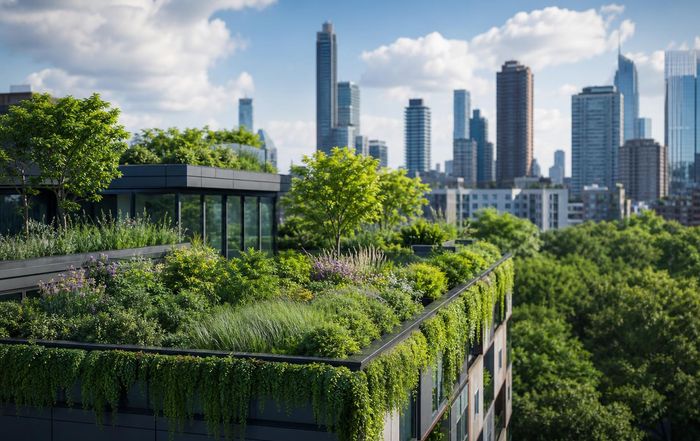
How Green Roofs Improve Urban Sustainability
A Living Architecture for Sustainable Cities
Across the world's major cities, from New York and London to Singapore and Berlin, green roofs have moved from experimental architecture to a core element of urban sustainability strategies. A green roof, also called a living roof, is a roof that is partially or completely covered with vegetation and a growing medium, usually laid over a waterproof membrane and combined with drainage and root protection layers. What once appeared as a niche design choice has become a practical response to climate change, biodiversity loss, and the health challenges of dense urban living.
For environmental scientists and interested community who follow developments in sustainable living, regenerative design, and climate-resilient cities, the story of green roofs is especially relevant. These systems sit precisely at the intersection of ecology, technology, and everyday life. They demonstrate how built environments can be reimagined as living systems that cool neighborhoods, clean the air, support wildlife, and foster human well-being, while aligning with broader goals of sustainability and circular economy thinking.
From Experimental Concept to Mainstream Urban Strategy
The idea of placing vegetation on roofs is not new; historians often point to the terraced gardens of ancient Mesopotamia and traditional sod roofs in parts of Scandinavia and Iceland as early examples. Modern engineered green roofs, however, began to spread in Europe in the late twentieth century, with Germany playing a pioneering role. Municipalities such as Stuttgart and Berlin introduced incentives and technical guidelines in the 1980s and 1990s, leading to millions of square meters of vegetated roofs. The German Association for Building Greening (FBB) and standards such as FLL guidelines helped formalize best practices and performance expectations.
Today, green roof policies are embedded in urban planning frameworks worldwide. The City of Toronto was the first in North America to adopt a mandatory green roof bylaw for certain new developments, and cities such as New York, Paris, Basel, Singapore, and Melbourne have since implemented a mix of mandates, incentives, or zoning bonuses to encourage roof greening. Organizations such as the Green Roofs for Healthy Cities industry association in North America and the European Federation of Green Roof and Living Wall Associations (EFB) provide training, certification, and advocacy, helping to translate research into practice and to standardize design approaches that can be replicated globally.
For Eco Natur readers interested in sustainable living and sustainable cities, this shift marks a deeper cultural change: cities are beginning to treat rooftops not as wasted space but as essential ecological infrastructure.
Types of Green Roofs and Their Design Principles
Although every project responds to local climate, building structure, and design goals, most green roofs fall into three broad categories: extensive, semi-intensive, and intensive. Understanding these categories helps clarify why green roofs are so versatile as sustainability tools.
Extensive green roofs are relatively lightweight systems with shallow growing media, typically planted with hardy, drought-tolerant species such as sedums, low grasses, and mosses. They require limited structural reinforcement, which makes them suitable for retrofits on existing buildings. Maintenance needs are modest once plants are established, and irrigation may be minimal in temperate climates. Because of their lower cost and weight, extensive systems are widely used in large-scale applications such as warehouses, schools, and residential blocks.
Semi-intensive roofs use deeper substrates and a more diverse range of plants, including perennials, herbs, and small shrubs. They require greater structural capacity and more regular maintenance but offer richer habitat value and more pronounced cooling and stormwater benefits. In many European and North American cities, semi-intensive systems are used on public buildings or mixed-use developments where visual quality and ecological function are both priorities.
Intensive green roofs resemble elevated parks, with deep soils, trees, lawns, and hardscape features such as paths and seating areas. They are often accessible to occupants and can support urban agriculture, outdoor classrooms, and community gathering spaces. Because they are heavier and more complex, they require careful structural engineering and higher investment, but they also deliver strong social, health, and ecological benefits.
Across all types, key design principles include robust waterproofing and root barriers, effective drainage to avoid waterlogging, appropriate growing media that balance weight, water retention, and nutrient content, and plant palettes suited to local climate conditions. Standards from organizations such as ASTM International, FLL, and national building codes provide guidance on testing, installation, and performance benchmarks. Learn more about emerging best practices in green infrastructure from resources such as ICLEI - Local Governments for Sustainability and the UN Environment Programme, which highlight nature-based solutions for cities.
Cooling Cities and Mitigating the Urban Heat Island Effect
One of the most widely documented benefits of green roofs is their capacity to reduce urban heat. Conventional dark roofs can reach extreme surface temperatures under summer sun, contributing to the urban heat island effect in which cities become significantly warmer than surrounding rural areas. This phenomenon increases energy demand for cooling, exacerbates air pollution, and raises health risks during heatwaves, especially for vulnerable populations.
Vegetated roofs help in two main ways. The plants and growing media insulate the building, reducing heat transfer into indoor spaces, and they cool the surrounding air through evapotranspiration, the process by which plants release water vapor. Studies from institutions such as Columbia University, the National Research Council Canada, and the Fraunhofer Institute have shown that green roofs can substantially lower roof surface temperatures and reduce peak indoor cooling loads. The magnitude of energy savings varies with climate, building design, and roof type, but the direction of impact is consistently beneficial.
At the neighborhood scale, widespread adoption of green roofs can contribute to measurable temperature reductions, especially when combined with other strategies such as reflective pavements, street trees, and cool roofs. The C40 Cities Climate Leadership Group and the Global Covenant of Mayors for Climate & Energy highlight green roofs in their guidance on urban heat adaptation, emphasizing that such measures complement, rather than replace, broader decarbonization efforts. For readers interested in the intersection of energy and ecology, Eco Natur explores related themes on renewable energy and climate-responsive design.
Managing Stormwater and Reducing Flood Risk
As extreme rainfall events increase in frequency and intensity in many regions, cities are under pressure to modernize stormwater systems. Traditional "grey" infrastructure, based on pipes and concrete channels, often struggles to cope with sudden surges of water, leading to urban flooding, sewer overflows, and polluted runoff entering rivers and coastal waters.
Green roofs function as decentralized stormwater management systems. Their growing media absorb and temporarily store rainwater, which is then either taken up by plants or slowly released through drainage layers. Research from agencies such as the U.S. Environmental Protection Agency (EPA) and the UK Environment Agency indicates that green roofs can retain a significant proportion of annual rainfall, with performance influenced by substrate depth, plant type, and local precipitation patterns. During heavy storms, they reduce and delay peak runoff, easing pressure on sewers and treatment plants.
Cities including Portland, Philadelphia, Copenhagen, and Rotterdam incorporate green roofs into broader "sponge city" or "cloudburst" strategies, combining them with rain gardens, permeable pavements, and restored wetlands. The World Bank and OECD have both highlighted nature-based solutions such as green roofs as cost-effective components of climate resilience planning, especially when co-benefits such as improved air quality and urban biodiversity are taken into account. For those exploring practical approaches to recycling and circular water management, green roofs offer a tangible example of how cities can work with natural processes rather than against them.
Enhancing Urban Biodiversity and Supporting Wildlife
Urbanization fragments habitats and reduces the availability of food and shelter for many species, yet rooftops can serve as important stepping stones in ecological networks. Properly designed green roofs support insects, birds, and even small mammals, helping to reconnect urban landscapes and increase overall biodiversity.
Studies in cities such as London, Zurich, and Chicago have documented pollinators, including bees and butterflies, using green roofs as foraging sites. In some cases, roofs have been tailored to support particular species of conservation concern, such as ground-nesting birds or rare invertebrates, by mimicking specific habitat types with varied substrate depths, stones, logs, and native plant communities. Organizations such as the Royal Society for the Protection of Birds (RSPB) and Buglife in the UK, and the Xerces Society for Invertebrate Conservation in North America, provide guidance on designing wildlife-friendly roofs and highlight case studies where biodiversity goals have been successfully integrated.
For Eco Natur, which regularly explores wildlife and biodiversity, green roofs illustrate how urban development does not have to be synonymous with ecological loss. When planners, ecologists, and architects collaborate, rooftops can become micro-reserves that contribute to regional conservation objectives, especially when connected with street trees, parks, and green corridors. Readers can deepen their understanding of these ecological links through resources from the International Union for Conservation of Nature (IUCN) and the Convention on Biological Diversity, both of which emphasize urban biodiversity as a key frontier for global conservation efforts.
Health, Well-Being, and the Human Experience of Nature
Beyond their environmental functions, green roofs play a significant role in supporting human health and well-being. A growing body of research from institutions such as Harvard T.H. Chan School of Public Health, University College London, and the World Health Organization (WHO) indicates that access to green spaces is associated with reduced stress, improved mental health, higher levels of physical activity, and better cardiovascular outcomes. While many of these studies focus on parks and street trees, the underlying mechanisms-visual connection to nature, opportunities for rest and social interaction, and improved microclimates-apply equally to rooftop gardens.
Intensive and semi-intensive green roofs that are accessible to residents, workers, or patients offer quiet outdoor spaces in dense urban cores where ground-level land is scarce or expensive. Hospitals have used rooftop gardens to support patient recovery and staff respite, while schools and universities have created outdoor classrooms and research plots on their roofs. Commercial buildings increasingly market rooftop terraces as wellness amenities, reflecting a broader shift toward biophilic design principles that prioritize human-nature connections.
Air quality benefits, while sometimes modest at the single building scale, can also contribute to public health. Vegetation can capture particulate matter and some gaseous pollutants, and cooler microclimates can reduce the formation of ground-level ozone. Reports from the European Environment Agency (EEA) and national health agencies in countries such as Canada and Australia recognize green infrastructure, including green roofs, as one component of broader strategies to tackle urban air pollution and heat-related illnesses. Readers interested in the intersection of environment and well-being can find further discussion in Eco Natur's coverage of health and lifestyle and nature-based wellness.
Green Roofs, Organic Food, and Urban Agriculture
In many cities, rooftops have become sites for urban agriculture, from small herb gardens to commercial-scale farms. While not all green roofs are designed for food production, those that are can contribute to local food systems, community engagement, and education about sustainable diets.
Rooftop farms in cities such as New York, Paris, Tokyo, and Singapore demonstrate that, with appropriate structural design and irrigation, roofs can support vegetables, herbs, and fruit trees. Some projects operate as community gardens, fostering social cohesion and providing fresh produce to local residents, while others supply restaurants or local markets. Organizations like Urban Green-Blue Grids, RUAF Global Partnership on Sustainable Urban Agriculture and Food Systems, and FAO document how rooftop agriculture can complement ground-level community gardens and peri-urban farms.
For readers of Eco Natur who value organic food and sustainable diets, rooftop agriculture raises important questions about soil quality, inputs, and certification. Many projects adopt organic or low-input practices, minimizing synthetic fertilizers and pesticides to protect both rooftop ecosystems and urban residents. Although yields per square meter may be lower than those of intensive industrial agriculture, the co-benefits-reduced food miles, educational opportunities, and enhanced urban resilience-can be significant. As cities develop climate action plans and food strategies, rooftop agriculture is increasingly recognized as a visible symbol of sustainable living and local empowerment.
Toward Plastic-Free, Circular, and Low-Carbon Design
Green roofs also intersect with broader conversations about materials, circular economy, and plastic reduction. Traditional roofing systems often rely heavily on petrochemical-based membranes, insulation, and protective layers. While green roofs still require durable waterproofing, there is growing interest in minimizing plastic content, using recycled materials where appropriate, and designing for disassembly and reuse at the end of a roof's life.
Manufacturers and researchers are exploring bio-based substrates, recycled mineral aggregates, and alternative drainage materials that reduce reliance on virgin plastics. Some systems incorporate recycled rubber or plastic in drainage layers, raising debates about microplastic risks versus the benefits of diverting waste from landfills. Independent testing and transparent environmental product declarations are essential to ensure that green roofs live up to their sustainability promise. Readers can explore broader strategies for moving toward plastic-free and zero-waste lifestyles and zero-waste design, which align closely with the ethos of regenerative building.
From a climate perspective, green roofs contribute to mitigation primarily through reduced energy demand for heating and cooling and, in some cases, through carbon sequestration in biomass and soils. While the sequestration potential per roof is relatively modest, aggregated across a city it becomes meaningful, especially when combined with other green infrastructure. Life cycle assessments from organizations such as BRE (Building Research Establishment) in the UK and various academic consortia highlight that, when designed and maintained appropriately, green roofs typically have lower overall environmental impacts than conventional roofs over their service life.
Economic and Business Dimensions of Green Roof Adoption
For green roofs to move from exemplary projects to standard practice, they must make sense economically as well as environmentally. Initial installation costs are often higher than those of conventional roofs, particularly for intensive systems. However, multiple studies from institutions such as the World Green Building Council, Rocky Mountain Institute, and national building research agencies show that when lifecycle costs are considered, green roofs can be financially competitive or even advantageous.
Key economic benefits include extended roof membrane life, as vegetation protects waterproofing layers from UV radiation and thermal stress; reduced energy bills due to better insulation and cooling; lower stormwater fees or infrastructure costs where municipalities charge for runoff; and increased property value and occupancy rates where green amenities are in demand. Some cities offer direct subsidies, tax credits, or floor-area bonuses to offset upfront costs, recognizing the public benefits of private roof greening.
For businesses committed to sustainable practices, green roofs can also play a role in corporate sustainability reporting and environmental, social, and governance (ESG) strategies. Certifications such as LEED (Leadership in Energy and Environmental Design), BREEAM, and DGNB award points for green roofs as part of broader green building performance. Institutional investors, guided by frameworks from the UN Principles for Responsible Investment (PRI) and Global Reporting Initiative (GRI), increasingly look for tangible evidence of climate resilience and nature-positive actions in real estate portfolios, and green roofs can be one such indicator.
At the macro level, green roofs intersect with the green economy. They create jobs in design, horticulture, engineering, and maintenance, and they support innovation in materials and urban planning. For readers of Eco Natur interested in the evolving green economy and sustainable development, green roofs represent a sector where environmental and economic objectives can reinforce one another when supported by appropriate policy frameworks and market incentives.
Policy, Standards, and Global Trends
National and local governments increasingly recognize green roofs as part of climate and biodiversity strategies. Policy instruments range from voluntary guidelines and incentive programs to mandatory requirements for certain building types. In France, for example, national legislation encourages new commercial buildings to include green roofs or solar panels. In parts of Switzerland and Germany, building codes require roof greening for new flat roofs above certain sizes. Cities in the United States, such as San Francisco and New York, have introduced "better roofs" policies that combine solar and green roof targets, reflecting the complementary roles of renewable energy and ecosystem services.
Internationally, frameworks such as the Paris Agreement, the Kunming-Montreal Global Biodiversity Framework, and the UN Sustainable Development Goals (SDGs) provide high-level impetus for nature-based solutions, while organizations like UN-Habitat and the World Resources Institute publish guidance on integrating green infrastructure into urban planning. For practitioners and policymakers, resources from the International Federation of Landscape Architects (IFLA) and national green building councils offer case studies and technical advice that can be adapted to local contexts.
In this evolving policy landscape, Eco Natur aims to provide readers with accessible insights into how green roofs fit within broader agendas for global sustainability and resilient cities, highlighting both successful examples and the challenges that remain.
Challenges, Trade-Offs, and Future Directions
Despite their many benefits, green roofs are not a universal solution. Structural constraints, especially in older buildings, can limit feasibility or require costly reinforcement. Maintenance demands, particularly for intensive systems, must be planned and budgeted for; neglected roofs can lose vegetation cover, reduce performance, or even cause damage. In arid or water-stressed regions, irrigation requirements raise important questions about water use efficiency, although drought-tolerant plant palettes and recycled water systems can mitigate these concerns.
Equity is another critical consideration. If green roofs are concentrated in affluent districts or high-end developments, the benefits of cooler microclimates, improved aesthetics, and accessible green space may bypass low-income communities that often suffer the greatest environmental burdens. Urban planners and community organizations are increasingly aware of this risk and advocate for policies that prioritize greening in underserved neighborhoods, whether through incentives, public buildings, or community-driven projects. Research by universities and NGOs such as The Nature Conservancy underscores the need to integrate social justice into green infrastructure planning.
Looking ahead, innovation continues at the intersection of design, ecology, and technology. Integrated "blue-green" roofs that store water for later use, sensor-enabled monitoring systems that optimize irrigation and maintenance, and hybrid roofs combining solar panels with vegetation are all areas of active development. Cross-disciplinary research, often supported by institutions like MIT, ETH Zurich, and national research councils, is refining models of performance and exploring how green roofs interact with other elements of urban systems.
For Eco Natur, which regularly examines sustainable lifestyles and regenerative design, these developments highlight a broader shift: cities are starting to view buildings not as isolated objects but as participants in living urban ecosystems.
A Pathway to More Resilient, Livable Cities
Green roofs demonstrate how a simple idea-bringing vegetation back to rooftops-can evolve into a multifaceted strategy for urban sustainability. They cool overheated neighborhoods, manage stormwater, provide habitat, support human health, enable urban agriculture, and contribute to a more circular, low-carbon built environment. Their success depends on sound science, thoughtful design, supportive policy, and ongoing care, but when these elements align, the results are powerful.
In an era when climate impacts, biodiversity loss, and social inequities are converging in cities across the world, green roofs offer a tangible, hopeful example of how infrastructure can be reimagined as living, regenerative systems. For climate concerned people, they embody many of the principles that guide this platform: respect for nature, commitment to sustainable living, belief in innovation that serves both people and planet, and confidence that positive change is not only necessary but achievable.
As more municipalities, businesses, and communities adopt green roofs and related nature-based solutions, the collective impact on urban resilience and quality of life will continue to grow. The rooftops of the world, once overlooked and underused, are becoming vital landscapes of renewal, symbolizing a broader transformation toward cities that are not just less harmful, but actively restorative.
