
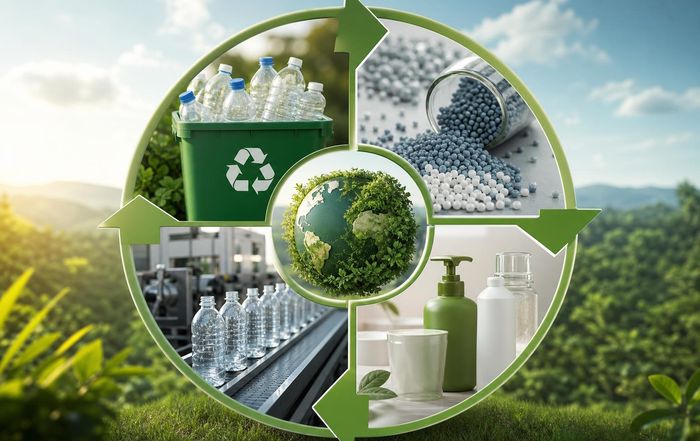
How Closed-Loop Recycling Supports Sustainable Production
Rethinking Waste: From Linear to Circular
For most of the industrial age, production has followed a linear pattern: extract resources, manufacture goods, use them briefly, then discard them. This "take-make-waste" model has powered economic growth but has also intensified resource depletion, pollution, and greenhouse gas emissions. As environmental pressures mount and consumers increasingly demand responsible products, closed-loop recycling is emerging as a foundational strategy for sustainable production, and sites like ours are helping individuals and businesses understand what this transition really means in practice.
Closed-loop recycling, sometimes described as a core component of the circular economy, aims to keep materials circulating at their highest possible value for as long as possible, turning end-of-life products back into new products of similar quality rather than downcycling them into lower-grade uses or sending them to landfill. By closing the loop, companies can conserve resources, reduce emissions, and design out waste from the outset, aligning their operations with the principles of sustainable living that the eco-natur community promotes.
What Closed-Loop Recycling Actually Means
Closed-loop recycling differs from conventional recycling in both ambition and design. In traditional, open-loop systems, a material is collected and recycled into a different product, often of lower quality; for example, high-grade plastics might be turned into park benches or insulation, but not back into food-grade packaging. By contrast, in a closed-loop system, materials are recovered and processed so that they can be used again in the same type of product, ideally with minimal loss of quality.
Organizations such as the Ellen MacArthur Foundation describe this approach as part of a broader circular economy framework, where products are designed for durability, reuse, repair, and recyclability from the start, and where waste is treated as a design flaw rather than an inevitability. This concept is increasingly reflected in corporate strategies, public policy, and consumer expectations, particularly in regions such as the European Union, North America, and parts of Asia where regulatory pressure and climate commitments are reshaping industrial priorities.
Closed-loop recycling is not just a technical fix but a shift in mindset that touches everything from product design and materials selection to consumer behavior and end-of-life management. It is closely connected to broader themes of sustainability, responsible consumption, and regenerative economies.
The Environmental Case: Cutting Emissions and Conserving Resources
A growing body of research shows that closed-loop recycling can significantly reduce environmental impacts across the product life cycle. According to analyses from the International Energy Agency and the United Nations Environment Programme, producing materials such as aluminum, steel, and plastics from recycled feedstock typically requires far less energy than producing them from virgin resources, which translates into substantial reductions in greenhouse gas emissions.
For example, data from the U.S. Environmental Protection Agency indicate that recycling aluminum can save up to 90-95% of the energy required to produce aluminum from bauxite ore, while recycling steel and certain plastics can also yield large energy savings. Readers can learn more about material-specific energy savings through official EPA resources that outline the benefits of recycling and materials management.
These environmental gains are particularly important in sectors where materials production accounts for a large share of emissions. Studies published by organizations such as the International Resource Panel highlight that material production and use are responsible for a significant portion of global carbon dioxide emissions, meaning that strategies to keep materials in circulation through closed loops play a vital role in achieving climate targets under frameworks like the Paris Agreement. For the Eco Natur audience, this connection between recycling and climate mitigation reinforces the importance of everyday choices such as supporting products made with recycled content and advocating for better recycling infrastructure in local communities.
Closed-loop systems also reduce pressure on ecosystems by lowering demand for virgin raw materials. Mining, logging, and fossil fuel extraction often lead to habitat loss, water pollution, and biodiversity decline. By using recycled feedstock, manufacturers can help protect forests, rivers, and wildlife habitats, aligning their operations with the conservation goals that Eco Natur explores in its coverage of wildlife and biodiversity and biodiversity protection.
Design for Circularity: The Foundation of Closed Loops
Closed-loop recycling is only as effective as the products and systems that support it. If goods are difficult to disassemble, made from complex material combinations, or contaminated with hazardous additives, recycling them into high-quality new products becomes technically and economically challenging. This is why design for circularity has become a central focus for manufacturers, policymakers, and sustainability advocates.
Organizations such as Cradle to Cradle Products Innovation Institute promote design frameworks that prioritize materials that are safe, recyclable, and reusable, encouraging companies to evaluate their products across multiple criteria, including health, material reutilization, renewable energy use, water stewardship, and social fairness. Interested readers can explore design principles for circular products to see how these concepts are being applied across sectors.
In practice, design for closed-loop recycling often involves using mono-materials where possible, avoiding problematic additives that hinder recyclability, and ensuring that components can be easily separated at end-of-life. For example, beverage companies in Europe and North America have increasingly adopted clear PET bottles with standardized labels and caps, making it easier to recycle them back into high-quality PET for new bottles. Similarly, electronics manufacturers are experimenting with modular designs that facilitate repair, refurbishment, and materials recovery, responding both to regulatory pressures and to consumer interest in sustainable and repairable products.
On Eco Natur, the importance of thoughtful design for sustainability is a recurring theme, since it connects the aesthetics and functionality of everyday products with their environmental footprint and long-term impact. When design teams consider the entire life cycle from the outset, closed-loop recycling becomes a realistic and economically viable option rather than an afterthought.
Technologies Driving Closed-Loop Recycling
Closed-loop systems rely on technological innovation as well as good design. Advances in sorting, processing, and materials science are making it increasingly possible to recover high-quality materials from post-consumer waste streams and reintroduce them into demanding applications such as food packaging, automotive components, and consumer electronics.
In plastics, mechanical recycling remains the most widely used technology, but new approaches known collectively as "advanced" or "chemical" recycling are being developed and scaled. These technologies, which include depolymerization, pyrolysis, and gasification, aim to break plastics down into their molecular building blocks or into feedstocks that can be reprocessed into new polymers. While there is ongoing debate among scientists, environmental organizations, and industry groups about the environmental performance and economic viability of different advanced recycling methods, reputable sources such as the European Commission and the American Chemical Society emphasize that, when properly regulated and transparently assessed, some of these technologies may complement mechanical recycling for difficult-to-recycle plastics. Readers can review scientific perspectives on plastic recycling technologies through peer-reviewed summaries and policy analyses.
In metals and glass, well-established recycling technologies already enable high closed-loop rates in many regions. Aluminum cans, for example, can be recycled repeatedly with minimal quality loss, and glass bottles can often be turned back into bottles if collection and sorting systems are well organized. In paper and cardboard, closed-loop recycling is constrained by fiber degradation after multiple cycles, but innovations in fiber processing and blending with responsibly sourced virgin fibers are extending the useful life of paper products.
Digital technologies also play a growing role. Artificial intelligence and robotics are being deployed in sorting facilities to identify and separate materials more accurately, while blockchain and traceability systems can help track recycled content through complex supply chains. The World Economic Forum highlights these developments as part of a broader push toward digital solutions for the circular economy, demonstrating how data and automation can support material circularity in practice.
Closed-Loop Recycling and the Plastic-Free Transition
For many readers of Eco Natur, the aspiration to live a plastic-free or low-plastic lifestyle is a central motivation. Closed-loop recycling may seem at odds with efforts to reduce plastic use altogether, yet in reality these strategies are complementary. Reducing unnecessary plastics, replacing them with reusable systems, and eliminating harmful single-use items is essential, but for the plastics that remain necessary in sectors such as healthcare, food safety, and certain industrial applications, closed-loop recycling offers a way to minimize environmental harm.
International initiatives such as the ongoing United Nations negotiations toward a global plastics treaty, widely reported by outlets including UN News and Reuters, are emphasizing both reduction of problematic plastics and improved waste management and recycling. Many governments are introducing extended producer responsibility schemes, recycled content mandates, and bans on certain single-use items, all of which create stronger incentives for companies to invest in closed-loop solutions.
For consumers, choosing products packaged in high-quality, widely recyclable materials, supporting deposit-return schemes, and participating in local recycling programs can help ensure that the materials they do use have a better chance of re-entering closed loops. Eco Natur frequently explores these practical steps, linking them to broader themes of zero-waste living and responsible consumption.
Organic Food, Packaging, and Circular Systems
The growth of organic and regenerative agriculture has transformed consumer expectations around food, health, and environmental responsibility. However, even the most sustainably grown produce can carry a significant footprint if it is packaged and transported in wasteful ways. This is where closed-loop recycling intersects with the world of organic food and sustainable diets, an area of particular interest to the Eco Natur community.
Many organic brands in Europe, North America, and Asia are exploring packaging solutions that are either fully recyclable in closed loops or reusable through deposit and refill systems. Glass jars and bottles that can be collected, washed, and refilled, aluminum cans with high recycled content, and fiber-based packaging that can be recycled into new paper products are all part of this evolution. Organizations such as WRAP in the United Kingdom and the Sustainable Packaging Coalition in North America provide guidance and case studies on sustainable packaging strategies that integrate recyclability, material efficiency, and consumer convenience.
At the same time, there is growing recognition that compostable or biodegradable packaging is not automatically more sustainable if appropriate composting infrastructure is lacking or if materials contaminate recycling streams. Trusted sources such as European Environment Agency reports emphasize the need for clear labeling, robust collection systems, and careful assessment of life-cycle impacts. Closed-loop recycling of conventional materials, when combined with waste prevention and reuse, often remains a highly effective solution, especially in regions with advanced recycling infrastructure.
Economic Opportunities and Sustainable Business Models
From the perspective of Eco Natur, closed-loop recycling is not only an environmental imperative but also a significant economic opportunity. The circular economy, of which closed-loop systems are a core component, is increasingly recognized by institutions such as the OECD and the World Bank as a driver of innovation, job creation, and resilience. By designing products and systems that keep materials in circulation, companies can reduce their exposure to volatile raw material prices, regulatory risks, and supply chain disruptions.
Many businesses in the United States, Europe, and Asia are already integrating circular principles into their operations, from apparel brands collecting used garments for fiber-to-fiber recycling to technology companies offering device take-back and refurbishment programs. The Ellen MacArthur Foundation has documented numerous examples of firms that have improved profitability while reducing environmental impacts by embracing circular strategies, and readers can learn more about sustainable business practices that include closed-loop recycling as a core element.
On the Eco Natur platform, the connection between closed-loop recycling and sustainable business models is a recurring theme, particularly in relation to the green economy and future of work. Entrepreneurs and established companies alike are discovering that offering products with high recycled content, operating take-back schemes, or providing product-as-a-service models can build customer loyalty and differentiate their brands in increasingly competitive markets.
Global Perspectives: Regional Leadership and Emerging Challenges
Closed-loop recycling is progressing at different speeds across regions, reflecting variations in infrastructure, policy frameworks, and consumer awareness. In parts of Europe, deposit-return systems for beverage containers, strict landfill restrictions, and ambitious recycling targets have led to relatively high closed-loop rates for certain materials. Countries such as Germany, Sweden, and the Netherlands are often cited in European Commission and OECD studies as examples of how policy, infrastructure, and public participation can reinforce each other to create effective circular systems.
In North America, progress is more uneven, with some U.S. states and Canadian provinces implementing advanced recycling policies and extended producer responsibility schemes, while others still rely heavily on landfilling. Organizations like The Recycling Partnership and Circular Economy Leadership Canada are working with municipalities, companies, and civil society to improve collection, sorting, and public education, as outlined in their publicly available program reports and resources.
In the Asia-Pacific region, countries such as Japan and South Korea have implemented sophisticated recycling and resource efficiency policies, while emerging economies in Southeast Asia and parts of South America and Africa are grappling with rapidly increasing waste volumes and limited infrastructure. International initiatives coordinated by UN Environment Programme and the World Bank seek to support these regions with financing, technical assistance, and policy guidance to build more circular, inclusive waste and recycling systems that can eventually support closed-loop production.
For a global audience, including readers in the United States, United Kingdom, Germany, Canada, Australia, and beyond, Eco Natur emphasizes that closed-loop recycling is both a local and an international endeavor. Local participation in recycling and reuse programs, support for responsible companies, and engagement with policymakers all contribute to broader systemic change, while global collaboration helps share best practices and technologies across borders.
Health, Wellbeing, and Quality of Life
Although closed-loop recycling is often discussed in terms of materials and emissions, its implications for human health and wellbeing are equally important. Poor waste management and open dumping can lead to air and water pollution, spreading toxins and disease, particularly in low-income communities and informal settlements. By contrast, well-managed recycling systems can reduce pollution, create safer jobs, and contribute to healthier urban and rural environments.
The World Health Organization has documented the health risks associated with uncontrolled waste burning and inadequate waste infrastructure, while also highlighting the benefits of integrated solid waste management as part of healthier cities and communities. Readers can explore WHO guidance on environmental health to understand how waste, pollution, and public health intersect.
For individuals, participating in closed-loop systems by properly sorting recyclables, supporting local initiatives, and choosing products designed for circularity can be part of a broader lifestyle that prioritizes health, wellbeing, and sustainable living. Many people find that aligning their daily choices with their environmental values enhances their sense of purpose and connection, a theme that Eco Natur often explores through its coverage of sustainable lifestyles and personal transformation.
The Role of Education, Transparency, and Trust
Closed-loop recycling depends not only on technology and policy but also on trust. Consumers and communities need confidence that the materials they carefully sort and return will genuinely be recycled into new products, rather than being landfilled or exported to countries with weaker environmental protections. This requires transparency from companies, robust regulatory oversight, and clear communication from public authorities.
Third-party certifications, standardized labeling systems, and public reporting on recycling rates and recycled content can all help build this trust. Organizations such as ISO and Global Reporting Initiative offer frameworks for environmental reporting and product claims, while initiatives like the Green Guides issued by the U.S. Federal Trade Commission provide guidance on avoiding misleading environmental marketing. Interested readers can review guidance on responsible environmental claims to better understand how to evaluate sustainability statements.
For Eco Natur, fostering an informed and empowered readership is central to its mission. By providing accessible explanations of complex topics such as closed-loop recycling, highlighting credible sources, and connecting global developments to everyday choices, the platform helps its community navigate a crowded and sometimes confusing landscape of sustainability information.
How Are Closed Loops a Cornerstone of Sustainable Production
As the world moves deeper into the third decade of the twenty-first century, the transition from linear to circular production systems is gaining momentum. Policy frameworks in Europe, North America, and parts of Asia are increasingly aligned with circular economy principles; companies across sectors are investing in recycled materials, take-back programs, and redesign; and consumers are becoming more aware of the environmental implications of their purchasing decisions. In this context, closed-loop recycling is not a marginal practice but a cornerstone of sustainable production.
There remain significant challenges, including the need to improve collection and sorting infrastructure, address difficult-to-recycle materials, ensure the environmental integrity of emerging recycling technologies, and make circular systems inclusive and just for workers and communities worldwide. Reliable sources such as the OECD, UNEP, and leading academic institutions emphasize that achieving truly sustainable production will require a combination of waste prevention, reuse, repair, high-quality recycling, and broader changes in consumption patterns.
Yet there is also genuine cause for optimism. Each year brings new examples of closed-loop systems that work at scale, from deposit-return schemes with high return rates to industrial symbiosis projects where one company's by-products become another's feedstock. Platforms like Eco Natur help connect these global developments with local action, encouraging readers to see themselves not just as consumers but as participants in a larger shift toward regenerative, circular economies.
For those seeking to deepen their understanding and translate it into practice, exploring daily resources on sustainability and systems change, recycling and materials management, renewable energy and low-carbon transitions, and global environmental perspectives can provide both knowledge and inspiration. Closed-loop recycling is one vital piece of a much larger puzzle, and by engaging with it thoughtfully, individuals, businesses, and communities can help build a future in which production supports, rather than undermines, the health of people and the planet.
