
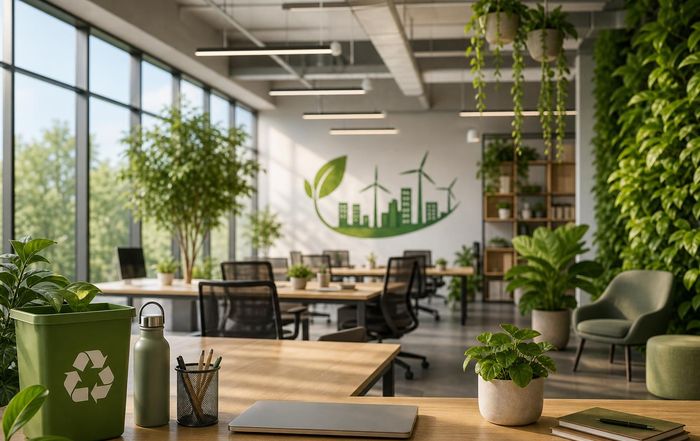
How Green Leasing Supports Sustainable Workplaces
Rethinking the Workplace Lease in a Low-Carbon World
Across global property markets, the commercial lease is quietly becoming one of the most powerful instruments for climate action and workplace transformation. As organizations in North America, Europe, Asia and beyond set science-based emissions targets and publish detailed sustainability reports, attention is shifting from headline goals to the practical mechanisms that determine whether those goals can be achieved in everyday operations. The lease agreement between building owners and tenants is one of those mechanisms, and the rapid evolution of "green leasing" is reshaping how offices, laboratories, logistics hubs and retail spaces are designed, managed and experienced.
For Eco Natur, whose climate sensitive readers are deeply engaged with sustainable living, circular economy principles and responsible business, green leasing offers a bridge between individual eco-conscious choices and the institutional decisions that define how workplaces consume energy, water and materials. By embedding environmental performance, health, and social value into the legal and financial framework of property occupation, green leases are turning sustainability from an optional add-on into a shared operational mandate for both landlords and tenants.
What Is a Green Lease?
A green lease is a commercial lease that incorporates specific clauses to improve the environmental and social performance of a building and its occupants, while aligning financial incentives so that both landlord and tenant benefit from sustainability investments. Instead of treating energy efficiency or recycling as discretionary "extras," a green lease makes them part of the contractual obligations that govern how space is built out, operated and upgraded.
Definitions vary across regions, but organizations such as the Institute for Market Transformation and the U.S. Department of Energy's Better Buildings Initiative describe green leases as agreements that address issues such as energy and water efficiency, indoor environmental quality, waste reduction, data sharing and sometimes renewable energy procurement. Readers can explore foundational concepts through resources from the Better Buildings Green Leasing program and the World Green Building Council, which explains how leases can support net zero carbon buildings.
Crucially, green leases seek to overcome the classic "split incentive" problem: landlords typically pay for capital upgrades (such as high-efficiency HVAC systems or better insulation), while tenants pay the utility bills. If a landlord invests in efficiency, the tenant reaps most of the savings, which can discourage the owner from spending on upgrades. Green leasing structures are designed to share both costs and benefits more equitably, making it rational for both parties to pursue ambitious sustainability measures.
Core Elements of a Green Lease
Although each market and building type differs, successful green leases tend to include a set of recurring themes that together support sustainable workplaces and healthier, more productive environments.
Shared Sustainability Objectives and Governance
Modern green leases usually begin with a statement of shared sustainability objectives, often aligned with widely recognized frameworks such as the Paris Agreement, Science Based Targets initiative (SBTi) or UN Sustainable Development Goals. Many agreements establish joint "green committees" or working groups in which landlord and tenant representatives meet periodically to review performance data, discuss improvement projects and update targets. This governance structure moves sustainability from informal conversations to a structured collaboration embedded in the life of the tenancy.
For a deeper understanding of such governance models, readers can review guidance from the Urban Land Institute on sustainable leasing practices, which highlights case studies from major cities including London, New York, Berlin and Singapore.
Energy Efficiency, Renewable Energy and Data Sharing
Energy is usually the heart of a green lease. Clauses may require that base building systems meet particular performance standards (for example, ASHRAE or national building codes), that tenants select efficient equipment, and that both parties cooperate on commissioning and ongoing optimization. Increasingly, leases include targets for energy intensity, expressed as kilowatt-hours per square meter, and set out processes for periodic review.
Data sharing provisions are critical. Without accurate sub-metering and transparent data, neither party can identify waste or verify improvements. Many green leases specify that landlords provide tenants with regular energy and water reports, while tenants agree to share data about plug loads and specialized equipment. This transparency enables joint planning for upgrades and supports external reporting, including sustainability disclosures aligned with the Global Reporting Initiative.
As renewable energy becomes more accessible, leases may also address on-site solar, power purchase agreements or green tariffs. In markets such as the United States, Germany and Australia, tenants are increasingly seeking buildings that can support their corporate commitments to 100 percent renewable electricity, and landlords who facilitate such arrangements often gain a competitive advantage. Readers interested in the broader context can explore renewable energy coverage on Eco Natur.
Indoor Environmental Quality and Health
A sustainable workplace is not only low-carbon; it is also healthy, comfortable and supportive of human well-being. Green leases often reference indoor environmental quality standards such as ASHRAE 62.1 for ventilation or voluntary certifications including WELL Building Standard and Fitwel. Clauses may address minimum fresh air rates, low-emitting materials, daylight access, thermal comfort ranges and acoustic performance.
Evidence from organizations such as Harvard T.H. Chan School of Public Health indicates that better air quality and environmental conditions can improve cognitive function and reduce absenteeism. Their "Healthy Buildings" research, accessible via Harvard Healthy Buildings, has been influential in persuading both landlords and tenants that investments in ventilation and filtration can yield measurable productivity benefits, especially in knowledge-intensive sectors.
For Eco Natur readers who follow health and sustainability, the integration of wellness criteria into legal agreements represents a significant step toward workplaces that support both planetary and human flourishing.
Water, Waste and Circularity
Water efficiency measures in green leases range from specifying low-flow fixtures to requiring leak detection systems and regular audits. In regions facing water stress, such as parts of Australia, South Africa and the western United States, water clauses are becoming more detailed, often referencing national standards or municipal conservation requirements.
Waste and circularity are equally central. Many green leases set out goals for diversion from landfill, require provision of recycling and organics collection infrastructure, and encourage the use of reusable or recyclable materials in fit-outs and daily operations. Some agreements address construction and demolition waste during tenant improvements, mandating recovery and recycling of materials where feasible, in line with guidance from organizations like the Ellen MacArthur Foundation, which promotes the circular economy in buildings and construction.
These provisions resonate strongly with Eco Natur's focus on recycling, plastic-free living and zero-waste strategies, showing how individual waste-reduction habits can be scaled up through institutional commitments.
Sustainable Fit-Outs and Materials
Office interiors and lab or retail fit-outs can be a major source of embodied carbon and resource use. Green leases frequently include guidelines for tenant improvements, encouraging or requiring the use of certified sustainable materials (for example, FSC-certified timber), low-VOC paints and adhesives, and modular furniture that can be reused or reconfigured rather than discarded.
Some agreements reference green building certification systems such as LEED, BREEAM or DGNB, specifying that tenant spaces must be designed to meet certain levels, or that changes cannot compromise the base building's certification. The U.S. Green Building Council and BRE Group provide extensive materials on green interior fit-outs and sustainable refurbishment, which are increasingly used by corporate real estate teams and design professionals.
For readers interested in sustainable design, the design and sustainability content at eco-natur complements these frameworks by highlighting aesthetic and functional approaches that minimize environmental impact while enhancing user experience.
How Green Leasing Supports Sustainable Workplaces in Practice
The impact of green leasing becomes most visible when examining how it shapes day-to-day operations, employee experience and long-term portfolio strategy.
Aligning Financial Incentives for Deep Retrofits
One of the most powerful contributions of green leases is their ability to unlock deeper energy and carbon reductions by aligning financial incentives. Traditional leases often leave landlords reluctant to invest in high-performance building systems because tenants capture most of the utility savings. Green leases introduce mechanisms such as cost-sharing for capital improvements, amortization of upgrade costs through service charges, or performance-based rent structures that reward efficiency.
Research from the Rocky Mountain Institute and the Institute for Market Transformation, summarized in their publicly available materials on high-performance leasing, suggests that when these mechanisms are well designed, both parties can achieve positive net present value from efficiency projects. Landlords benefit from higher asset value, improved occupancy rates and reduced risk of obsolescence, while tenants enjoy lower operating costs and progress toward their sustainability targets.
From the perspective of Eco Natur's audience, which closely follows sustainable business practices and green economy trends, this alignment of financial and environmental performance is a critical enabler of systemic change.
Supporting Corporate Climate and ESG Commitments
Many multinational companies headquartered in the United States, United Kingdom, Germany, Japan and other major economies have now adopted net-zero or near-zero carbon targets, often validated by the Science Based Targets initiative. For service-based organizations whose emissions are dominated by office energy use, travel and purchased goods, the environmental performance of leased space is a major lever.
Green leases provide a structured way to translate abstract climate commitments into concrete operational requirements. They can specify that buildings must meet certain energy performance benchmarks, that renewable energy must be sourced where available, and that landlord and tenant will collaborate on decarbonization roadmaps. These provisions, in turn, support more robust sustainability strategies and help companies respond to evolving disclosure regulations such as the EU Corporate Sustainability Reporting Directive and climate-related reporting frameworks promoted by the International Sustainability Standards Board.
By embedding ESG considerations into leases, organizations make sustainability less dependent on voluntary initiatives and more a matter of contractual compliance and fiduciary responsibility, which aligns with the growing emphasis on environmental, social and governance performance in global capital markets.
Enhancing Employee Experience, Health and Retention
Sustainable workplaces are increasingly recognized not only for their environmental benefits but also for their capacity to attract and retain talent. Surveys by organizations such as Deloitte and PwC indicate that younger employees, in particular, place high value on working for companies that demonstrate authentic environmental responsibility, and they often notice whether their offices reflect those values through visible sustainability features and practices.
Green leases can help ensure that such features are not superficial. By codifying requirements for indoor air quality, access to natural light, biophilic design elements, quiet zones and low-toxicity materials, leases create more consistent standards across a company's global portfolio. Certification systems like WELL and Fitwel provide frameworks for measuring these aspects, and the International WELL Building Institute offers case studies showing how health-focused buildings have improved employee satisfaction and reduced absenteeism.
This holistic approach connects closely with Eco Natur's coverage of sustainable lifestyle choices and workplace well-being, demonstrating that environmental responsibility and human-centered design can reinforce each other rather than compete.
Advancing Circular Economy and Plastic-Free Goals
Office environments, retail outlets and distribution centers generate significant volumes of waste, much of it packaging, single-use plastics, and discarded furnishings or equipment. Green leases provide a mechanism to formalize commitments to waste reduction and circularity, for example by requiring landlords to provide infrastructure for multi-stream recycling, composting and secure e-waste handling, and by obliging tenants to participate in these systems and report performance.
In some markets, innovative leases go further, encouraging shared use of resources such as furniture libraries, modular partitions and refurbished equipment, which can be reallocated between tenants rather than disposed of at the end of a lease. These practices align with guidance from organizations like Zero Waste International Alliance and the Ellen MacArthur Foundation, and they resonate strongly with Eco Natur readers who are already pursuing plastic-free and zero-waste lifestyles at home.
By extending circular principles into the workplace through contractual obligations, green leases help scale individual behavior change into collective, systemic impact.
Supporting Biodiversity and Urban Nature
Although energy and carbon often dominate discussions, green leases can also support biodiversity and nature-positive outcomes, especially in campuses, business parks and mixed-use developments. Clauses may address green roofs, pollinator-friendly landscaping, tree preservation, bird-safe glass, and restrictions on harmful pesticides, aligning with guidance from groups such as IUCN and the Convention on Biological Diversity.
For buildings near sensitive habitats or within rapidly urbanizing regions, these provisions can make a tangible difference to local ecosystems and urban wildlife corridors. Eco Natur's own work on biodiversity and wildlife underscores the importance of integrating nature into human environments, and green leases offer a pragmatic way to ensure that urban development does not come at the expense of ecological resilience.
Regional Trends and Policy Drivers
Green leasing is evolving differently across regions, shaped by regulatory frameworks, market maturity and cultural expectations.
In Europe, where building performance standards are tightening under the EU Green Deal and national regulations, green leases are increasingly seen as a practical tool for achieving compliance. In the United Kingdom, for example, the Better Buildings Partnership has developed a widely referenced Green Lease Toolkit, and many institutional landlords now treat green clauses as standard for Grade A office stock. Similar initiatives are emerging in France, Germany, the Netherlands and the Nordic countries, where strong climate policies and tenant demand reinforce each other.
In North America, voluntary programs such as the U.S. DOE's Green Lease Leaders have helped mainstream best practices, with major corporates and real estate investment trusts adopting green clauses across portfolios. Canadian cities like Vancouver and Toronto are also integrating green leasing concepts into broader climate and building strategies, supported by organizations such as the Canada Green Building Council.
In the Asia-Pacific region, markets such as Australia and Singapore have been early adopters of performance-based leases, influenced by strong building rating systems like NABERS and Green Mark. In China, Japan and South Korea, growing corporate climate commitments and government decarbonization targets are beginning to drive more systematic attention to leased space, although practices remain uneven across regions and asset classes.
For readers seeking a global overview of sustainable real estate trends, the Global Real Estate Sustainability Benchmark (GRESB) provides annual assessments and sector insights that highlight how leasing practices are evolving in response to investor expectations and regulatory change.
Challenges and Areas of Uncertainty
Despite its promise, green leasing is not without challenges. Negotiating detailed sustainability clauses can lengthen lease discussions, especially when parties have different levels of ambition or when legal teams are unfamiliar with technical standards. Smaller landlords and tenants may lack the expertise or resources to design and implement sophisticated performance-based structures, and in some markets, regulatory or utility constraints limit access to renewable energy options.
There is also ongoing debate about how prescriptive leases should be. Some practitioners argue for highly detailed requirements, believing that clear obligations drive better outcomes and reduce ambiguity. Others prefer more flexible, principle-based clauses that can adapt to technological change and evolving standards. Independent analyses by organizations like the World Resources Institute and C40 Cities suggest that both approaches can work, provided that there is a mechanism for periodic review and that data transparency is maintained, but there is no universal consensus on the optimal balance.
Measurement and verification present another area of uncertainty. While advanced buildings with sub-metering and digital management systems can track performance with high precision, many existing properties lack such infrastructure. Retrofitting meters and integrating data platforms can be costly and complex, and responsibility for these investments must be negotiated. As a result, some green leases rely on modeled or benchmarked performance rather than real-time data, which can limit their effectiveness.
Nevertheless, the overall trajectory across regions indicates that these challenges are being addressed through standardization, capacity building and the growing availability of digital tools for building analytics and reporting.
How Eco Natur Readers Can Engage with Green Leasing
For individuals and organizations aligned with Eco Natur's mission, green leasing offers multiple entry points, whether they are corporate decision-makers, small business owners, employees or sustainability advocates.
Corporate occupiers can integrate green leasing requirements into their real estate strategies, ensuring that requests for proposals and lease negotiations reflect their climate, health and circular economy objectives. Facilities managers and sustainability teams can collaborate to define clear performance targets and governance structures, leveraging guidance from trusted organizations such as the World Green Building Council, Urban Land Institute and national green building councils.
Smaller businesses, co-working members and non-profits can ask prospective landlords about existing sustainability measures, building certifications and willingness to include basic green clauses, even if comprehensive performance-based structures are not feasible. Over time, such questions help signal market demand and encourage landlords to upgrade their offerings.
Employees can engage through internal sustainability committees, raising awareness of how their workplace is leased and operated, and advocating for improvements that align with the company's values. By connecting workplace initiatives with personal commitments to sustainable living, organic food choices and responsible consumption, individuals can help create a culture in which green leasing is seen not as a niche legal product but as a natural expression of organizational purpose.
Policy makers and city leaders can support green leasing by providing model clauses, facilitating knowledge exchange and aligning regulations and incentives with performance-based leasing structures. Many cities are already exploring how building performance standards, disclosure requirements and financial incentives can be combined with green leases to accelerate decarbonization and resilience.
Toward a New Standard for Sustainable Workplaces
As the decade progresses, the convergence of climate science, investor expectations, employee values and regulatory frameworks is transforming what it means to be a responsible occupier or owner of commercial space. Green leasing is emerging as a practical, scalable tool that connects high-level sustainability commitments with the granular realities of building operations and workplace experience.
For Eco Natur and its global earth caring community, the rise of green leasing underscores a broader truth: sustainable transformation is not only about new technologies or individual behavior change, but also about re-writing the rules and contracts that organize economic life. By embedding environmental performance, health, circularity and social value into the everyday legal instruments of the property market, organizations can create workplaces that support both planetary boundaries and human flourishing.
Readers and subscribers who wish to explore these themes further can find additional perspectives across eco-natur's daily coverage of sustainability, recycling and circular economy, sustainable business and the green economy and global environmental trends. As green leasing continues to evolve, it offers a compelling example of how thoughtful design, legal innovation and shared purpose can turn workplaces into engines of positive environmental and social change.
