
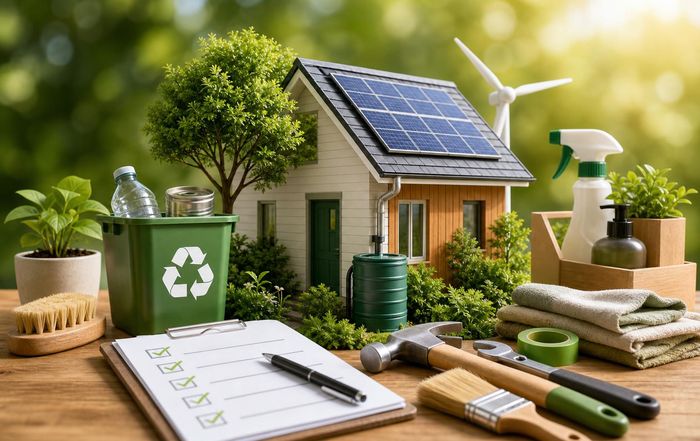
How to Create a Sustainable Home Maintenance Plan
Creating a sustainable home maintenance plan has evolved from a niche interest into a central pillar of responsible living, and it now sits at the heart of how individuals and families can respond meaningfully to environmental challenges. For the community online here, the home is not only a place of comfort and safety but also a powerful platform for reducing emissions, conserving resources, and protecting biodiversity. A carefully designed maintenance plan allows households to embed sustainability into everyday routines, transforming repairs, cleaning, upgrades, and long-term investments into actions that support a healthier planet and more resilient communities.
Why a Sustainable Home Maintenance Plan Matters
Sustainable home maintenance connects three core dimensions: environmental impact, economic resilience, and personal well-being. Research compiled by organizations such as the Intergovernmental Panel on Climate Change (IPCC) shows that buildings account for a significant share of global energy use and greenhouse gas emissions, especially when heating, cooling, and appliances are considered together. Improving the efficiency and durability of a home, and choosing low-impact materials and methods, therefore offers one of the most direct ways for individuals to reduce their environmental footprint. Readers who explore the broader framework of sustainability and systems thinking at Eco Natur will recognize that these household decisions ripple outward into supply chains, local economies, and ecosystems.
Economic benefits are equally important. Studies from institutions such as the International Energy Agency (IEA) and U.S. Department of Energy indicate that well-insulated homes with efficient heating, cooling, and appliances can cut energy bills substantially over time, often offsetting the initial cost of upgrades. Preventive maintenance also reduces costly emergency repairs and extends the life of roofs, boilers, and other major components, which is particularly valuable in regions facing more extreme weather. A sustainable home maintenance plan thus supports both household budgets and broader economic resilience and green growth.
Health and comfort form the third pillar. Indoor air quality, moisture control, and exposure to chemicals all influence respiratory health, allergies, and general well-being. Guidance from organizations such as the World Health Organization (WHO) and U.S. Environmental Protection Agency (EPA) highlights the links between poor indoor environments and health problems, while also providing evidence-based recommendations on ventilation, low-emission materials, and safe cleaning practices. By integrating these insights into a structured maintenance plan, households can create living spaces that are healthier for occupants and safer for the environment.
Building the Foundations of a Sustainable Plan
A robust sustainable home maintenance plan begins with a clear understanding of the home's current performance and environmental footprint. Homeowners and renters across regions such as North America, Europe, Asia, and beyond increasingly use professional energy audits, green building certifications, and simple self-assessments to identify priorities. Organizations like ENERGY STAR in the United States and the UK Energy Saving Trust offer practical tools and guidance that help households assess insulation levels, heating systems, lighting, and appliance efficiency in a structured way. These resources complement the broader lifestyle guidance available through Eco Natur, particularly the sections on sustainable living practices and global environmental action.
A sustainable plan should be written down, reviewed regularly, and adapted to local climate, building type, and budget. In colder climates such as Scandinavia, Canada, or alpine regions of Europe, insulation, airtightness, and heating system optimization may be the top priorities, while in warmer countries such as Australia, Spain, Thailand, or parts of South Africa, shading, ventilation, and cooling efficiency may take precedence. Urban apartments in high-density cities like Singapore or Tokyo require different strategies from detached houses in rural Germany or the United States. In all cases, the goal is to align seasonal and annual tasks with long-term sustainability goals, whether that involves moving toward zero waste in the home, improving biodiversity in the garden, or preparing for renewable energy installations.
Energy Efficiency as the Cornerstone
Energy use is often the largest environmental impact associated with a home, and it is therefore central to any sustainable maintenance plan. Organizations such as the IEA, IPCC, and European Environment Agency (EEA) consistently identify energy efficiency in buildings as one of the most cost-effective climate solutions. For households, this translates into a blend of routine maintenance, targeted upgrades, and behavioral changes.
Regular tasks such as bleeding radiators, servicing boilers or heat pumps, cleaning filters in ventilation systems, and sealing drafts around windows and doors can significantly improve performance. In many countries, including the United Kingdom, Germany, and Japan, national energy agencies provide checklists and online tools to help residents schedule these tasks at appropriate intervals. Replacing incandescent or halogen bulbs with high-efficiency LEDs, and ensuring that major appliances meet or exceed local efficiency standards, further reduces energy demand. Consumers can consult reliable information from sources like ENERGY STAR, the UK Government's energy label guidance, or the European Commission's product energy labels to make informed choices.
Long-term planning may involve deeper retrofits. Adding insulation to roofs, walls, and floors; upgrading single-glazed windows to double or triple glazing; and replacing old fossil-fuel boilers with high-efficiency heat pumps or district heating connections can dramatically cut emissions. The Rocky Mountain Institute (RMI) and International Finance Corporation (IFC) publish case studies showing that such retrofits, when carefully planned, can deliver both environmental and financial benefits over the life of the building. For readers at Eco Natur considering more advanced steps, exploring options for renewable energy integration at home can be a logical next stage, whether through rooftop solar, community energy schemes, or green tariffs where available.
Water Conservation and Resilient Plumbing
Water scarcity and climate-induced variability in rainfall are pressing concerns in regions ranging from California and Australia to parts of Southern Europe, South Africa, and Asia. A sustainable home maintenance plan therefore includes both efficiency measures and resilience strategies for water. Organizations such as the World Resources Institute (WRI) and UN-Water provide global overviews of water stress, while utilities and local authorities often offer practical household guidance.
Routine actions include checking for leaks in taps, toilets, and irrigation systems; installing low-flow fixtures; and ensuring that appliances such as dishwashers and washing machines are water-efficient. In many countries, labels such as the Water Efficiency Labelling Scheme (WELS) in Australia or the EPA WaterSense program in the United States help consumers identify products that meet rigorous efficiency criteria. Regular inspection of outdoor hoses, rain gutters, and drainage also supports both water efficiency and building durability, reducing the risk of moisture damage and mold.
In areas where regulations permit, rainwater harvesting systems and greywater reuse can be integrated into home maintenance plans. These systems require periodic cleaning of filters, tanks, and distribution lines to ensure water quality and performance. For households interested in broader ecological water management, maintaining permeable surfaces, rain gardens, and native vegetation supports local hydrology and biodiversity, aligning with the guidance on biodiversity and wildlife-friendly design found on eco-natur.com.
Sustainable Materials, Repair, and Circular Thinking
A sustainable home maintenance plan also addresses the materials used in repairs, renovations, and daily upkeep. The production and disposal of building materials, furnishings, and household goods contribute significantly to resource depletion and waste. Reports from organizations such as the Ellen MacArthur Foundation and United Nations Environment Programme (UNEP) stress the importance of circular economy principles, which emphasize durability, repairability, and recycling over linear "take-make-dispose" patterns.
When choosing paints, sealants, flooring, or furniture, many households now seek products with low volatile organic compound (VOC) emissions, certified sustainable wood, and recycled or bio-based content. Certifications from bodies such as Forest Stewardship Council (FSC), Cradle to Cradle Certified, and EU Ecolabel can help identify products that meet recognized environmental and health standards. Routine maintenance tasks, such as sanding and repainting window frames, re-sealing bathroom joints, or repairing minor cracks, can be performed with these more sustainable materials, reducing long-term exposure to harmful chemicals.
Repair culture is another cornerstone of sustainable maintenance. Instead of replacing damaged fixtures or furniture, households can increasingly access repair cafes, local craftspeople, or online tutorials from trusted educational institutions such as ETH Zurich, MIT OpenCourseWare, or national vocational training centers. This approach reduces waste, conserves resources, and often saves money. For readers seeking to embed these practices into daily life, the guidance on recycling and resource recovery at Eco Natur offers a complementary framework.
Plastic-Free and Low-Toxic Cleaning Practices
Day-to-day cleaning and upkeep present an opportunity to minimize plastic waste and reduce exposure to hazardous chemicals. Many conventional cleaning products come in single-use plastic packaging and contain ingredients that can harm aquatic ecosystems and indoor air quality. Environmental health agencies, including the European Chemicals Agency (ECHA) and Health Canada, provide evidence-based information on chemical safety and encourage the use of less harmful alternatives where possible.
Households can transition to concentrated or refillable cleaning products, solid soaps, and reusable cloths and brushes to cut down on packaging waste. In many cities across Europe, North America, and Asia, refill stations and zero-waste shops are becoming more common, allowing consumers to bring their own containers. Simple, well-researched recipes based on vinegar, baking soda, and plant-derived soaps can handle many cleaning tasks, although users should always consult reliable sources such as Consumer Reports, Which? in the UK, or government health agencies to ensure safety and effectiveness on different surfaces.
Microplastic pollution is another emerging concern. Fibers from synthetic textiles and particles from certain cleaning products can enter waterways through domestic wastewater. Guidance from organizations such as the International Union for Conservation of Nature (IUCN) suggests using washing machine filters designed to capture microfibers, washing synthetic garments less frequently, and choosing natural fibers when possible. For readers committed to reducing plastic dependence more broadly, the in-depth resources on plastic-free living strategies at eco-natur.com provide a structured path forward.
Organic Food, Kitchen Maintenance, and Household Health
The kitchen is a central node where sustainability, health, and daily routines intersect. Many readers of Eco Natur are already exploring organic food choices, and integrating these choices into a home maintenance plan can yield additional benefits. By organizing pantry storage, monitoring fridge temperatures, and planning regular checks for expired items, households can reduce food waste, which is a significant source of greenhouse gas emissions globally according to the Food and Agriculture Organization (FAO).
Choosing durable cookware made from materials such as stainless steel, cast iron, or high-quality glass, and maintaining these items properly, reduces the need for frequent replacement and limits potential exposure to chemicals that can be released from degraded non-stick coatings. Agencies like the European Food Safety Authority (EFSA) and U.S. Food and Drug Administration (FDA) periodically review the safety of food-contact materials, and their updates can guide household decisions. Proper maintenance of refrigerators, freezers, and ovens-cleaning coils, checking door seals, and descaling where necessary-improves energy efficiency and helps preserve food safely.
Kitchen hygiene and pest prevention are also integral to sustainable maintenance. Sealing cracks, storing food in airtight reusable containers, and promptly cleaning spills reduce the need for chemical pesticides. Where pest control is necessary, integrated pest management approaches, recommended by bodies such as the U.S. EPA and various European public health agencies, prioritize non-chemical methods and targeted, low-toxicity treatments. These practices align closely with the holistic view of health, environment, and lifestyle promoted by Eco Natur.
Wildlife-Friendly and Climate-Resilient Outdoor Spaces
For homes with gardens, balconies, or shared outdoor areas, sustainable maintenance extends beyond the building envelope to the surrounding ecosystem. Urbanization and intensive land use have placed pressure on wildlife across regions from the United Kingdom and Germany to Brazil, South Africa, and parts of Asia. Conservation organizations such as WWF, BirdLife International, and the IUCN encourage homeowners to create habitats that support pollinators, birds, and small mammals, even in densely populated areas.
Regular garden maintenance can be guided by ecological principles. Reducing or eliminating synthetic pesticides and fertilizers, favoring native plants, and allowing some areas to remain wild or lightly managed can significantly boost local biodiversity. Composting garden waste and kitchen scraps, where safe and permitted, turns organic material into a valuable soil amendment, closing nutrient loops and reducing landfill contributions. Many municipalities and environmental NGOs publish region-specific planting guides that help residents select species suited to local conditions and wildlife needs.
Climate resilience is increasingly important in outdoor maintenance planning. In regions facing heavier rainfall, storms, or heatwaves, households can maintain shade trees, install rain gardens, and use drought-tolerant plants to manage water and temperature extremes. Proper maintenance of gutters, downspouts, and drainage channels prevents erosion and water damage to buildings. Readers who wish to deepen their understanding of the connections between wildlife, biodiversity, and home landscapes will find extensive resources on eco-natur.com that complement practical garden tasks with broader ecological insights.
Integrating Recycling and Waste Reduction into Routine Tasks
Waste management is a visible and measurable aspect of sustainable living, and a home maintenance plan offers an ideal structure for embedding good practices. Municipal recycling systems vary widely between countries and even between neighboring cities, but reliable information is typically available from local authorities, national environment agencies, or reputable organizations such as Zero Waste Europe, Recycling Council of British Columbia, or Keep America Beautiful. Households can use this information to establish clear sorting systems for paper, glass, metals, and plastics, and to schedule regular trips to collection points for special items such as electronics, batteries, and hazardous waste.
Maintenance tasks often involve materials that require particular care, including paint, solvents, old insulation, and broken electronics. Many jurisdictions in Europe, North America, and parts of Asia operate take-back schemes or special collection days for these items, which help ensure they are processed safely. Before discarding items, households can consider repair, donation, or repurposing options, strengthening local circular economies and reducing pressure on landfills and incineration facilities. The thematic guidance on recycling and circular living and zero-waste strategies at Eco Natur provides additional frameworks for integrating these habits into daily life.
Sustainable Business Practices and the Home as a Market Signal
A growing number of people work remotely or run small enterprises from home, blurring the line between domestic and commercial spaces. This shift creates new opportunities to align home maintenance with broader sustainable business practices. Choosing suppliers that demonstrate strong environmental, social, and governance (ESG) performance, and favoring companies that publish transparent sustainability reports verified by organizations such as CDP, Global Reporting Initiative (GRI), or B Corp, sends market signals that reward responsible behavior.
Households can incorporate criteria such as product durability, repairability, and ethical sourcing into procurement decisions for office equipment, furniture, and building materials. Many leading companies in Europe, North America, and Asia now provide detailed information on their supply chains and carbon footprints, often aligned with frameworks from the Science Based Targets initiative (SBTi) or UN Global Compact. By aligning home maintenance choices with these standards, residents effectively extend the influence of sustainable business norms into everyday consumer behavior, reinforcing the link between personal values and market transformation.
Lifestyle, Habits, and Long-Term Commitment
Ultimately, a sustainable home maintenance plan is not a static checklist but a living framework that evolves with changing technologies, regulations, and personal circumstances. It is deeply connected to broader patterns of lifestyle and daily choices, including transportation, diet, and consumption habits. As new research emerges from universities, public agencies, and international bodies, households can adjust their practices, phasing out outdated technologies and embracing proven innovations.
Education and community engagement play a crucial role in maintaining momentum. Many cities and regions host workshops on home energy efficiency, water conservation, and eco-friendly gardening, often in collaboration with organizations such as ICLEI - Local Governments for Sustainability, C40 Cities, or national environmental NGOs. Online courses from universities and platforms like Coursera or edX further democratize access to technical knowledge, allowing residents in diverse regions-from the United States and Canada to India, Brazil, and South Korea-to develop expertise relevant to their local context.
For our audience, the home becomes a canvas on which sustainability principles are expressed in tangible, practical ways. By weaving together energy efficiency, water stewardship, responsible materials, wildlife support, and circular thinking, a sustainable home maintenance plan transforms everyday tasks into a coherent, long-term contribution to global environmental goals. The journey involves continuous learning, collaboration, and adaptation, yet it also offers a profound sense of agency and purpose. Each repaired window, insulated roof, refilled bottle, and thriving garden bed is a quiet but powerful affirmation that individual actions, when guided by knowledge and intention, can help shape a more resilient and regenerative future.
