
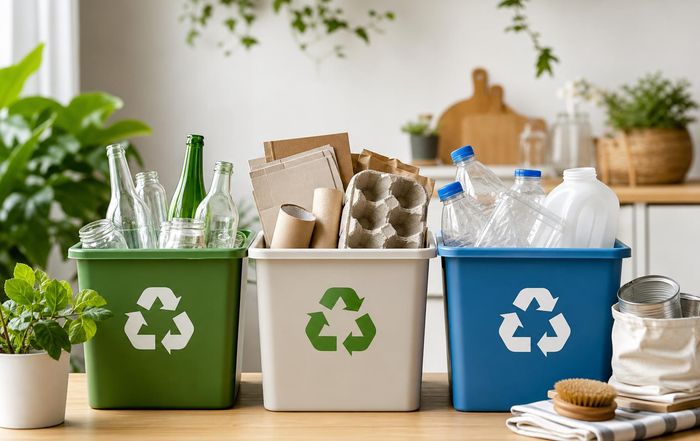
How to Reduce Recycling Confusion at Home
Recycling at home has never been more important, yet for many households it has also never felt more confusing. Different colored bins, complex symbols on packaging, changing local rules, and conflicting advice online can leave even the most environmentally conscious families wondering whether their efforts are really making a difference. At the same time, evidence from organizations such as the OECD and UN Environment Programme indicates that improper sorting and contamination remain major barriers to effective recycling systems worldwide, undermining the good intentions of millions of people.
For environmentally where and monitoring individuals who care deeply about sustainable living, the challenge is not a lack of motivation but a lack of clarity. This article explores how households can cut through the confusion, build reliable habits, and turn recycling from a source of frustration into a confident, positive part of everyday life. It draws on guidance from respected institutions, highlights recent developments in recycling standards and technologies, and connects these insights with the broader themes of sustainable living, circular economy, and responsible consumption that are central to us.
Why Recycling Feels So Confusing
Recycling confusion at home is not a sign of personal failure; it is largely a structural problem. Over recent years, several overlapping trends have combined to create a landscape in which ordinary consumers struggle to know what belongs in which bin.
One of the most significant factors is the lack of global uniformity. Rules can vary not only between countries but also between neighboring cities or even different collection zones within the same municipality. In the United States, for example, the U.S. Environmental Protection Agency (EPA) notes that local authorities set their own programs, which means the list of accepted materials in one town may look very different from another only a few kilometers away. Similar patterns exist in the United Kingdom, where WRAP (the Waste and Resources Action Programme) has documented wide variations in collection systems, and in Germany, where the Umweltbundesamt (German Environment Agency) explains that regional waste management companies determine specific sorting requirements.
Packaging design further complicates matters. Modern products often combine multiple materials, thin films, labels, and coatings that are not always visible to the consumer. Research summarized by the Ellen MacArthur Foundation shows that multi-layer flexible packaging, in particular, is difficult to recycle in many regions, yet it is increasingly common in food and household goods. Meanwhile, a proliferation of green-sounding claims and symbols, some regulated and some not, can mislead people into believing that an item is recyclable when local facilities cannot handle it.
Adding to this complexity is the evolving nature of global recycling markets. After China's National Sword policy sharply restricted imports of contaminated recyclables, many countries were forced to reassess what materials they could economically process domestically. Organizations such as Greenpeace and Basel Action Network have documented how this shift exposed longstanding problems with contamination and low-quality recyclables, leading some municipalities to tighten their rules or temporarily suspend certain streams. Households often experienced these changes as sudden and confusing rule shifts, with limited explanation.
In this context, the mission of Eco Natur to support clear, practical sustainable living guidance becomes especially valuable. By helping readers understand why the system looks the way it does, the path toward more confident, effective recycling becomes much easier to see.
Building a Clear Foundation: Know Your Local System
The most powerful step any household can take to reduce recycling confusion is to anchor its decisions in verified, local information rather than generic advice. While global best practices are important, what ultimately matters for contamination and recycling success is what the local facility can actually process.
Most municipalities or waste companies now maintain online guidance pages explaining what goes into each bin, how to prepare materials, and which exceptions apply. In the United States, for instance, the EPA offers a directory that can help residents connect to local recycling information, while in the United Kingdom, Recycling Locator tools supported by Recycle Now and WRAP allow households to search by postcode. Similar resources are provided by the European Environment Agency, many provincial governments in Canada, and local councils across Australia, Germany, and the Nordic countries.
Households can reduce uncertainty significantly by taking the time to locate and carefully read these official instructions, printing or saving a copy for quick reference in the kitchen. For many readers of eco-natur, this process aligns naturally with broader efforts to cultivate a more intentional sustainable lifestyle, in which decisions are informed by evidence rather than assumption.
When reviewing local rules, it is useful to pay attention to the details that often cause confusion, such as whether lids should be removed from bottles, if pizza boxes with grease are accepted, whether plastic film is allowed in curbside collection, and how to handle items like aerosol cans, batteries, and small electronics. Many local authorities now publish clear "yes/no" lists, and some offer smartphone apps with search functions to check individual items.
By anchoring household practices in these local guidelines, families can avoid one of the most common sources of recycling errors: applying advice from another city or country that does not match local infrastructure.
Understanding Symbols and Labels Without Being Misled
The symbols printed on packaging are meant to help, but they often add to the confusion. A key step toward more confident recycling at home is understanding what these symbols do and do not guarantee.
The familiar "chasing arrows" triangle with a number inside is a prime example. Many consumers interpret this as a universal recycling mark, yet organizations such as The Recycling Partnership and National Renewable Energy Laboratory (NREL) emphasize that the number simply identifies the type of plastic resin, not whether the item is accepted in a particular recycling program. In many regions, only a subset of these plastics-commonly PET (1) and HDPE (2), sometimes PP (5)-are widely recycled, while others may be technically recyclable but lack local processing capacity.
In response to this confusion, labeling initiatives such as the How2Recycle program in North America and the On-Pack Recycling Label (OPRL) in the United Kingdom have sought to provide clearer, standardized guidance. These systems use straightforward language such as "Widely Recycled," "Check Locally," or "Not Yet Recycled," based on independently verified data. Consumers can learn more about these efforts through resources from How2Recycle and OPRL, which explain the criteria behind each label and how to interpret them.
The Ellen MacArthur Foundation and UN Environment Programme have also highlighted the importance of transparent labeling in the transition to a circular economy, noting that clearer on-pack information helps align consumer behavior with actual system capabilities. For households, the practical takeaway is that labels can be a useful guide, but they should always be cross-checked against local rules. When a label says "Check Locally," it is worth taking that instruction seriously rather than assuming the item belongs in the recycling bin.
For readers of Eco Natur, this is an opportunity to integrate better label literacy into everyday shopping choices, reinforcing the site's emphasis on sustainability and informed consumption. Choosing products with transparent, standardized recycling guidance and avoiding those with vague or misleading claims can gradually shift demand toward more responsible packaging practices.
Designing the Home for Simple, Reliable Sorting
Many households struggle with recycling not because they lack information, but because their kitchen or living space is not set up to make correct sorting easy. A core principle of behavior change research, supported by institutions such as Behavioural Insights Team in the UK and academic studies summarized by Nature and ScienceDirect, is that the physical environment strongly shapes daily habits.
At home, this means that a single bin under the sink, with recycling containers located far away or in an inconvenient spot, will almost inevitably lead to mistakes. People in a hurry will choose the easiest option. By contrast, when recycling bins are placed next to the main trash bin, clearly labeled, and large enough to handle typical household volumes, correct sorting becomes the default behavior.
Households can start by mapping where most waste is generated-often the kitchen, bathroom, and home office-and then ensuring that each of these locations has an accessible, clearly marked option for recyclables. Simple labels specifying "Paper and Cardboard," "Plastics and Cans," or whatever categories match local rules can reduce hesitation at the moment of disposal. Families with children may find that involving them in decorating or color-coding the bins encourages engagement and learning.
People who are already exploring zero waste and low-waste strategies can integrate recycling-friendly design into broader home organization efforts. Aligning storage, shopping, and waste systems around sustainability goals not only reduces confusion but also helps make the overall household environment more harmonious and intentional.
Tackling the Most Confusing Materials
Certain items consistently cause uncertainty in households around the world. While specific rules always depend on local systems, several broad categories are widely recognized as problematic, and understanding why can help families make better decisions.
Plastic films and flexible packaging are among the most confusing. Thin bags, wrappers, and pouches are often made from mixed materials that are difficult to separate, and they can clog sorting machinery designed for rigid containers. Organizations such as Plastic Recyclers Europe, American Chemistry Council, and GreenBlue note that while dedicated drop-off programs exist in some countries for clean polyethylene film, curbside systems frequently exclude these items. Checking local guidance is essential, and when in doubt, reducing use of flexible packaging through reusable containers, bulk purchasing, or plastic-free choices is often the most reliable solution.
Another challenging category is food-contaminated packaging. While many paper and cardboard items are accepted, heavily soiled materials can degrade the quality of the recycling stream. The EPA, WRAP, and multiple municipal authorities advise that light staining is sometimes acceptable, but items soaked with grease or food residue should generally be composted where facilities exist or placed in residual waste. Rinsing containers such as yogurt pots or cans with a quick swirl of water, without aiming for perfection, is usually sufficient to prevent contamination while still conserving water.
Mixed-material items, like coffee cups with plastic linings, foil-lined cartons, and composite pouches, are another source of confusion. Some regions have developed specialized recycling streams for beverage cartons, supported by organizations such as ACE (The Alliance for Beverage Cartons and the Environment), but acceptance varies widely. Households can reduce uncertainty by favoring simpler, mono-material packaging and by consulting local guidelines for items like cartons and laminated papers.
By systematically identifying and addressing these "problem categories," families can eliminate a large share of day-to-day recycling uncertainty and align their habits more closely with the practical realities of modern waste management systems.
Connecting Recycling with Sustainable Living and Organic Choices
Recycling is only one part of the sustainability picture, but when integrated thoughtfully with other choices, it can support a broader transformation in how households consume and dispose of products. For the Eco Natur community, this integration is central to a meaningful and inspiring approach to environmental responsibility.
One important connection lies between recycling and organic and sustainable food choices. As consumers shift toward organic produce, minimally processed foods, and local supply chains, they often encounter simpler packaging-such as loose fruits and vegetables, paper bags, or reusable containers-rather than complex multi-layer plastics. This naturally reduces both the volume of waste and the complexity of sorting. Resources from organizations like IFOAM - Organics International, Soil Association, and USDA Organic highlight how organic farming practices can complement waste reduction by promoting soil health and biodiversity, which in turn supports more resilient ecosystems and sustainable food systems.
Recycling decisions also intersect with broader sustainable living choices, such as opting for reusable water bottles, coffee cups, and shopping bags, or choosing durable goods that can be repaired rather than replaced. The Ellen MacArthur Foundation and World Resources Institute (WRI) emphasize that the most effective way to reduce waste is to avoid generating it in the first place, following the familiar hierarchy of reduce, reuse, then recycle. When households prioritize products designed for longevity and repair, they not only decrease the volume of materials requiring sorting but also support a more circular economy that values resource efficiency.
By viewing recycling as one element in a larger tapestry of sustainable habits, households can move beyond anxiety about "getting it wrong" and toward a more holistic, empowering vision of environmental stewardship.
The Role of Wildlife, Biodiversity, and Human Health
Reducing recycling confusion is not merely a matter of administrative efficiency; it has profound implications for wildlife, ecosystems, and human health. Mismanaged waste and poorly sorted recyclables can lead to higher rates of landfilling and incineration, as well as increased leakage of plastics and other pollutants into natural environments.
Organizations such as WWF, IUCN, and UNESCO have documented how plastic pollution threatens marine and terrestrial species through ingestion, entanglement, and habitat degradation. Microplastics, in particular, have been detected in oceans, rivers, soils, and even the air, raising concerns about long-term impacts on food webs and biodiversity. By improving household recycling practices and reducing contamination, communities can help ensure that more materials are effectively recovered and fewer end up in the natural world.
For readers interested in wildlife and biodiversity, understanding this connection can make the sometimes abstract rules of recycling feel more immediate and meaningful. Correctly sorted materials are more likely to be processed into new products, reducing demand for virgin resources and lowering the pressure on habitats from mining, logging, and fossil fuel extraction. The Convention on Biological Diversity and IPBES (Intergovernmental Science-Policy Platform on Biodiversity and Ecosystem Services) both highlight resource overuse as a key driver of biodiversity loss, reinforcing the importance of circular resource flows.
Human health is also at stake. The World Health Organization (WHO) and Lancet Commission on Pollution and Health report that exposure to pollutants from poorly managed waste, including open burning and unregulated dumps, can contribute to respiratory diseases, cardiovascular problems, and other health impacts. By supporting robust, uncontaminated recycling streams, households indirectly contribute to cleaner air and water, benefiting communities both locally and globally. Readers can connect these insights with a focus on health and well-being, recognizing that environmental and personal health are deeply intertwined.
Sustainable Business, the Circular Economy, and Household Influence
Although recycling decisions are made at home, their ripple effects extend into the broader economy. When households consistently sort materials correctly, they provide higher-quality inputs for recycling companies and manufacturers, making it more economically viable to produce goods from recycled content. This in turn strengthens market demand for recyclables and encourages more businesses to adopt circular design principles.
Organizations such as the World Economic Forum (WEF), OECD, and Ellen MacArthur Foundation have emphasized that a successful circular economy requires collaboration between governments, businesses, and citizens. High-quality recycling streams are a crucial part of this system, enabling industries to rely on secondary materials rather than virgin resources. Many companies are now setting targets for recycled content, guided by frameworks from initiatives like the Global Commitment on plastics and the Science Based Targets initiative (SBTi).
For people exploring sustainable business practices and the green economy, this underscores the fact that individual actions and corporate strategies are closely connected. When consumers demand products with clear recycling instructions, high recycled content, and minimal unnecessary packaging, they send signals that can influence design decisions across supply chains. Conversely, responsible businesses can reduce recycling confusion by standardizing materials, simplifying packaging, and partnering with local authorities to communicate clearly with customers.
As more governments in Europe, North America, Asia, and beyond adopt extended producer responsibility (EPR) schemes-policies that make manufacturers financially responsible for the end-of-life management of their products-the alignment between household behavior and corporate accountability is likely to strengthen. Reliable, well-sorted recycling streams are a foundation upon which these emerging systems can build.
From Confusion to Confidence -A Path Forward ?
Recycling at home will probably never be completely effortless. Materials evolve, technologies advance, and local rules change as infrastructure improves. Yet the sense of confusion that many households feel today is not inevitable. By combining accurate local information, better label literacy, thoughtful home design, and a broader commitment to sustainable living, families can transform recycling from a source of stress into a steady, confident habit.
For the our active community, this journey is part of a larger story. The same curiosity and care that lead readers to explore recycling best practices, plastic-free alternatives, and renewable energy solutions can be channeled into a clear, practical approach to everyday waste. Each correctly sorted bottle, each avoided piece of unnecessary packaging, and each conversation with neighbors or local authorities about better recycling systems contributes to a more resilient, circular, and life-supporting economy.
In a world facing complex environmental challenges, the act of placing an item in the right bin may seem small. Yet when multiplied across millions of households in the United States, Europe, Asia, Africa, South America, and beyond, these small acts add up to significant reductions in resource extraction, pollution, and greenhouse gas emissions. They support healthier ecosystems, more innovative businesses, and fairer economic opportunities in the growing circular economy.
By embracing clarity over confusion and aligning daily choices with the values of sustainability, respect for wildlife, and care for human health, readers of eco-natur can help ensure that recycling at home becomes not just a duty, but a meaningful expression of hope and responsibility for the planet and for future generations.
