
Organic Pantry Staples for Sustainable Home Cooking
Organic Kitchens as a Foundation for Sustainable Living
Across continents, from urban apartments in New York and London to rural homes in Germany, India, and Brazil, more households are recognizing that the daily act of cooking can either reinforce environmental harm or become a powerful expression of care for the planet. A thoughtfully stocked organic pantry does more than provide ingredients for wholesome meals; it underpins a lifestyle that values soil health, biodiversity, climate stability, and fair livelihoods for farmers. For readers of Eco Natur at eco-natur.com, this connection between everyday choices and global impact is central, and the pantry is often where that journey becomes tangible.
Organic agriculture, as defined by organizations such as IFOAM - Organics International, emphasizes ecological balance, biodiversity, and the avoidance of synthetic pesticides and fertilizers. Studies summarized by the Food and Agriculture Organization (FAO) and the Rodale Institute have found that well-managed organic systems can improve soil organic matter, support pollinator populations, and reduce chemical runoff into waterways, while in some contexts achieving competitive yields over the long term. For households, this translates into ingredients that are often less chemically intensive, more transparent in origin, and supportive of farming communities that prioritize stewardship over short-term extraction.
Building an organic pantry is therefore not a niche lifestyle choice but an accessible strategy for aligning personal health, culinary enjoyment, and environmental responsibility. Through its guides on sustainable living, organic food, and sustainability, Eco Natur has consistently emphasized that change begins at home, one ingredient and one meal at a time.
Why Organic Pantry Staples Matter for People and Planet
A pantry stocked with organic staples shapes what ends up on the plate, but it also carries upstream consequences for ecosystems and communities. Research compiled by the European Commission's organic farming portal indicates that organic farms in Europe generally host higher species richness of plants, insects, and birds compared with comparable conventional systems, largely because synthetic pesticides and herbicides are restricted and more diverse crop rotations are encouraged. Similar patterns have been documented in North America and parts of Asia by institutions such as the USDA and FiBL - Research Institute of Organic Agriculture.
For consumers in regions as varied as the United States, Germany, Brazil, and Japan, this means that choosing organic pantry staples often supports farming systems that preserve hedgerows, maintain flowering strips for pollinators, and protect soil organisms that underpin long-term productivity. For those concerned with wildlife and habitat protection, Eco Natur's focus on biodiversity and wildlife underscores how every bag of organic lentils or oats may indirectly safeguard nesting sites and insect corridors that would otherwise be threatened by intensive chemical use.
From a health perspective, public bodies like the European Food Safety Authority (EFSA) and the World Health Organization (WHO) stress that both organic and conventional foods must meet strict safety standards. Some peer-reviewed studies, including meta-analyses summarized by the British Journal of Nutrition, have found lower average pesticide residues and, in some cases, modest differences in certain nutrient levels in organic produce and grains, although the health implications of these differences remain a subject of ongoing scientific discussion. Rather than promising miraculous benefits, a responsible view sees organic pantry staples as one component of a broader pattern of healthy living, alongside varied diets rich in plants, regular physical activity, and reduced ultra-processed food consumption.
Crucially, organic pantries also intersect with climate and resource concerns. Life-cycle assessments reviewed by the Intergovernmental Panel on Climate Change (IPCC) suggest that while organic yields can be lower in some contexts, practices such as cover cropping, composting, and reduced synthetic fertilizer use can enhance soil carbon sequestration and lower certain pollution impacts. When combined with reduced food waste and diets that emphasize plant-based proteins, organic staples can contribute to climate-conscious living, a theme that resonates strongly with Eco Natur's emphasis on sustainable lifestyles and renewable energy transitions.
Core Organic Pantry Staples for Everyday Sustainable Cooking
A sustainable organic pantry is less about accumulating exotic superfoods and more about choosing versatile, minimally processed ingredients that can anchor countless meals. Households in North America, Europe, Asia, Africa, and Oceania can adapt the following categories to local availability and culinary traditions, while still honoring the same environmental and ethical principles.
Whole Grains: The Backbone of an Organic Kitchen
Whole grains form the structural core of many sustainable kitchens, providing complex carbohydrates, fiber, and micronutrients while often requiring fewer resources per calorie than animal-based foods. Organic brown rice, oats, barley, quinoa, whole wheat, rye, and regional grains like spelt, millet, sorghum, or teff can be purchased in bulk, stored for long periods, and transformed into breakfasts, salads, breads, and hearty mains.
Organizations such as the Whole Grains Council and the Harvard T.H. Chan School of Public Health highlight the role of whole grains in reducing the risk of certain chronic diseases when part of an overall balanced diet. When these grains are grown organically, they also tend to support more diverse crop rotations, which can break pest cycles and improve soil structure. For readers of Eco Natur, integrating organic whole grains into weekly meal planning aligns with the platform's guidance on sustainable living practices and its commitment to a resilient, low-impact economy.
Legumes and Pulses: Affordable Organic Protein
Beans, lentils, chickpeas, peas, and regional pulses such as cowpeas or mung beans are among the most climate-efficient sources of protein available, especially when compared to resource-intensive animal products. The EAT-Lancet Commission and the United Nations Environment Programme (UNEP) have both highlighted the environmental advantages of shifting diets towards plant-based proteins, noting lower greenhouse gas emissions and reduced land and water use per gram of protein.
Organic legumes, whether dried or canned, are pantry workhorses. They store well, can be transformed into soups, stews, curries, salads, and spreads, and are central to traditional cuisines from Mexico and Brazil to India, Italy, and the Middle East. Because legumes fix atmospheric nitrogen in the soil, organic farmers often use them as key rotation crops, reducing reliance on synthetic nitrogen fertilizers that are energy-intensive to produce and can contribute to nitrous oxide emissions and water pollution. For households following Eco Natur's insights on recycling nutrients through composting and embracing zero-waste principles, cooking large batches of organic beans and creatively using leftovers can minimize both packaging and food waste.
Nuts, Seeds, and Nut Butters: Nutrient-Dense Essentials
Organic nuts and seeds, including almonds, walnuts, hazelnuts, sunflower seeds, pumpkin seeds, sesame, chia, and flax, provide healthy fats, protein, and minerals. While some nut crops, such as almonds, have raised concerns about water use and pollinator stress in certain regions, organic and regenerative producers are experimenting with more diversified agroforestry systems and improved water management. Resources from the Almond Board of California and independent research summarized by the University of California Agriculture and Natural Resources describe evolving practices to address these challenges, highlighting the importance of choosing suppliers committed to continuous improvement.
Nut butters made from organic peanuts, almonds, or other nuts, with minimal added ingredients, can replace highly processed spreads and serve as convenient protein sources. For families seeking to reduce single-use plastic, purchasing nuts and seeds from bulk bins into reusable containers, where available, aligns with Eco Natur's guidance on going plastic free and reducing packaging. Seeds such as flax and chia also play a role in plant-based baking, where they can substitute for eggs in certain recipes, supporting more climate-friendly and inclusive cooking.
Organic Oils, Vinegars, and Condiments: Flavor with Integrity
Organic extra-virgin olive oil, cold-pressed rapeseed or canola oil, and unrefined coconut or regional oils provide essential fats and lend character to dishes. The International Olive Council notes that olive groves managed with attention to biodiversity and soil health can function as semi-natural habitats, although there are documented concerns about intensive, high-input systems. Choosing certified organic oils from producers who emphasize traditional or agroecological methods can help support more sustainable landscapes, from Mediterranean hillsides to Australian and Californian groves.
Organic vinegars, such as apple cider, wine, rice, or balsamic vinegar, alongside naturally fermented condiments like tamari, miso, and sauerkraut, enrich flavor while adding beneficial microbial diversity when unpasteurized. Fermented staples are also central to many Asian and European culinary traditions and can be prepared at home with basic organic ingredients, reducing reliance on industrially processed sauces that may contain additives or excessive sugars. For readers exploring sustainable design in the kitchen and low-waste cooking, simple glass jars, reusable bottles, and homemade dressings fit naturally into the ethos promoted by Eco Natur.
Herbs, Spices, and Natural Sweeteners: Organic Aroma and Balance
Aromatic herbs and spices are small in volume but immense in impact. Organic cinnamon, turmeric, cumin, coriander, pepper, paprika, oregano, basil, and countless regional herbs bring depth and complexity to plant-forward meals, making it easier to reduce reliance on meat and dairy without sacrificing satisfaction. The Fairtrade Foundation and Rainforest Alliance highlight that many spice and herb producers in Asia, Africa, and Latin America face precarious livelihoods, so choosing products with credible organic and fair-trade certifications can support farmers working under more equitable and environmentally responsible conditions.
Organic sweeteners such as raw cane sugar, maple syrup, date syrup, and honey should still be used sparingly, as health authorities like the Centers for Disease Control and Prevention (CDC) and Public Health England advise limiting added sugars overall. However, organic production can reduce chemical inputs on sugarcane and sugar beet fields, while organic beekeeping practices often emphasize pollinator welfare and avoidance of certain synthetic treatments. For those inspired by Eco Natur's focus on wildlife protection, supporting organic honey producers who prioritize habitat quality and floral diversity can be one way to contribute to healthier pollinator populations.
Shelf-Stable Fruits, Vegetables, and Broths: Organic Convenience with Care
Even in an age of fresh produce abundance in many regions, shelf-stable organic fruits and vegetables play a crucial role in reducing waste and providing year-round access to nutrients. Glass jars or cans of organic tomatoes, beans, corn, and other vegetables, along with dried fruits such as apricots, raisins, and mangoes, can anchor quick meals when time or access to fresh markets is limited. The United Nations World Food Programme (WFP) and Global Alliance for Improved Nutrition (GAIN) both emphasize the importance of diverse, micronutrient-rich diets; organic dried and preserved produce can help households meet these goals while supporting chemical-reduced agriculture.
Organic vegetable broths, stocks, and bouillon alternatives made without artificial additives or palm oil provide the base for soups, grains, and sauces. When households save vegetable scraps in the freezer and occasionally simmer them into homemade stock, they embody the circular mindset that Eco Natur promotes through its resources on recycling and zero-waste living. Dehydrating seasonal organic produce at home, where possible, further extends shelf life and reduces dependence on heavily packaged convenience foods.
Plastic-Free, Low-Waste Strategies for an Organic Pantry
An organic pantry that still overflows with single-use plastic and unnecessary packaging only partially achieves its sustainability potential. The movement towards plastic-free and low-waste living, documented by organizations such as Zero Waste Europe and the Plastic Pollution Coalition, emphasizes redesigning systems to avoid waste at the source rather than simply managing it after the fact. For households aligned with Eco Natur's plastic-free guidance, a series of practical shifts can make a significant difference.
Where bulk stores or refill stations are available in cities from Berlin and Amsterdam to Melbourne, Singapore, and San Francisco, bringing reusable jars, cloth bags, and containers to purchase grains, legumes, nuts, and spices reduces packaging and often lowers costs. In regions where bulk access is limited, choosing larger package sizes, favoring paper, glass, or metal over plastic when feasible, and supporting brands experimenting with compostable or reusable packaging can still move the needle. The Ellen MacArthur Foundation provides case studies of circular packaging and refill models that illustrate how consumer demand and business innovation can reinforce each other.
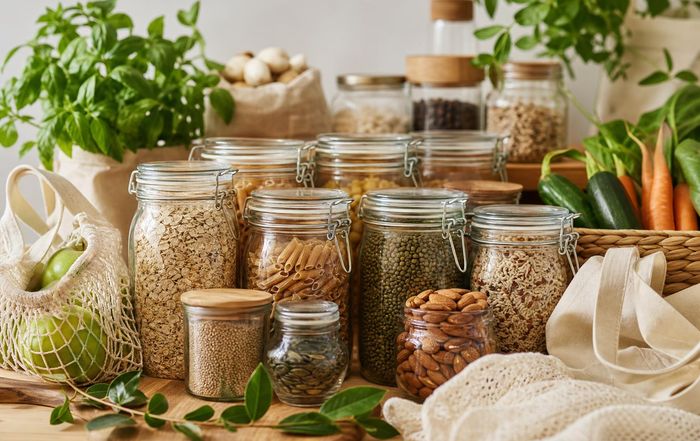
At home, organizing the pantry with clear jars and labeled containers not only reduces visual clutter but also helps prevent food waste by making it easy to see what needs to be used. Rotating older items to the front, planning meals around what is already on hand, and learning simple preservation techniques such as pickling, fermenting, and freezing surplus produce align with the waste-reduction strategies promoted across Eco Natur's content on sustainable living and sustainability. Composting unavoidable scraps, whether through municipal green waste programs, backyard systems, or community compost hubs, closes the loop and returns nutrients to the soil.
Organic Pantry Choices and the Wider Sustainable Economy
The ripple effects of an organic pantry extend beyond individual health and household waste streams into the broader spheres of agriculture, trade, and sustainable business. Global organic food sales have continued to grow over the past decade, with data compiled by FiBL and IFOAM indicating expanding markets in North America, Europe, and increasingly in Asia and Latin America. This growth has encouraged more farmers to transition to organic systems, although the conversion process can be financially and technically challenging, particularly for smallholders in regions with limited support infrastructure.
Consumers who prioritize organic pantry staples are effectively voting for supply chains that value transparency, certification, and ecological integrity. The Organic Trade Association in the United States and national organic associations across Europe, Australia, and Asia highlight how consumer demand has spurred investment in local processing facilities, distribution networks, and research into regionally adapted organic seeds and practices. For readers of Eco Natur, this dynamic connects directly with the platform's examination of sustainable business models and the evolution of a greener economy, in which long-term resilience takes precedence over short-term gains.
At the same time, responsible reporting must acknowledge ongoing debates. Some researchers, including those cited by the OECD, note that lower yields in certain organic systems could, if not paired with dietary shifts and reduced food waste, require more land to produce the same amount of food, potentially increasing pressure on natural ecosystems. Others argue, drawing on agroecological studies summarized by the International Panel of Experts on Sustainable Food Systems (IPES-Food), that diversified organic and agroecological systems can feed growing populations when combined with reduced overconsumption, better distribution, and support for smallholder farmers. For households, the most constructive response is not to see organic as a perfect or imperfect solution, but as one element in a broader transformation that includes eating more plants, wasting less food, and supporting policies that protect ecosystems and rural communities.
Regional Nuances and Global Solidarity in Organic Eating
Although the core principles of an organic pantry are widely applicable, regional realities shape how they are implemented. In the United States and Canada, national organic standards administered by agencies like the USDA National Organic Program and the Canadian Food Inspection Agency provide a regulatory framework, while farmers' markets and community-supported agriculture schemes connect consumers directly with producers. In Europe, the EU organic logo and country-specific labels in Germany, France, Italy, and Spain guide shoppers, while retailers increasingly dedicate shelf space to organic store brands.
In the United Kingdom, Soil Association certification remains influential, while in Australia and New Zealand, several accredited organic certifiers operate under national standards. Across Asia, countries such as Japan, South Korea, China, and Thailand have developed or are strengthening their organic regulations, and urban consumers in cities like Shanghai, Bangkok, and Seoul are showing growing interest in pesticide-reduced and organic produce. In Africa and South America, from South Africa to Brazil, there is a dynamic interplay between export-oriented organic production and domestic movements to make chemical-reduced food more accessible to local communities, often through agroecology initiatives and participatory guarantee systems documented by organizations like FAO's agroecology hub.
For the global readership of Eco Natur, these regional differences underscore the importance of understanding local standards, seasonality, and supply chains. Learning about nearby organic farms, cooperatives, and community gardens, and asking retailers about sourcing practices, helps ensure that the organic pantry is not only certified but also contextually appropriate and socially just. At the same time, sharing recipes, preservation techniques, and cultural food traditions across continents fosters a sense of solidarity, reminding households that they are part of a worldwide movement towards more sustainable, equitable food systems.
Inspiring a Culture of Organic, Sustainable Home Cooking
An organic pantry is ultimately a means, not an end. Its true value emerges when the jars and bags are opened, the stove is lit, and meals are prepared with curiosity and care. In a world grappling with climate change, biodiversity loss, and social inequity, the kitchen can become a place of quiet transformation, where small, repeated actions accumulate into meaningful change. By choosing organic staples, minimizing plastic, planning meals to avoid waste, and savoring plant-rich dishes, households embody the principles that Eco Natur champions across its resources on organic food, sustainable living, and global sustainability.
As new research emerges, from soil microbiology to nutrition science, and as policy frameworks evolve in the United States, Europe, Asia, Africa, and South America, the concept of an organic pantry will continue to adapt. What remains constant is the underlying ethos: a commitment to cooking in ways that nourish both people and the planet, recognizing that every bag of organic oats, every jar of lentils, and every bottle of olive oil represents a choice about what kind of food system to support. For readers and contributors at eco-natur.com, that choice is increasingly guided by experience, evidence, and a shared desire to leave healthier soils, richer ecosystems, and more resilient communities for future generations.
