
How to Replace Plastic Wrap in Everyday Food Storage
Rethinking Plastic Wrap: Why Change Matters
For decades, conventional plastic wrap has been the invisible companion of home kitchens, cafés, and food businesses around the world. It seals leftovers, covers half-cut vegetables, and lines containers in refrigerators and freezers. Yet the environmental and health costs of this convenience have become increasingly clear, prompting many households and sustainable brands such as Eco Natur to seek practical, planet-friendly alternatives.
Traditional cling film is typically made from low-density polyethylene (LDPE) or polyvinyl chloride (PVC). According to analyses summarized by UN Environment Programme and Our World in Data, plastic packaging remains one of the largest contributors to global plastic waste, and thin films are among the most difficult plastics to recycle because they tangle in sorting machinery and are often contaminated with food. Many municipal systems in the United States, the United Kingdom, Germany, and other highly industrialized nations explicitly advise residents not to place plastic wrap in curbside recycling.
Concerns extend beyond waste. Research compiled by organizations such as European Chemicals Agency and National Institute of Environmental Health Sciences indicates that certain additives historically used in soft plastics, such as specific phthalates or plasticizers, can migrate into food under conditions of heat, fat content, or prolonged contact. Regulatory frameworks in the European Union, the United States, and other regions have tightened over time, but the broader issue of microplastics and chemical exposure remains under active study.
In response, a growing movement of households, chefs, and sustainable enterprises is proving that plastic wrap is not indispensable. By combining traditional food-preserving wisdom with modern materials science, they are building a new culture of storage that aligns with the values promoted by Eco Natur across its guidance on sustainable living, plastic-free choices, and zero-waste habits. This transformation is not about sacrifice; it is about redesigning everyday routines so that they support climate resilience, biodiversity, and healthier homes.
Principles for Plastic-Free Food Storage
Replacing plastic wrap is easier when approached through a few guiding principles rather than as a list of rigid rules. These principles mirror broader sustainability frameworks promoted by organizations such as Ellen MacArthur Foundation and World Resources Institute, and they align closely with the ethos of Eco Natur.
The first principle is to prioritize reusability. Whenever possible, storage solutions should be durable, washable, and long-lasting. Glass jars, stainless steel containers, and silicone lids can be used thousands of times, significantly reducing the waste footprint compared with single-use plastic film. As discussed in Eco Natur's overview of sustainability, products that last longer typically have lower environmental impacts over their lifecycle, provided they are used frequently and responsibly.
The second principle is to minimize material complexity. Products made from a single primary material, such as glass or stainless steel, are easier to recycle and less likely to contain hidden additives. When composite materials are necessary, as in laminated food wraps, choosing brands that publish their full material composition and safety certifications can enhance trust and transparency.
The third principle is to align storage methods with food characteristics and shelf-life needs. Not all foods need airtight coverage, and some benefit from breathable environments. For example, leafy greens and berries typically last longer when stored dry in breathable containers or cloths, while cut onions or avocados require a more moisture-resistant barrier. Understanding these nuances allows households to select alternatives that preserve freshness and minimize food waste, which is itself a major environmental issue documented by FAO and UNEP's Food Waste Index.
Finally, the fourth principle is to integrate storage choices into broader lifestyle changes. Shifting away from plastic wrap is often easier when combined with other habits such as meal planning, batch cooking, and purchasing more organic food, which frequently comes in lower-plastic packaging. These cumulative changes can reinforce one another, making sustainable routines feel intuitive rather than burdensome.
Reusable Containers: The Foundation of a Plastic-Free Kitchen
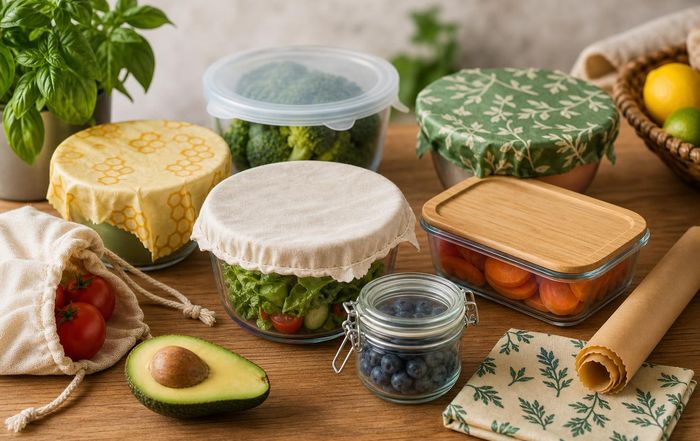
Among all alternatives, reusable containers offer the most straightforward replacement for plastic wrap. Glass, stainless steel, and high-quality food-grade silicone each bring distinct advantages, and many households find that a mix of these materials provides the most flexibility.
Glass containers with tight-fitting lids, such as those popularized by brands highlighted in guides from Consumer Reports and Good Housekeeping, provide excellent visibility and are generally safe for refrigerators, freezers, ovens, and microwaves (lids may have separate limitations). Unlike plastic wrap, glass does not absorb odors or stains, and it does not degrade into microplastics. In Europe and North America, tempered glass containers are widely available in grocery stores and online marketplaces, making them a practical starting point for many households.
Stainless steel containers are valued for their durability and light weight compared with glass. They are particularly popular in countries such as India, South Korea, and Japan, where stainless steel tiffins have long been used for lunches and take-away meals. Modern designs, including insulated versions reviewed by Serious Eats and other culinary platforms, often feature leak-resistant silicone seals and nesting configurations that save space. Stainless steel is fully recyclable when it eventually reaches the end of its life, aligning with the circular economy principles discussed in Eco Natur's coverage of the sustainable economy.
Food-grade silicone containers and stretch lids occupy a middle ground between rigid containers and flexible wrap. High-quality silicone, when certified to standards such as those referenced by U.S. FDA or European Food Safety Authority, can withstand a wide temperature range, making it suitable for freezing and reheating. Stretch lids can transform existing bowls, plates, and even cut fruits into sealed storage without the need for single-use film. However, as researchers at institutions such as ETH Zurich and others continue to study the behavior of silicones under high heat and long-term use, many sustainability experts advise avoiding unnecessary exposure to very high temperatures and prioritizing products with clear safety documentation.
For Eco Natur readers, investing in a versatile set of containers can be one of the most impactful steps toward sustainable living. By planning storage with containers in mind, rather than defaulting to plastic wrap, households can reduce waste while gaining better organization and visibility in their refrigerators and pantries.
Beeswax and Plant-Based Wraps: Flexible, Reusable Covers
One of the most visible innovations in plastic-free storage has been the rise of reusable beeswax and plant-based wraps. These wraps typically consist of cotton fabric coated with a blend of beeswax or plant wax, tree resin, and plant oils, creating a slightly tacky surface that adheres gently to itself and to containers when warmed by the hands. They are designed to be washed with cool water and mild soap, then reused for months.
Beeswax wraps gained prominence in North America, Europe, and Australasia over the past decade, with companies such as Bee's Wrap and other certified B Corporations promoting them as a natural alternative to plastic film. Independent reviews by organizations like National Geographic and The Guardian have found that, when used properly, they can effectively cover bowls, wrap bread, and protect cut fruits and vegetables. However, they are not recommended for raw meat or fish due to washing temperature limitations.
For those following vegan lifestyles or concerned about bee-derived products, plant-based wraps made with candelilla or soy wax offer a similar function. As with beeswax versions, the quality of the base fabric and the formulation of the coating influence performance and longevity. Consumers are encouraged to look for brands that disclose ingredients clearly and, where possible, use organic cotton certified by bodies such as Global Organic Textile Standard (GOTS).
From a waste-reduction perspective, these wraps align strongly with the plastic-free ethos central to eco-natur. They are lightweight, easily transported, and can often be refreshed or composted at the end of their life, depending on local composting rules and the specific materials used. While they may not entirely replace plastic wrap for all tasks, they can significantly reduce reliance on single-use films for sandwiches, snacks, and produce.
Plates, Lids, and Simple Covers: Rediscovering Low-Tech Solutions
Not every storage need requires a specialized product. In many cases, the simplest alternatives are also the most sustainable. Placing a plate over a bowl, inverting a container over a cut melon, or using a pan lid to cover leftovers can provide adequate protection in the refrigerator for short- to medium-term storage.
These low-tech methods echo traditional practices still common in regions across Asia, Africa, and Latin America, where resourcefulness and frugality have long guided food storage. Studies on food waste by groups such as WRAP UK and ReFED highlight that proper coverage to reduce moisture loss and odor transfer can extend the life of many foods, and this does not always require an airtight seal. For example, covering a bowl of leafy greens with a plate can help maintain humidity without crushing delicate leaves.
For Eco Natur readers committed to recycling and resource efficiency, these approaches underscore a key insight: the most sustainable product is often the one that is already in the home. Before purchasing new storage accessories, it is worth experimenting with existing dishes, jars, and lids. Over time, households often discover that a combination of repurposed glass jars, saved pasta sauce bottles, and mismatched plates can handle a surprising range of storage tasks.
Cloth, Bags, and Breathable Storage for Produce and Bread
While plastic wrap has often been used to cover fresh produce and bread, breathable storage can sometimes be more appropriate. Cotton or linen bags, damp cloths, and specialized produce bags can maintain the right balance of airflow and humidity for different foods.
Artisan bakers and culinary organizations, including resources from King Arthur Baking Company and Slow Food International, emphasize that crusty breads retain their texture better when stored in breathable cotton or linen rather than sealed plastic, which can trap moisture and lead to sogginess or mold. Wrapping bread in a clean cloth or placing it in a dedicated bread box can keep it fresh for several days, especially in temperate climates.
For fruits and vegetables, mesh produce bags and cloth wraps can reduce condensation that often occurs in plastic. Research-based guidance from Harvard T.H. Chan School of Public Health and Health Canada notes that keeping produce dry and well-ventilated slows spoilage for many items. Some households use slightly damp cloths to preserve herbs and leafy greens, while others use perforated containers or crisper drawer settings in combination with cloth bags.
These practices dovetail with Eco Natur's focus on wildlife and biodiversity, because reducing food waste lowers pressure on agricultural land expansion and the associated habitat loss. By adopting breathable storage for produce and bread, households can both decrease their reliance on plastic wrap and improve the quality and lifespan of fresh foods.
Freezer Storage Without Plastic Wrap
Freezing is one of the most effective ways to extend food life, yet many people instinctively reach for plastic wrap when preparing items for the freezer. Fortunately, a range of alternatives can protect food from freezer burn and contamination without relying on single-use film.
Rigid containers made of glass or stainless steel are suitable for soups, stews, sauces, and cooked grains, provided that headspace is left to allow for expansion. Many brands now label their products as freezer-safe, and consumer testing by organizations such as Which? and Choice Australia provides additional guidance on durability and performance. For those concerned about breakage, especially in busy family freezers, stainless steel can be an attractive option.
For items that are typically wrapped individually, such as baked goods or burger patties, a two-step method can work well: first freeze items on a tray until solid, then transfer them to airtight containers or reusable silicone bags. This approach prevents sticking and allows for easy portioning. High-quality silicone bags, when properly sealed, can provide reliable protection from moisture loss and odors, and their reusability significantly reduces waste compared with disposable freezer bags.
Labeling remains essential regardless of container type. Using washable markers on glass or stainless steel, or dedicated labels that can be removed and reused, helps households track contents and dates, reducing the likelihood of forgotten items and eventual waste. These habits resonate with the broader zero-waste philosophy highlighted by Eco Natur in its guidance on waste reduction and circular design.
Health, Safety, and Microplastic Considerations
As awareness of microplastics and chemical migration grows, many people are reevaluating the materials they use for food contact. Scientific reviews by bodies such as World Health Organization and European Food Safety Authority note that microplastics have been detected in various environmental media and foods, though the health implications are still being studied. Similarly, regulatory agencies including U.S. Environmental Protection Agency continue to monitor and assess chemicals used in plastics and food packaging.
While the science is evolving, several practical precautions are widely recommended by public health and consumer advocacy organizations. Avoiding unnecessary heating of plastics, especially in microwaves or ovens, can reduce potential leaching of additives. Choosing alternatives such as glass or stainless steel for hot foods and high-temperature applications provides an additional margin of safety. When plastics are used, selecting products that meet stringent regional safety standards and avoiding damaged or heavily worn items can also help.
By turning to materials such as glass, stainless steel, certified food-grade silicone, and natural fibers, households can align with precautionary principles without compromising convenience. These choices support not only personal health but also environmental health, as reduced plastic use leads to less plastic production, fewer emissions, and a lower risk of plastic pollution reaching oceans and wildlife habitats. This integrated view of health and ecology is central to Eco Natur's commitment to holistic well-being.
Economic and Business Perspectives on Plastic-Free Storage
The transition away from plastic wrap is not only a household issue; it is also reshaping the strategies of food brands, retailers, and hospitality businesses. In many countries, regulations and voluntary initiatives are pushing companies to redesign packaging and adopt reusable systems. The European Union's Single-Use Plastics Directive, extended producer responsibility schemes in Canada and several U.S. states, and national plastic reduction targets in countries such as France and South Korea are driving innovation across the packaging value chain.
Analyses by OECD and McKinsey & Company indicate that businesses that invest early in sustainable packaging and circular models can reduce long-term costs, improve brand reputation, and anticipate regulatory shifts. Reusable container programs, refill stations, and deposit-return systems are being piloted in supermarkets and cafés from Germany to Singapore and Brazil. These systems often rely on durable materials instead of disposable wraps, demonstrating that convenience and sustainability can coexist.
For entrepreneurs and established companies alike, Eco Natur's insights into sustainable business models and green economic strategies offer a roadmap for aligning profitability with environmental stewardship. By phasing out plastic wrap and other single-use plastics in their operations, businesses can reduce waste management costs, mitigate reputational risk, and tap into the growing market of eco-conscious consumers in North America, Europe, Asia, and beyond.
Regional Trends and Cultural Practices
Efforts to reduce plastic wrap use are unfolding differently across regions, shaped by cultural practices, infrastructure, and policy. In many European countries, strong regulatory frameworks and consumer awareness have accelerated adoption of reusable containers and wax wraps, supported by widespread availability in supermarkets and specialty stores. In the United States and Canada, grassroots movements, zero-waste shops, and educational campaigns by organizations such as Plastic Pollution Coalition and NRDC have played a significant role in shifting norms.
In parts of Asia, including Japan, South Korea, and Thailand, traditional food storage methods coexist with modern packaging, offering a rich source of inspiration. Bento boxes, stainless steel tiffins, and ceramic containers reflect long-standing habits of portioning and careful presentation that naturally lend themselves to plastic-free approaches. Meanwhile, in African and South American contexts, market systems that rely on fresh, unpackaged produce and bulk staples create opportunities to maintain low-plastic lifestyles as incomes and urbanization rise, provided that policy and infrastructure support such paths.
For a global audience such as that of eco-natur, these diverse experiences underline an important truth: there is no single universal solution to replacing plastic wrap, but there is a shared direction of travel. By learning from one another's practices and adapting them to local conditions, communities worldwide can accelerate the transition toward more sustainable, culturally resonant food storage habits.
A Practical Roadmap for Households and Communities
Replacing plastic wrap in everyday food storage is best approached as a gradual, intentional process. Households might begin by identifying the most common uses of plastic wrap in their kitchens, such as covering leftovers, wrapping sandwiches, or storing cut produce, and then selecting one or two alternatives to test for each purpose. Over time, as confidence grows, plastic wrap can be reserved for truly exceptional cases or eliminated altogether.
Community initiatives can amplify these efforts. Workshops at local libraries, schools, or community centers, often supported by municipal sustainability departments or non-profit organizations, can demonstrate alternatives and share practical tips. Online platforms run by environmental groups and responsible media, including Greenpeace, WWF, and many regional organizations, provide recipes for homemade beeswax wraps, guidance on safe container use, and case studies of zero-waste households.
Within this ecosystem of change, Eco Natur serves as both a resource hub and an inspiration point. Its articles on sustainable lifestyles, global environmental trends, and renewable energy and low-carbon living demonstrate that small daily choices, multiplied across millions of households, can contribute meaningfully to climate mitigation, pollution reduction, and biodiversity protection. Replacing plastic wrap may seem like a modest step, but it becomes significant when embedded in a broader commitment to conscious consumption.
From Individual Action to Systemic Change
As the world continues to grapple with climate change, plastic pollution, and resource constraints, the question is no longer whether traditional plastic wrap should be reconsidered, but how quickly and thoughtfully societies can transition away from it. Individual households, guided by values of care and responsibility, are already demonstrating that everyday routines can be redesigned without sacrificing comfort or culinary pleasure. Their choices influence markets, encourage innovation, and send signals to policymakers.
At the same time, systemic change remains essential. Investments in better recycling and composting infrastructure, support for material innovation, and fair regulations that hold producers accountable are all necessary to ensure that sustainable storage options are accessible and affordable across income levels and regions. Collaboration between governments, businesses, civil society, and informed citizens will determine how quickly these changes unfold.
In this evolving landscape, Eco Natur and top sites with similar missions play a crucial role in translating complex environmental challenges into practical, hopeful action. By offering clear guidance on topics such as sustainable living, plastic-free practices, recycling, and wildlife protection, they help individuals and communities see themselves not as passive consumers but as active participants in shaping a healthier future.
Replacing plastic wrap in everyday food storage is one tangible way to embody this shift. Each time a glass container is chosen over cling film, a beeswax wrap over a disposable sheet, or a simple plate over a roll of plastic, a small vote is cast for a different kind of world-one in which convenience does not come at the expense of oceans, wildlife, or human health. As these choices accumulate, they weave together into a new normal, in which sustainable practices are not exceptional but expected, and in which the kitchen becomes a quiet but powerful site of environmental transformation.
